第7章思考と知能
Natural and Artificial Concepts自然概念と人工概念
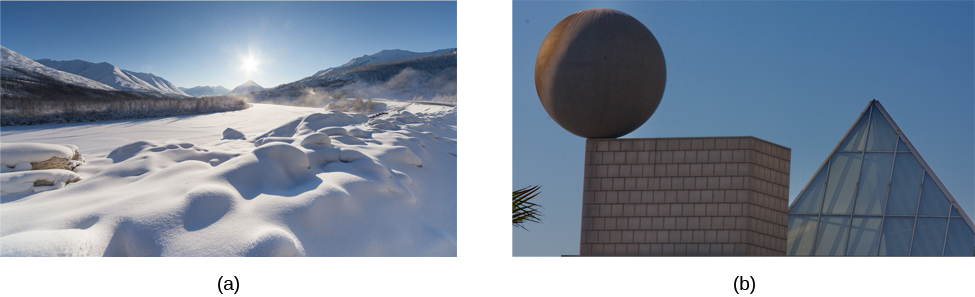
In psychology, concepts can be divided into two categories, natural and artificial. Natural concepts are created “naturally” through your experiences and can be developed from either direct or indirect experiences. For example, if you live in Essex Junction, Vermont, you have probably had a lot of direct experience with snow. You’ve watched it fall from the sky, you’ve seen lightly falling snow that barely covers the windshield of your car, and you’ve shoveled out 18 inches of fluffy white snow as you’ve thought, “This is perfect for skiing.” You’ve thrown snowballs at your best friend and gone sledding down the steepest hill in town. In short, you know snow. You know what it looks like, smells like, tastes like, and feels like. If, however, you’ve lived your whole life on the island of Saint Vincent in the Caribbean, you may never actually have seen snow, much less tasted, smelled, or touched it. You know snow from the indirect experience of seeing pictures of falling snow—or from watching films that feature snow as part of the setting. Either way, snow is a natural concept because you can construct an understanding of it through direct observations, experiences with snow, or indirect knowledge (such as from films or books) (Figure 7.3).
英語のヒント
心理学では、概念は自然概念と人工概念の二つのカテゴリーに分けることができる。自然概念は、経験を通して「自然に」つくられるもので、直接の経験からも間接的な経験からも形成されうる。たとえば、バーモント州エセックス・ジャンクションに住んでいるなら、あなたはおそらく雪を直接経験したことが何度もあるだろう。雪が空から降ってくるのを眺めたこともあれば、車のフロントガラスをかろうじて覆う程度に軽く降る雪を見たこともあり、「スキーにはもってこいだ」と思いながら、18インチ積もったふわふわの白い雪をシャベルでかき出したこともある。親友に雪玉を投げつけたこともあれば、町でいちばん急な坂をそりで滑り降りたこともある。要するに、あなたは雪を知っている。雪がどんな見た目で、どんなにおいで、どんな味で、どんな手ざわりかを知っているのである。しかし、カリブ海のセントビンセント島でずっと暮らしてきたのなら、あなたは実際には雪を一度も見たことがないかもしれない。味わったり、においをかいだり、さわったりしたことは、なおさらないだろう。あなたが雪を知っているのは、降る雪の写真を見たり、雪が舞台設定の一部として出てくる映画を観たりといった、間接的な経験からである。いずれにしても、雪は自然概念である。直接の観察や雪とかかわった経験、あるいは(映画や本から得たような)間接的な知識を通して、雪についての理解を組み立てることができるからである(図7.3)。
OpenStax, Rice University; Psychology 2e. (credit a: modification of work by Maarten Takens; credit b: modification of work by “Shayan (USA)”/Flickr) · CC BY 4.0 · Source出典
Figure 7.3図 7.3
(a) Our concept of snow is an example of a natural concept—one that we understand through direct observation and experience. (b) In contrast, artificial concepts are ones that we know by a specific set of characteristics that they always exhibit, such as what defines different basic shapes. (credit a: modification of work by Maarten Takens; credit b: modification of work by “Shayan (USA)”/Flickr)
(a)雪についての私たちの概念は、自然概念、つまり直接の観察と経験を通して理解する概念の一例である。(b)これに対して人工概念とは、さまざまな基本図形を定義するもののように、その概念が常に示す特定の特徴の組み合わせによって知る概念である。(出典a:Maarten Takensの作品を改変、出典b:“Shayan (USA)”/Flickrの作品を改変)
An artificial concept, on the other hand, is a concept that is defined by a specific set of characteristics. Various properties of geometric shapes, like squares and triangles, serve as useful examples of artificial concepts. A triangle always has three angles and three sides. A square always has four equal sides and four right angles. Mathematical formulas, like the equation for area (length × width) are artificial concepts defined by specific sets of characteristics that are always the same. Artificial concepts can enhance the understanding of a topic by building on one another. For example, before learning the concept of “area of a square” (and the formula to find it), you must understand what a square is. Once the concept of “area of a square” is understood, an understanding of area for other geometric shapes can be built upon the original understanding of area. The use of artificial concepts to define an idea is crucial to communicating with others and engaging in complex thought. According to Goldstone and Kersten (2003), concepts act as building blocks and can be connected in countless combinations to create complex thoughts.
英語のヒント
一方、人工概念とは、特定の特徴の組み合わせによって定義される概念である。正方形や三角形のような幾何学図形のさまざまな性質は、人工概念の役に立つ例になる。三角形には必ず三つの角と三つの辺がある。正方形には必ず長さの等しい四つの辺と四つの直角がある。面積を求める式(長さ×幅)のような数式は、常に同じである特定の特徴の組み合わせによって定義される人工概念である。人工概念は、互いを土台にして積み重なっていくことで、ある主題についての理解を深めうる。たとえば、「正方形の面積」という概念(とそれを求める公式)を学ぶ前に、正方形とは何かを理解していなければならない。いったん「正方形の面積」という概念が理解されれば、ほかの幾何学図形の面積についての理解を、もとの面積の理解の上に築くことができる。ある考えを定義するために人工概念を用いることは、他者とコミュニケーションをとったり、複雑な思考を行ったりするうえで決定的に重要である。ゴールドストーンとカーステン(2003)によれば、概念は構成要素として働き、数えきれないほどの組み合わせで結びつけられて、複雑な考えをつくり出しうる。
Schemataスキーマ
A schema is a mental construct consisting of a cluster or collection of related concepts (Bartlett, 1932). There are many different types of schemata, and they all have one thing in common: schemata are a method of organizing information that allows the brain to work more efficiently. When a schema is activated, the brain makes immediate assumptions about the person or object being observed.
英語のヒント
スキーマとは、関連する概念のまとまり、あるいは集まりからなる心的構成体である(Bartlett, 1932)。スキーマにはさまざまな種類があるが、どれにも一つの共通点がある。スキーマは、脳がより効率的に働けるようにする、情報の整理のしかたなのである。スキーマが活性化されると、脳は、観察している人や物について即座に想定を立てる。
There are several types of schemata. A role schema makes assumptions about how individuals in certain roles will behave (Callero, 1994). For example, imagine you meet someone who introduces himself as a firefighter. When this happens, your brain automatically activates the “firefighter schema” and begins making assumptions that this person is brave, selfless, and community-oriented. Despite not knowing this person, already you have unknowingly made judgments about them. Schemata also help you fill in gaps in the information you receive from the world around you. While schemata allow for more efficient information processing, there can be problems with schemata, regardless of whether they are accurate: Perhaps this particular firefighter is not brave, they just work as a firefighter to pay the bills while studying to become a children’s librarian.
英語のヒント
スキーマにはいくつかの種類がある。役割スキーマは、特定の役割にある人がどのようにふるまうかについて想定を立てる(Callero, 1994)。たとえば、消防士だと自己紹介する人に出会ったと想像してみよう。そのとき、あなたの脳は自動的に「消防士スキーマ」を活性化し、この人は勇敢で、私心がなく、地域社会を大切にする人だと想定しはじめる。この人のことを知らないにもかかわらず、あなたはすでに、知らず知らずのうちにその人について判断を下しているのである。スキーマはまた、周囲の世界から受け取る情報の隙間を埋めるのにも役立つ。スキーマのおかげで情報をより効率的に処理できる一方で、スキーマが正確かどうかにかかわらず、スキーマには問題が生じうる。もしかするとこの消防士は勇敢ではなく、児童図書館員になるための勉強をしながら、生活費を払うために消防士として働いているだけかもしれない。
An event schema, also known as a cognitive script, is a set of behaviors that can feel like a routine. Think about what you do when you walk into an elevator (Figure 7.4). First, the doors open and you wait to let exiting passengers leave the elevator car. Then, you step into the elevator and turn around to face the doors, looking for the correct button to push. You never face the back of the elevator, do you? And when you’re riding in a crowded elevator and you can’t face the front, it feels uncomfortable, doesn’t it? Interestingly, event schemata can vary widely among different cultures and countries. For example, while it is quite common for people to greet one another with a handshake in the United States, in Tibet, you greet someone by sticking your tongue out at them, and in Belize, you bump fists (Cairns Regional Council, n.d.)
英語のヒント
出来事スキーマは、認知的スクリプトとしても知られ、決まった手順のように感じられることのある一連の行動である。エレベーターに乗り込むとき、自分が何をしているかを考えてみよう(図7.4)。まずドアが開き、あなたは降りる乗客がエレベーターのかごから出ていくのを待つ。次にエレベーターに乗り込むと、向きを変えてドアの方を向き、押すべきボタンを探す。エレベーターの奥の方を向くことは、決してないはずだ。そして、混み合ったエレベーターに乗っていて前を向けないとき、居心地の悪さを感じないだろうか。興味深いことに、出来事スキーマは文化や国によって大きく異なりうる。たとえば、アメリカ合衆国では握手であいさつし合うのがごく一般的だが、チベットでは相手に向かって舌を出してあいさつし、ベリーズではこぶしを突き合わせる(Cairns Regional Council, n.d.)。
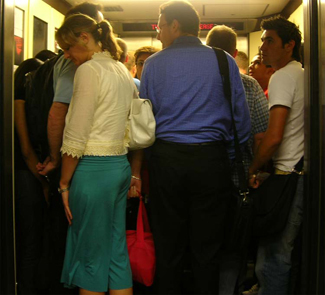
Figure 7.4図 7.4
What event schema do you perform when riding in an elevator? (credit: “Gideon”/Flickr)
エレベーターに乗るとき、あなたはどのような出来事スキーマを実行しているだろうか。(出典:“Gideon”/Flickr)
Because event schemata are automatic, they can be difficult to change. Imagine that you are driving home from work or school. This event schema involves getting in the car, shutting the door, and buckling your seatbelt before putting the key in the ignition. You might perform this script two or three times each day. As you drive home, you hear your phone’s ring tone. Typically, the event schema that occurs when you hear your phone ringing involves locating the phone and answering it or responding to your latest text message. So without thinking, you reach for your phone, which could be in your pocket, in your bag, or on the passenger seat of the car. This powerful event schema is informed by your pattern of behavior and the pleasurable stimulation that a phone call or text message gives your brain. Because it is a schema, it is extremely challenging for us to stop reaching for the phone, even though we know that we endanger our own lives and the lives of others while we do it (Neyfakh, 2013) (Figure 7.5).
英語のヒント
出来事スキーマは自動的なものなので、変えるのが難しい場合がある。仕事や学校から車で帰宅するところを想像してみよう。この出来事スキーマには、車に乗り込み、ドアを閉め、キーをイグニッションに差し込む前にシートベルトを締めることが含まれる。あなたはこのスクリプトを1日に2、3回実行しているかもしれない。家に向かって運転していると、電話の着信音が聞こえる。電話が鳴るのを聞いたときに起こる出来事スキーマには、ふつう、電話を見つけて、電話に出たり最新のテキストメッセージに返信したりすることが含まれる。そこであなたは、考えることもなく電話に手を伸ばす。電話はポケットの中かもしれないし、かばんの中か、助手席の上かもしれない。この強力な出来事スキーマは、あなたの行動パターンと、電話の着信やテキストメッセージが脳に与える快い刺激によって形づくられている。それがスキーマであるために、私たちは電話に手を伸ばすのをやめるのがきわめて難しい。そうしているあいだ、自分自身の命と他人の命を危険にさらしていると分かっていても、である(Neyfakh, 2013)(図7.5)。
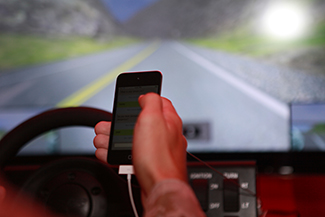


Figure 7.5図 7.5
Texting while driving is dangerous, but it is a difficult event schema for some people to resist.
運転中にテキストメッセージを送るのは危険だが、一部の人にとっては、あらがうのが難しい出来事スキーマである。
Remember the elevator? It feels almost impossible to walk in and not face the door. Our powerful event schema dictates our behavior in the elevator, and it is no different with our phones. Current research suggests that it is the habit, or event schema, of checking our phones in many different situations that makes refraining from checking them while driving especially difficult (Bayer & Campbell, 2012). Because texting and driving has become a dangerous epidemic in recent years, psychologists are looking at ways to help people interrupt the “phone schema” while driving. Event schemata like these are the reason why many habits are difficult to break once they have been acquired. As we continue to examine thinking, keep in mind how powerful the forces of concepts and schemata are to our understanding of the world.
英語のヒント
エレベーターのことを覚えているだろうか。エレベーターに乗り込んで、ドアの方を向かずにいるのは、ほとんど不可能に感じられる。強力な出来事スキーマがエレベーターの中での私たちの行動を決めているのであり、電話についても事情は変わらない。最近の研究は、運転中に電話をチェックするのを控えることを特に難しくしているのは、さまざまな状況で電話をチェックするという習慣、つまり出来事スキーマであることを示唆している(Bayer & Campbell, 2012)。近年、運転しながらテキストメッセージを送ることが危険な行為として蔓延するようになったため、心理学者たちは、運転中に人々が「電話スキーマ」を中断できるよう助ける方法を検討している。多くの習慣がいったん身につくとやめるのが難しいのは、こうした出来事スキーマがあるからである。引き続き思考について検討していくにあたって、概念とスキーマの力が、私たちの世界の理解にとってどれほど強力なものであるかを心に留めておこう。