第1章心理学入門
1.3 Contemporary Psychology1.3 現代の心理学
Learning Objectives学習目標
By the end of this section, you will be able to:
この節を学び終えると、次のことができるようになる。
- Appreciate the diversity of interests and foci within psychology心理学の中の関心と焦点の多様性を正しく理解する
- Understand basic interests and applications in each of the described areas of psychologyここで述べた心理学の各領域の基本的な関心と応用を理解する
- Demonstrate familiarity with some of the major concepts or important figures in each of the described areas of psychologyここで述べた心理学の各領域の主な概念や重要人物のいくつかについて、よく知っていることを示す
Contemporary psychology is a diverse field that is influenced by all of the historical perspectives described in the preceding section. Reflective of the discipline’s diversity is the diversity seen within the American Psychological Association (APA). The APA is a professional organization representing psychologists in the United States. The APA is the largest organization of psychologists in the world, and its mission is to advance and disseminate psychological knowledge for the betterment of people. There are 54 divisions within the APA, representing a wide variety of specialties that range from Societies for the Psychology of Religion and Spirituality to Exercise and Sport Psychology to Behavioral Neuroscience and Comparative Psychology. Reflecting the diversity of the field of psychology itself, members, affiliate members, and associate members span the spectrum from students to doctoral-level psychologists, and come from a variety of places including educational settings, criminal justice, hospitals, the armed forces, and industry (American Psychological Association, 2014). G. Stanley Hall was the first president of the APA. Before he earned his doctoral degree, he was an adjunct instructor at Wilberforce University, a historically Black college/university (HBCU), while serving as faculty at Antioch College. Hall went on to work under William James, earning his PhD. Eventually, he became the first president of Clark University in Massachusetts when it was founded (Pickren & Rutherford, 2010).
英語のヒント
現代の心理学は多様な分野であり、前の節で述べたすべての歴史的な立場から影響を受けている。この分野の多様性は、アメリカ心理学会(APA)の中に見られる多様性にも表れている。APAは、アメリカの心理学者を代表する専門職団体である。APAは世界最大の心理学者の組織であり、その使命は、人々の幸福のために心理学の知識を発展させ広めることである。APAには54の部会があり、宗教・スピリチュアリティ心理学会から、運動・スポーツ心理学、行動神経科学・比較心理学に至るまで、幅広い専門分野を代表している。心理学という分野そのものの多様性を反映して、正会員、準会員、協力会員の顔ぶれは、学生から博士号を持つ心理学者まで幅広く、教育機関、刑事司法、病院、軍隊、産業界などさまざまな場から集まっている(American Psychological Association, 2014)。G・スタンレー・ホールはAPAの初代会長だった。ホールは博士号を取得する前、アンティオーク大学で教員を務めながら、歴史的黒人大学(HBCU)であるウィルバーフォース大学で非常勤講師をしていた。その後ホールはウィリアム・ジェームズのもとで研究し、PhDを取得した。最終的に、マサチューセッツ州のクラーク大学が創設されたとき、その初代学長となった(Pickren & Rutherford, 2010)。
The Association for Psychological Science (APS) was founded in 1988 and seeks to advance the scientific orientation of psychology. Its founding resulted from disagreements between members of the scientific and clinical branches of psychology within the APA. The APS publishes five research journals and engages in education and advocacy with funding agencies. A significant proportion of its members are international, although the majority is located in the United States. Other organizations provide networking and collaboration opportunities for professionals of several ethnic or racial groups working in psychology, such as the National Latina/o Psychological Association (NLPA), the Asian American Psychological Association (AAPA), the Association of Black Psychologists (ABPsi), and the Society of Indian Psychologists (SIP). Most of these groups are also dedicated to studying psychological and social issues within their specific communities.
英語のヒント
心理科学協会(APS)は1988年に設立され、心理学の科学志向を推し進めることを目指している。その設立は、APAの中の科学部門と臨床部門の会員のあいだの意見の対立から生まれた。APSは5つの研究誌を発行し、研究資金を提供する機関に向けた教育や提言活動を行っている。会員の大部分はアメリカにいるが、国外の会員もかなりの割合を占める。ほかにも、心理学の分野で働くいくつかの民族・人種集団の専門家に、交流や協力の機会を提供する組織がある。全米ラテン系心理学会(NLPA)、アジア系アメリカ人心理学会(AAPA)、黒人心理学者協会(ABPsi)、アメリカ先住民心理学者協会(SIP)などである。こうした団体の多くは、それぞれのコミュニティの中の心理的・社会的な問題を研究することにも力を注いでいる。
This section will provide an overview of the major subdivisions within psychology today in the order in which they are introduced throughout the remainder of this textbook. This is not meant to be an exhaustive listing, but it will provide insight into the major areas of research and practice of modern-day psychologists.
英語のヒント
この節では、現在の心理学の主な下位分野を、本書の残りの部分で取り上げる順に概観する。すべてを網羅するものではないが、現代の心理学者が研究し実践している主な領域を見通す手がかりになるだろう。
Biopsychology and Evolutionary Psychology生物心理学と進化心理学
As the name suggests, biopsychology explores how our biology influences our behavior. While biological psychology is a broad field, many biological psychologists want to understand how the structure and function of the nervous system is related to behavior (Figure 1.10). As such, they often combine the research strategies of both psychologists and physiologists to accomplish this goal (as discussed in Carlson, 2013).
英語のヒント
その名のとおり、生物心理学は、私たちの生物学的な仕組みが行動にどう影響するかを探究する。生物心理学は幅広い分野だが、生物心理学者の多くは、神経系の構造と機能が行動とどのように関係しているのかを理解したいと考えている(図1.10)。そのため彼らは、この目標を達成するために、心理学者と生理学者の両方の研究方略を組み合わせることが多い(Carlson, 2013で論じられているとおり)。
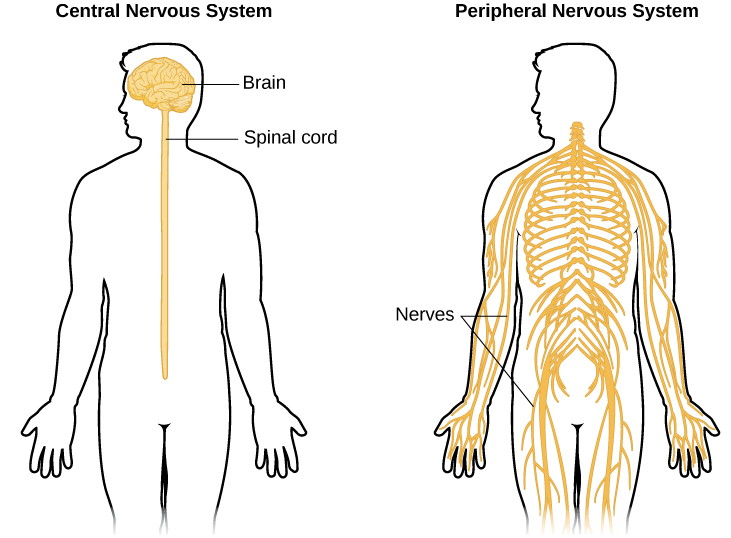

Figure 1.10図 1.10
Biological psychologists study how the structure and function of the nervous system generate behavior.
生物心理学者は、神経系の構造と機能がどのように行動を生み出すのかを研究する。
The research interests of biological psychologists span a number of domains, including but not limited to, sensory and motor systems, sleep, drug use and abuse, ingestive behavior, reproductive behavior, neurodevelopment, plasticity of the nervous system, and biological correlates of psychological disorders. Given the broad areas of interest falling under the purview of biological psychology, it will probably come as no surprise that individuals from all sorts of backgrounds are involved in this research, including biologists, medical professionals, physiologists, and chemists. This interdisciplinary approach is often referred to as neuroscience, of which biological psychology is a component (Carlson, 2013).
英語のヒント
生物心理学者の研究関心は、感覚系と運動系、睡眠、薬物の使用と乱用、摂食行動、生殖行動、神経発達、神経系の可塑性、心理的障害の生物学的な相関物など、多くの領域にわたる(これらに限られない)。生物心理学の守備範囲にこれほど幅広い関心領域が含まれることを考えれば、生物学者、医療専門職、生理学者、化学者など、あらゆる背景を持つ人々がこの研究にかかわっていても驚くには当たらないだろう。この学際的なアプローチは神経科学と呼ばれることが多く、生物心理学はその一部である(Carlson, 2013)。
While biopsychology typically focuses on the immediate causes of behavior based in the physiology of a human or other animal, evolutionary psychology seeks to study the ultimate biological causes of behavior. To the extent that a behavior is impacted by genetics, a behavior, like any anatomical characteristic of a human or animal, will demonstrate adaption to its surroundings. These surroundings include the physical environment and, since interactions between organisms can be important to survival and reproduction, the social environment. The study of behavior in the context of evolution has its origins with Charles Darwin, the co-discoverer of the theory of evolution by natural selection. Darwin was well aware that behaviors should be adaptive and wrote books titled, The Descent of Man (1871) and The Expression of the Emotions in Man and Animals (1872), to explore this field.
英語のヒント
生物心理学が通常、人間やほかの動物の生理に基づく行動の直接的な原因に焦点を当てるのに対し、進化心理学は、行動の究極的な生物学的原因を研究しようとする。行動が遺伝の影響を受けているかぎり、その行動は、人間や動物の解剖学的な特徴と同じように、周囲の環境への適応を示すはずである。この周囲の環境には物理的な環境が含まれ、また、生物どうしのかかわりが生存と繁殖にとって重要になりうることから、社会的な環境も含まれる。進化の文脈で行動を研究することの起源は、自然選択による進化論の共同発見者であるチャールズ・ダーウィンにある。ダーウィンは、行動もまた適応的であるはずだとよく理解しており、この分野を探究するために『人間の由来』(1871)や『人及び動物の表情について』(1872)という題の本を書いた。
Evolutionary psychology, and specifically, the evolutionary psychology of humans, has enjoyed a resurgence in recent decades. To be subject to evolution by natural selection, a behavior must have a significant genetic cause. In general, we expect all human cultures to express a behavior if it is caused genetically, since the genetic differences among human groups are small. The approach taken by most evolutionary psychologists is to predict the outcome of a behavior in a particular situation based on evolutionary theory and then to make observations, or conduct experiments, to determine whether the results match the theory. It is important to recognize that these types of studies are not strong evidence that a behavior is adaptive, since they lack information that the behavior is in some part genetic and not entirely cultural (Endler, 1986). Demonstrating that a trait, especially in humans, is naturally selected is extraordinarily difficult; perhaps for this reason, some evolutionary psychologists are content to assume the behaviors they study have genetic determinants (Confer et al., 2010).
英語のヒント
進化心理学、とくに人間の進化心理学は、ここ数十年で再び盛り上がりを見せている。自然選択による進化の対象となるためには、行動には重要な遺伝的原因がなければならない。一般に、ある行動が遺伝的に引き起こされるのであれば、人間のすべての文化がその行動を示すと予想される。人間の集団間の遺伝的な違いは小さいからである。ほとんどの進化心理学者がとるアプローチは、進化理論に基づいて特定の状況での行動の結果を予測し、それから観察や実験を行って、結果が理論に合うかどうかを確かめるというものである。重要なのは、この種の研究は、ある行動が適応的であることの強い証拠にはならないと認識することである。その行動が完全に文化的なものではなく、一部でも遺伝的なものであるという情報が欠けているからである(Endler, 1986)。ある特性が、とくに人間において、自然選択されたものだと示すことは非常に難しい。おそらくそのためだろうが、一部の進化心理学者は、自分たちが研究する行動には遺伝的な決定因があると仮定するだけで満足している(Confer et al., 2010)。
One other drawback of evolutionary psychology is that the traits that we possess now evolved under environmental and social conditions far back in human history, and we have a poor understanding of what these conditions were. This makes predictions about what is adaptive for a behavior difficult. Behavioral traits need not be adaptive under current conditions, only under the conditions of the past when they evolved, about which we can only hypothesize.
英語のヒント
進化心理学のもう一つの欠点は、私たちがいま持っている特性は、人類の歴史のはるか昔の環境的・社会的条件のもとで進化したものであり、その条件がどのようなものだったかを私たちはよく分かっていないことである。そのため、ある行動にとって何が適応的かを予測することが難しくなる。行動特性は、現在の条件のもとで適応的である必要はなく、それが進化した過去の条件のもとで適応的であればよい。そして、その過去の条件については、私たちは仮説を立てることしかできない。
There are many areas of human behavior for which evolution can make predictions. Examples include memory, mate choice, relationships between kin, friendship and cooperation, parenting, social organization, and status (Confer et al., 2010).
英語のヒント
進化が予測を立てることのできる人間の行動の領域は多い。たとえば、記憶、配偶者の選択、血縁者どうしの関係、友情と協力、子育て、社会組織、地位などである(Confer et al., 2010)。
Evolutionary psychologists have had success in finding experimental correspondence between observations and expectations. In one example, in a study of mate preference differences between men and women that spanned 37 cultures, Buss (1989) found that women valued earning potential factors greater than men, and men valued potential reproductive factors (youth and attractiveness) greater than women in their prospective mates. In general, the predictions were in line with the predictions of evolution, although there were deviations in some cultures.
英語のヒント
進化心理学者は、観察と予想のあいだの実験的な一致を見いだすことに成功してきた。一つの例として、37の文化にまたがる、配偶者の好みの男女差についての研究で、バス(1989)は、将来の配偶者について、女性は男性よりも稼ぐ能力にかかわる要因を重視し、男性は女性よりも潜在的な生殖にかかわる要因(若さと魅力)を重視することを見いだした。全体として、結果は進化による予測と一致していたが、一部の文化では予測からのずれも見られた。