第23章素粒子物理Particle Physics原書 p.795–832
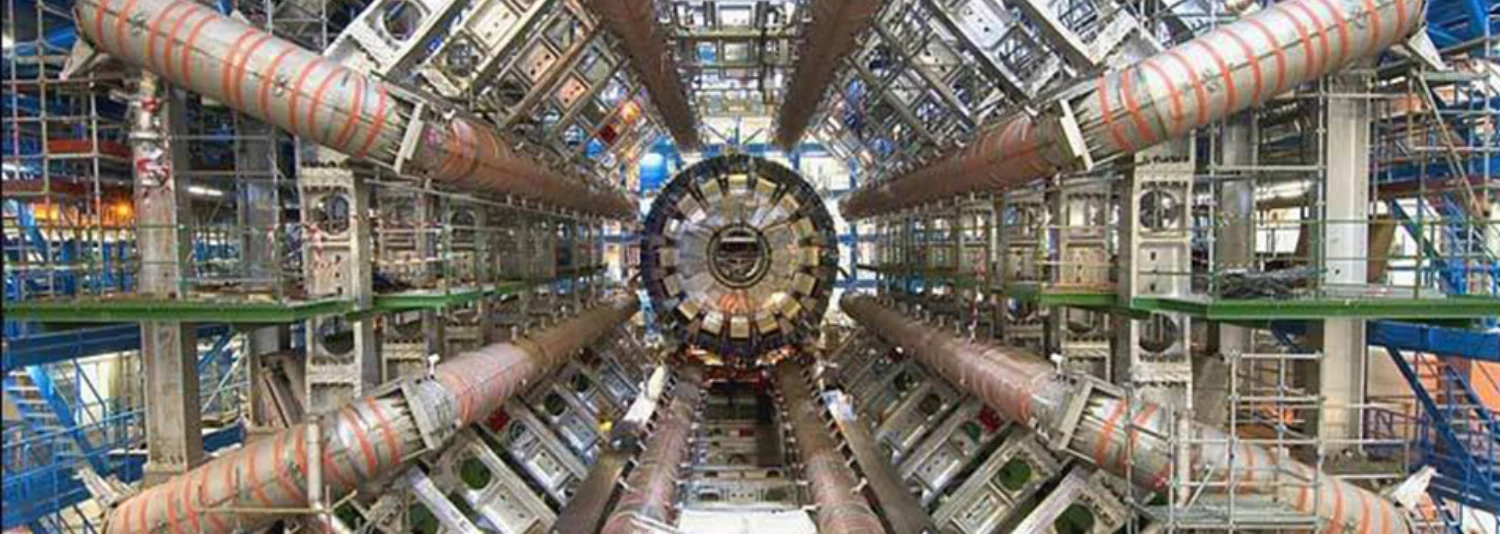
CHAPTER OUTLINE章の構成
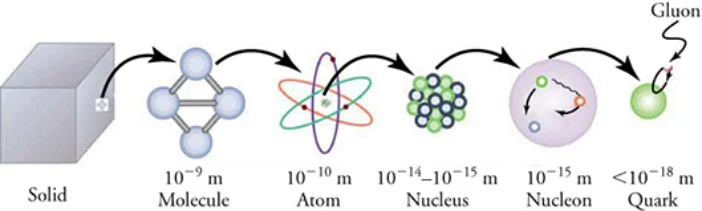
INTRODUCTION Following ideas remarkably similar to those of the ancient Greeks, we continue to look for smaller and smaller structures in nature, hoping ultimately to find and understand the most fundamental building blocks that exist. Atomic physics deals with the smallest units of elements and compounds. In its study, we have found a relatively small number of atoms with systematic properties, and these properties have explained a tremendous range of phenomena. Nuclear physics is concerned with the nuclei of atoms and their substructures. Here, a smaller number of components—the proton and neutron—make up all nuclei. Exploring the systematic behavior of their interactions has revealed even more about matter, forces, and energy. Particle physics deals with the substructures of atoms and nuclei and is particularly aimed at finding those truly fundamental particles that have no further substructure. Just as in atomic and nuclear physics, we have found a complex array of particles and properties with systematic characteristics analogous to the periodic table and the chart of nuclides. An underlying structure is apparent, and there is some reason to think that we are finding particles that have no substructure. Of course, we have been in similar situations before. For example, atoms were once thought to be the ultimate substructures. It is possible that we could continue to find deeper and deeper structures without ever discovering the ultimate substructure—in science there is never complete certainty. See Figure 23.2.
はじめに 古代ギリシア人の考えと驚くほど似た道すじで、私たちは自然の中により小さな構造を探し続け、最後には存在する最も根本の組み立ての部品を見つけて理解しようとしている。原子物理は元素と化合物の最小の単位を扱う。その研究で、規則正しい性質を持つ比較的少数の原子が見つかり、それらの性質が途方もない範囲の現象を説明してきた。核物理は原子の核と、そのさらに細かい構造を扱う。ここでは、さらに少数の部品——陽子と中性子——がすべての原子核を作る。その相互作用の規則正しいふるまいを探ることで、物質・力・エネルギーについてさらに多くが明らかになった。素粒子物理は原子と原子核のさらに細かい構造を扱い、とくに、それ以上細かい構造を持たない本当に根本の粒子を見つけることをねらう。原子物理や核物理と同じように、周期表や核種の図表に似た規則正しい特徴を持つ、込み入った粒子と性質の並びが見つかっている。底にある構造がはっきり見えてきており、私たちがもう細かい構造を持たない粒子を見つけつつあると考える理由もいくらかある。もちろん、似た状況は前にもあった。たとえば原子はかつて究極の細かい構造だと思われていた。究極の細かい構造を見つけないまま、より深い構造を次々に見つけ続けることもありうる——科学に完全な確実さは決してない。図23.2を見よ。
The properties of matter are based on substructures called molecules and atoms. Each atom has the substructure of a nucleus surrounded by electrons, and their interactions explain atomic properties. Protons and neutrons—and the interactions between them—explain the stability and abundance of elements and form the substructure of nuclei. Protons and neutrons are not fundamental—they are composed of quarks. Like electrons and a few other particles, quarks may be the fundamental building blocks of all matter, lacking any further substructure. But the story is not complete because quarks and electrons may have substructures smaller than details that are presently observable.
物質の性質は、それを構成する分子や原子の構造から理解できる。原子は原子核と、そのまわりの電子からなり、これらの相互作用が原子の性質を決める。原子核は陽子と中性子からなり、その相互作用は、元素の安定性や存在量を説明する。さらに、陽子と中性子はクォークからできている。クォークは、電子やほかのいくつかの粒子と同じく、それ以上の内部構造が確認されていない基本的な粒子である。ただし、今の実験で見えるより小さな尺度に構造がある可能性まで、排除されたわけではない。
This chapter covers the basics of particle physics as we know it today. An amazing convergence of topics is evolving in particle physics. We find that some particles are intimately related to forces and that nature on the smallest scale may have its greatest influence on the large scale character of the universe. It is an adventure exceeding the best science fiction because it is not only fantastic but also real.
この章では、今日わかっている素粒子物理の基本を扱う。素粒子物理では、話題の驚くべき集まり方が起こりつつある。ある種の粒子が力と深く結びついていること、そして最も小さな尺度での自然が、宇宙の最も大きな尺度の姿に最大の影響を及ぼしているかもしれないことがわかってきた。それは最良の空想科学小説をも超える冒険である。とんでもない話であるうえに、本当のことだからである。