第7章ニュートンの万有引力の法則Newton's Law of Gravitation原書 p.235–258
CHAPTER OUTLINE章の構成
7.1 Kepler's Laws of Planetary Motion7.2 Newton's Law of Universal Gravitation and Einstein's Theory of General Relativity
INTRODUCTION What do a falling apple and the orbit of the moon have in common? You will learn in this chapter that each is caused by gravitational force. The motion of all celestial objects, in fact, is determined by the gravitational force, which depends on their mass and separation.
はじめに 落ちるリンゴと月の軌道に共通するものは何か。この章では、どちらも重力によって生じることを学ぶ。実のところ、あらゆる天体の運動は重力によって決まり、重力は天体の質量と間隔による。
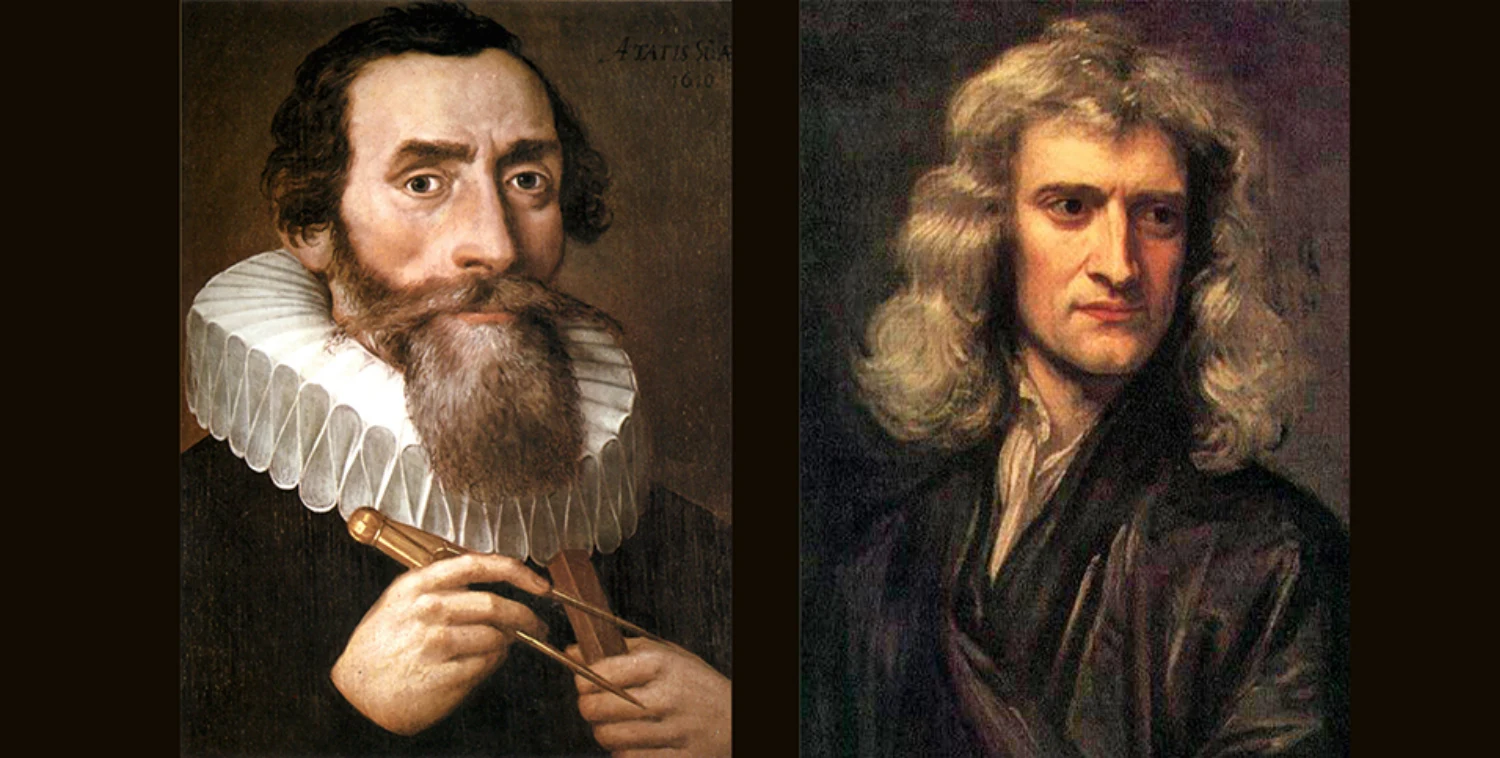
Johannes Kepler discovered three laws of planetary motion that all orbiting planets and moons follow. Years later, Isaac Newton found these laws useful in developing his law of universal gravitation. This law relates gravitational force to the masses of objects and the distance between them. Many years later still, Albert Einstein showed there was a little more to the gravitation story when he published his theory of general relativity.
ヨハネス・ケプラーは、惑星の運動を記述する3つの法則を発見した。後にアイザック・ニュートンは、それらを手掛かりの1つとして、万有引力の法則を築いた。この法則は、物体間に働く重力を、物体の質量と距離に結びつける。さらに後の時代に、アルベルト・アインシュタインは一般相対性理論を発表し、重力の理解をいっそう深めた。