第1章物理学とは何かWhat is Physics?原書 p.5–54
1.2 The Scientific Methods1.2 科学の方法
SECTION LEARNING OBJECTIVES By the end of this section, you will be able to do the following:
この節の学習目標 この節を終えると、次のことができるようになる。
• Explain how the methods of science are used to make scientific discoveries• Define a scientific model and describe examples of physical and mathematical models used in physics• Compare and contrast hypothesis, theory, and law
・科学の方法が、科学的発見を生むためにどう使われるかを説明する・科学的モデルを定義し、物理学で使われる物理的モデルと数学的モデルの例を述べる・仮説、理論、法則を比べ、その違いを述べる
Section Key Termsこの節の重要語
experimenthypothesismodelobservationprinciplescientific lawscientific methodstheoryuniversal
実験仮説モデル観察原理科学法則科学の方法理論普遍的
Scientific Methods科学の方法
Scientists often plan and carry out investigations to answer questions about the universe around us. These investigations may lead to natural laws. Such laws are intrinsic to the universe, meaning that humans did not create them and cannot change them. We can only discover and understand them. Their discovery is a very human endeavor, with all the elements of mystery, imagination, struggle, triumph, and disappointment inherent in any creative effort. The cornerstone of discovering natural laws is observation. Science must describe the universe as it is, not as we imagine or wish it to be.
科学者は、私たちを取り巻く宇宙についての問いに答えるため、しばしば調査を計画し実行する。こうした調査は自然法則へと導くことがある。自然法則は宇宙に本来そなわったものであり、人間が作ったのでも、変えられるものでもない。私たちにできるのは、それを発見し理解することだけである。その発見はきわめて人間的な営みであって、あらゆる創造的な仕事と同じく、謎、想像、苦闘、勝利、落胆のすべてを含んでいる。自然法則の発見の礎になるのは観察である。科学は、宇宙を私たちが想像したり願ったりする姿ではなく、あるがままに記述しなければならない。
We all are curious to some extent. We look around, make generalizations, and try to understand what we see. For example, we look up and wonder whether one type of cloud signals an oncoming storm. As we become serious about exploring nature, we become more organized and formal in collecting and analyzing data. We attempt greater precision, perform controlled experiments (if we can), and write down ideas about how data may be organized. We then formulate models, theories, and laws based on the data we have collected, and communicate those results with others. This, in a nutshell, describes the scientific method that scientists employ to decide scientific issues on the basis of evidence from observation and experiment.
私たちは誰でもある程度は好奇心を持っている。あたりを見回し、一般化し、見えたものを理解しようとする。たとえば空を見上げて、ある種類の雲は嵐の前触れなのだろうかと考える。自然を本気で調べようとすると、データの集め方や分析のしかたが、より組織立った形式ばったものになっていく。より高い精度を目指し、可能なら制御された実験を行い、データをどう整理できるかについての考えを書き留める。そして集めたデータをもとにモデル、理論、法則を組み立て、その結果を他の人に伝える。ひと言でいえばこれが、観察と実験による証拠にもとづいて科学上の問題を決着させるために科学者が使う、科学の方法である。
An investigation often begins with a scientist making an observation. The scientist observes a pattern or trend within the natural world. Observation may generate questions that the scientist wishes to answer. Next, the scientist may perform some research about the topic and devise a hypothesis. A hypothesis is a testable statement that describes how something in the natural world works. In essence, a hypothesis is an educated guess that explains something about an observation.
探究はしばしば、科学者が観察を行うところから始まる。科学者は自然界の中にある型や傾向に気づく。観察は、科学者が答えたいと思う問いを生む。次に科学者はその話題について少し調べ、仮説を考え出す。仮説とは、自然界の何かがどう働くのかを述べた、検証可能な言明である。要するに仮説とは、ある観察について何かを説明する、根拠のある推測である。
Scientists may test the hypothesis by performing an experiment. During an experiment, the scientist collects data that will help them learn about the phenomenon they are studying. Then the scientists analyze the results of the experiment (that is, the data), often using statistical, mathematical, and/or graphical methods. From the data analysis, they draw conclusions. They may conclude that their experiment either supports or rejects their hypothesis. If the hypothesis is supported, the scientist usually goes on to test another hypothesis related to the first. If their hypothesis is rejected, they will often then test a new and different hypothesis in their effort to learn more about whatever they are studying.
科学者は実験を行うことで仮説を検証することがある。実験の間、科学者は研究している現象について知る助けとなるデータを集める。そして実験の結果、すなわちデータを、統計的・数学的・図的な方法を使って分析することが多い。データの分析から結論を引き出す。実験は自分の仮説を支持した、あるいは棄却した、と結論することになる。仮説が支持されれば、科学者はふつう、それに関連する別の仮説の検証へ進む。仮説が棄却されれば、対象についてさらに知ろうとして、新しい別の仮説を検証することが多い。
Scientific processes can be applied to many situations. Let’s say that you try to turn on your car, but it will not start. You have just made an observation! You ask yourself, "Why won’t my car start?" You can now use scientific processes to answer this question. First, you generate a hypothesis such as, "The car won’t start because it has no gasoline in the gas tank." To test this hypothesis, you put gasoline in the car and try to start it again. If the car starts, then your hypothesis is supported by the experiment. If the car does not start, then your hypothesis is rejected. You will then need to think up a new hypothesis to test such as, "My car won’t start because the fuel pump is broken." Hopefully, your investigations lead you to discover why the car won’t start and enable you to fix it.
科学の手続きは、いろいろな場面に当てはめられる。たとえば車のエンジンをかけようとしたのに、かからなかったとしよう。あなたは今まさに観察をしたのだ。「なぜ車がかからないのか」と自問する。ここから科学の手続きを使ってこの問いに答えられる。まず「ガソリンタンクにガソリンがないから、車がかからない」といった仮説を立てる。この仮説を検証するために、ガソリンを入れてもう一度かけてみる。かかれば、仮説は実験によって支持されたことになる。かからなければ、仮説は棄却される。そこで「燃料ポンプが壊れているから、車がかからない」といった新しい仮説を立てて検証する必要が出てくる。うまくいけば、この調べのすえに、なぜ車がかからないのかを突き止め、直すことができる。
Modelingモデルを作る
A model is a representation of something that is often too difficult (or impossible) to study directly. Models can take the form of physical models, equations, computer programs, or simulations—computer graphics/animations. Models are tools that are especially useful in modern physics because they let us visualize phenomena that we normally cannot observe with our senses, such as very small objects or objects that move at high speeds. For example, we can understand the structure of an atom using models, without seeing an atom with our own eyes. Although images of single atoms are now possible, these images are extremely difficult to achieve and are only possible due to the success of our models. The existence of these images is a consequence rather than a source of our understanding of atoms. Models are always approximate, so they are simpler to consider than the real situation; the more complete a model is, the more complicated it must be. Models put the intangible or the extremely complex into human terms that we can visualize, discuss, and hypothesize about.
モデルとは、直接に調べるのが難しすぎる(あるいは不可能な)ものを表したものである。モデルは、実物のモデル、方程式、コンピュータプログラム、シミュレーション(コンピュータグラフィックスやアニメーション)といった形をとりうる。モデルは現代物理学でとりわけ役に立つ道具である。というのも、きわめて小さいものや高速で動くものなど、ふつうは感覚で観察できない現象を、モデルは目に見える形にしてくれるからだ。たとえば、自分の目で原子を見なくても、モデルを使えば原子の構造を理解できる。今では原子1個の画像も撮れるようになったが、その画像を得るのは極度に難しく、しかも私たちのモデルが成功していたからこそ可能になったものである。こうした画像の存在は、原子についての理解の源ではなく、その結果なのだ。モデルはつねに近似であり、だからこそ実際の状況より考えやすい。モデルは完全に近づくほど、複雑にならざるをえない。モデルは、手に触れられないものや極度に複雑なものを、私たちが思い描き、論じ、仮説を立てられる人間の言葉に置き換えてくれる。
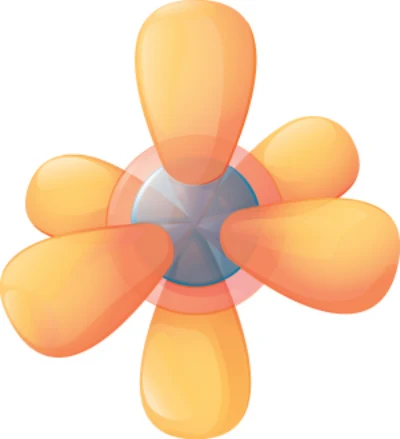
Scientific models are constructed based on the results of previous experiments. Even still, models often only describe a phenomenon partially or in a few limited situations. Some phenomena are so complex that they may be impossible to model them in their entirety, even using computers. An example is the electron cloud model of the atom in which electrons are moving around the atom’s center in distinct clouds (Figure 1.12), that represent the likelihood of finding an electron in different places. This model helps us to visualize the structure of an atom.However, it does not show us exactly where an electron will be within its cloud at any one particular time.
科学的なモデルは、それまでの実験結果にもとづいて組み立てられる。それでもなおモデルは、現象を部分的にしか、あるいはごく限られた状況でしか記述できないことが多い。あまりに複雑で、コンピュータを使ってさえ全体をモデル化するのが不可能な現象もある。一例が原子の電子雲モデルで、電子が原子の中心のまわりをはっきりした雲のかたちで動いているとする(図1.12)。この雲は、電子がどこで見つかりやすいかを表している。このモデルは原子の構造を思い描く助けになる。しかし、ある特定の時刻に電子が雲の中のどこにいるかを正確に示してくれるわけではない。
As mentioned previously, physicists use a variety of models including equations, physical models, computer simulations, etc. For example, three-dimensional models are often commonly used in chemistry and physics to model molecules. Properties other than appearance or location are usually modelled using mathematics, where functions are used to show how these properties relate to one another. Processes such as the formation of a star or the planets, can also be modelled using computer simulations. Once a simulation is correctly programmed based on actual experimental data, the simulation can allow us to view processes that happened in the past or happen too quickly or slowly for us to observe directly. In addition, scientists can also run virtual experiments using computer-based models. In a model of planet formation, for example, the scientist could alter the amount or type of rocks present in space and see how it affects planet formation.
先に述べたとおり、物理学者は方程式、実物のモデル、コンピュータシミュレーションなど、さまざまなモデルを使う。たとえば化学や物理では、分子を表すのに三次元モデルがよく使われる。見た目や位置以外の性質は、たいてい数学を使ってモデル化され、関数によって性質どうしの関係が示される。恒星や惑星の形成のような過程も、コンピュータシミュレーションでモデル化できる。実際の実験データにもとづいて正しくプログラムされていれば、シミュレーションは、過去に起きた過程や、直接観察するには速すぎたり遅すぎたりする過程を見せてくれる。さらに科学者は、コンピュータ上のモデルを使って仮想の実験を走らせることもできる。たとえば惑星形成のモデルなら、宇宙空間にある岩石の量や種類を変えて、それが惑星形成にどう影響するかを見ることができる。
Scientists use models and experimental results to construct explanations of observations or design solutions to problems. For example, one way to make a car more fuel efficient is to reduce the friction or drag caused by air flowing around the moving car. This can be done by designing the body shape of the car to be more aerodynamic, such as by using rounded corners instead of sharp ones. Engineers can then construct physical models of the car body, place them in a wind tunnel, and examine the flow of air around the model. This can also be done mathematically in a computer simulation. The air flow pattern can be analyzed for regions smooth air flow and for eddies that indicate drag. The model of the car body may have to be altered slightly to produce the smoothest pattern of air flow (i.e., the least drag). The pattern with the least drag may be the solution to increasing fuel efficiency of the car. This solution might then be incorporated into the car design.
科学者は、観察を説明したり問題の解決策を設計したりするために、モデルと実験結果を使う。たとえば車の燃費をよくする方法の一つは、走る車のまわりを流れる空気が生む摩擦、すなわち抗力を減らすことである。これは、角を尖らせず丸めるなど、車体の形をより空力的に設計することで実現できる。技術者は車体のモデルを作って風洞に入れ、モデルのまわりの空気の流れを調べることができる。同じことをコンピュータシミュレーションの中で数学的に行うこともできる。空気の流れの型は、なめらかに流れている領域と、抗力を示す渦の領域とに分けて分析できる。最もなめらかな流れ(すなわち抗力が最小の流れ)を得るには、車体のモデルを少し変える必要が出てくるかもしれない。抗力が最小になる型が、車の燃費を上げる解決策なのかもしれない。そしてこの解決策が、実際の車の設計に取り入れられる。
SNAP LAB身近な実験Using Models and the Scientific Processesモデルと科学の手続きを使う
Be sure to secure loose items before opening the window or door.
窓や戸を開ける前に、飛びそうなものは固定しておくこと。
In this activity, you will learn about scientific models by making a model of how air flows through your classroom or a room in your house.
この活動では、教室や自宅の部屋の中を空気がどう流れるかのモデルを作ることで、科学的モデルについて学ぶ。
• One room with at least one window or door that can be opened• Piece of single-ply tissue paper1. Work with a group of four, as directed by your teacher. Close all of the windows and doors in the room you are working in. Your teacher may assign you a specific window or door to study.2. Before opening any windows or doors, draw a to-scale diagram of your room. First, measure the length and width of your room using the tape measure. Then, transform the measurement using a scale that could fit on your paper, such as 5 centimeters = 1 meter.3. Your teacher will assign you a specific window or door to study air flow. On your diagram, add arrows showing your hypothesis (before opening any windows or doors) of how air will flow through the room when your assigned window or door is opened. Use pencil so that you can easily make changes to your diagram.
・窓か戸が少なくとも一つあり、開けられる部屋・一枚重ねのティッシュペーパー1. 先生の指示に従い、4人一組で取り組む。作業する部屋の窓と戸をすべて閉める。先生が、調べる窓または戸を指定するかもしれない。2. まだ窓も戸も開けないうちに、部屋の縮尺図を描く。まず巻き尺で部屋の縦と横を測る。次に、たとえば5センチメートル=1メートルのように、紙に収まる縮尺に直す。3. 先生が、空気の流れを調べる窓または戸を指定する。指定された窓または戸を開けたとき、部屋の中を空気がどう流れるか、その予想(仮説)を矢印で図に描き込む。あとで直しやすいように鉛筆を使うこと。
4. On your diagram, mark four locations where you would like to test air flow in your room. To test for airflow, hold a strip of single ply tissue paper between the thumb and index finger. Note the direction that the paper moves when exposed to the airflow. Then, for each location, predict which way the paper will move if your air flow diagram is correct.5. Now, each member of your group will stand in one of the four selected areas. Each member will test the airflow Agree upon an approximate height at which everyone will hold their papers.6. When you teacher tells you to, open your assigned window and/or door. Each person should note the direction that their paper points immediately after the window or door was opened. Record your results on your diagram.7. Did the airflow test data support or refute the hypothetical model of air flow shown in your diagram? Why or why not? Correct your model based on your experimental evidence.8. With your group, discuss how accurate your model is. What limitations did it have? Write down the limitations that your group agreed upon.
4. 部屋の中で空気の流れを調べたい場所を4か所、図に印を付ける。空気の流れを調べるには、一枚重ねのティッシュペーパーの細片を親指と人差し指でつまんで持つ。気流にさらされたとき紙が動く向きに注目する。そのうえで各場所について、自分の気流図が正しいなら紙がどちらに動くはずかを予想する。5. 次に、班の各員が選んだ4か所のいずれかに立つ。各員が気流を調べる。紙を持つ高さは全員でだいたい揃えておく。6. 先生の合図で、指定された窓か戸を開ける。開けた直後に自分の紙がどちらを向いたかを各自が記録する。結果を図に書き込む。7. 気流の測定データは、図に描いた気流のモデル(仮説)を支持したか、反証したか。それはなぜか。実験で得た証拠にもとづいてモデルを修正する。8. 班の中で、自分たちのモデルがどれくらい正確かを話し合う。どんな限界があったか。班で合意した限界を書き留める。
Your diagram is a model, based on experimental evidence, of how air flows through the room. Could you use your model to predict how air would flow through a new window or door placed in a different location in the classroom? Make a new diagram that predicts the room’s airflow with the addition of a new window or door. Add a short explanation that describes how.
あなたの図は、実験による証拠にもとづいた、部屋の中の空気の流れのモデルである。このモデルを使って、教室の別の場所に新しく窓や戸を設けたら空気がどう流れるかを予測できるだろうか。新しい窓か戸を加えたときの部屋の気流を予測する図を、新たに描いてみよう。どうしてそうなるかの短い説明も添えること。
a. Yes, you could use your model to predict air flow through a new window. The earlier experiment of air flow would help you model the system more accurately.b. Yes, you could use your model to predict air flow through a new window. The earlier experiment of air flow is not useful for modeling the new system.c. No, you cannot model a system to predict the air flow through a new window. The earlier experiment of air flow would help you model the system more accurately.d. No, you cannot model a system to predict the air flow through a new window. The earlier experiment of air flow is not useful for modeling the new system.
a. できる。新しい窓を通る気流をモデルで予測できる。先の気流の実験は、この系をより正確にモデル化するのに役立つ。b. できる。新しい窓を通る気流をモデルで予測できる。ただし先の気流の実験は、新しい系のモデル化には役立たない。c. できない。新しい窓を通る気流を予測するために系をモデル化することはできない。ただし先の気流の実験は、この系をより正確にモデル化するのに役立つ。d. できない。新しい窓を通る気流を予測するために系をモデル化することはできず、先の気流の実験も新しい系のモデル化には役立たない。
Scientific Laws and Theories科学法則と科学理論
A scientific law is a description of a pattern in nature that is true in all circumstances that have been studied. That is, physical laws are meant to be universal, meaning that they apply throughout the known universe. Laws are often also concise, whereas theories are more complicated. A law can be expressed in the form of a single sentence or mathematical equation. For example, Newton’s second law of motion, which relates the motion of an object to the force applied (F), the mass of the object (m), and the object’s acceleration (a), is simply stated using the equation
科学法則とは、これまで調べられたすべての状況で成り立つ、自然の中の型についての記述である。すなわち物理法則は普遍的であることを目指しており、既知の宇宙のどこでも当てはまる。法則はまた簡潔であることが多く、理論のほうがより込み入っている。法則は一つの文、あるいは一つの数式で言い表せる。たとえばニュートンの運動の第二法則は、物体の運動を、加えられた力(F)、物体の質量(m)、物体の加速度(a)と結びつけるもので、次の式で簡潔に表される。
Scientific ideas and explanations that are true in many, but not all situations in the universe are usually called principles. An example is Pascal’s principle, which explains properties of liquids, but not solids or gases. However, the distinction between laws and principles is sometimes not carefully made in science.
宇宙の多くの、しかしすべてではない状況で成り立つ科学的な考えや説明は、ふつう原理と呼ばれる。一例がパスカルの原理で、これは液体の性質を説明するが、固体や気体には当てはまらない。もっとも、法則と原理の区別は、科学の中でいつも注意深くなされているわけではない。
A theory is an explanation for patterns in nature that is supported by much scientific evidence and verified multiple times by multiple researchers. While many people confuse theories with educated guesses or hypotheses, theories have withstood more rigorous testing and verification than hypotheses.
理論とは、自然の中の型についての説明であって、多くの科学的証拠に支えられ、複数の研究者によって何度も検証されたものである。多くの人は理論を、根拠のある推測や仮説と取り違えるが、理論は仮説よりはるかに厳しい検証と確認をくぐり抜けている。
As a closing idea about scientific processes, we want to point out that scientific laws and theories, even those that have been supported by experiments for centuries, can still be changed by new discoveries. This is especially true when new technologies emerge that allow us to observe things that were formerly unobservable. Imagine how viewing previously invisible objects with a microscope or viewing Earth for the first time from space may have instantly changed our scientific theories and laws! What discoveries still await us in the future? The constant retesting and perfecting of our scientific laws and theories allows our knowledge of nature to progress. For this reason, many scientists are reluctant to say that their studies prove anything. By saying support instead of prove, it keeps the door open for future discoveries, even if they won’t occur for centuries or even millennia.
科学の手続きについて最後に一つ指摘しておきたい。科学法則も科学理論も、何世紀にもわたって実験に支えられてきたものでさえ、新しい発見によって変わりうる。とりわけ、それまで観察できなかったものを観察させてくれる新しい技術が現れたときにそうなる。それまで見えなかったものを顕微鏡で覗いたとき、あるいは宇宙から初めて地球を眺めたとき、私たちの科学理論と法則がどれほど一変したかを想像してほしい。この先どんな発見が私たちを待っているだろうか。科学法則と科学理論をたえず検証し直し、磨き上げていくことが、自然についての知識を前へ進めている。だからこそ多くの科学者は、自分の研究が何かを「証明した」と言うのをためらう。「証明する」ではなく「支持する」と言うことで、たとえ何世紀、何千年先になろうとも、将来の発見に扉を開いたままにしておけるのである。
Check Your Understanding理解の確認
6Explain why scientists sometimes use a model rather than trying to analyze the behavior of the real system.
6実際の系の振る舞いをそのまま分析しようとせず、科学者がモデルを使うことがあるのはなぜか、説明せよ。
a. Models are simpler to analyze.b. Models give more accurate results.
a. モデルのほうが分析しやすいから。b. モデルのほうが正確な結果を与えるから。
c. Models provide more reliable predictions.d. Models do not require any computer calculations.
c. モデルのほうが信頼できる予測を与えるから。d. モデルならコンピュータ計算が一切いらないから。
7Describe the difference between a question, generated through observation, and a hypothesis.a. They are the same.b. A hypothesis has been thoroughly tested and found to be true.
7観察から生まれる問いと、仮説との違いを述べよ。a. 同じものである。b. 仮説は徹底的に検証され、正しいと確かめられたものである。
c. A hypothesis is a tentative assumption based on what is already known.d. A hypothesis is a broad explanation firmly supported by evidence.
c. 仮説は、すでに分かっていることにもとづく暫定的な想定である。d. 仮説は、証拠にしっかり支えられた広範な説明である。
8What is a scientific model and how is it useful?a. A scientific model is a representation of something that can be easily studied directly. It is useful for studying things that can be easily analyzed by humans.b. A scientific model is a representation of something that is often too difficult to study directly. It is useful for studying a complex system or systems that humans cannot observe directly.c. A scientific model is a representation of scientific equipment. It is useful for studying working principles of scientific equipment.d. A scientific model is a representation of a laboratory where experiments are performed. It is useful for studying requirements needed inside the laboratory.
8科学的モデルとは何か。またそれはどう役に立つのか。a. 科学的モデルとは、直接に調べるのが容易なものを表したものである。人間が簡単に分析できるものを研究するのに役立つ。b. 科学的モデルとは、直接に調べるのが難しすぎることが多いものを表したものである。複雑な系や、人間が直接に観察できない系を研究するのに役立つ。c. 科学的モデルとは、実験装置を表したものである。実験装置の動作原理を研究するのに役立つ。d. 科学的モデルとは、実験を行う実験室を表したものである。実験室の中に必要な設備を検討するのに役立つ。
9Which of the following statements is correct about the hypothesis?a. The hypothesis must be validated by scientific experiments.b. The hypothesis must not include any physical quantity.
9仮説について正しい記述は次のうちどれか。a. 仮説は科学的な実験によって検証されなければならない。b. 仮説は物理量を含んでいてはならない。
c. The hypothesis must be a short and concise statement.d. The hypothesis must apply to all the situations in the universe.
c. 仮説は短く簡潔な言明でなければならない。d. 仮説は宇宙のあらゆる状況に当てはまらなければならない。
10What is a scientific theory?a. A scientific theory is an explanation of natural phenomena that is supported by evidence.b. A scientific theory is an explanation of natural phenomena without the support of evidence.c. A scientific theory is an educated guess about the natural phenomena occurring in nature.d. A scientific theory is an uneducated guess about natural phenomena occurring in nature.
10科学理論とは何か。a. 科学理論とは、証拠に支えられた自然現象の説明である。b. 科学理論とは、証拠の裏付けのない自然現象の説明である。c. 科学理論とは、自然に起きている現象についての、根拠のある推測である。d. 科学理論とは、自然に起きている現象についての、根拠のない当て推量である。
11Compare and contrast a hypothesis and a scientific theory.a. A hypothesis is an explanation of the natural world with experimental support, while a scientific theory is an educated guess about a natural phenomenon.b. A hypothesis is an educated guess about natural phenomenon, while a scientific theory is an explanation of natural world with experimental support.c. A hypothesis is experimental evidence of a natural phenomenon, while a scientific theory is an explanation of the natural world with experimental support.d. A hypothesis is an explanation of the natural world with experimental support, while a scientific theory is experimental evidence of a natural phenomenon.
11仮説と科学理論を比べ、その違いを述べよ。a. 仮説は実験的裏付けのある自然界の説明であり、科学理論は自然現象についての根拠ある推測である。b. 仮説は自然現象についての根拠ある推測であり、科学理論は実験的裏付けのある自然界の説明である。c. 仮説は自然現象の実験的証拠であり、科学理論は実験的裏付けのある自然界の説明である。d. 仮説は実験的裏付けのある自然界の説明であり、科学理論は自然現象の実験的証拠である。