第8章データ管理
Cognitive Analytics and Artificial Intelligence認知分析と人工知能
The technology that tries to simulate a human’s way of solving problems (e.g., Siri and Alexa) is called cognitive computing. Artificial intelligence (AI) is a system that creates intelligent ways to solve problems that previously required human interaction.
英語のヒント
人間の問題解決の仕方を模倣しようとする技術(SiriやAlexaなど)を、コグニティブコンピューティングという。人工知能(AI)は、それまで人間の関与が必要だった問題を解決する、知的な方法を作るシステムである。
Cognitive Computingコグニティブコンピューティング
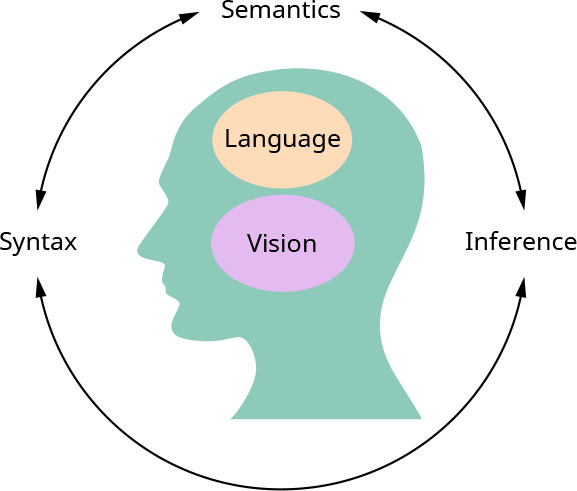
Three components must interact to achieve AI (Figure 8.28): syntax (structure), semantics (meaning), and inference (reasoning/planning). Human intelligence requires that these three components rely on some form of data management and relate to deep learning of other brain functions such as restricted Boltzmann machines, stacked autoencoder, and deep belief networks. Restricted Boltzmann machines are artificial networks that can learn a probability distribution using a set of input. Stacked autoencoder is an artificial network used to learn unlabeled data through efficient coding. Deep belief networks are intelligent networks used to invent a solution for a specific problem when the traditional intelligent network could not solve it.
英語のヒント
AIを実現するには、構文(構造)、意味論(意味)、推論(推論・計画)の3つの構成要素が相互作用しなければならない(図8.28)。人間の知能では、この3つの構成要素が何らかのデータ管理に依存し、制限ボルツマンマシン、積層オートエンコーダー、ディープビリーフネットワークなど、ほかの脳機能の深層学習と関係する必要がある。制限ボルツマンマシンは、入力の集合を使って確率分布を学習できる人工ネットワークである。積層オートエンコーダーは、効率的な符号化を通じ、ラベルのないデータを学習するために使う人工ネットワークである。ディープビリーフネットワークは、従来の知的ネットワークでは解けなかった特定の問題について、解決策を考え出すために使う知的ネットワークである。
attribution: Copyright Rice University, OpenStax, under CC BY 4.0 license · CC BY 4.0 · Source出典
Figure 8.28 Components of artificial intelligence include syntax, semantics, and inference. (attribution: Copyright Rice University, OpenStax, under CC BY 4.0 license)
図8.28 人工知能の構成要素には、構文、意味論、推論がある。(出典表記:著作権者 Rice University、OpenStax、CC BY 4.0ライセンス)
Sample AI ApplicationsAIの応用例
Amazon provides various ML services. They allow developers to integrate Cloud ML into mobile and other applications. Amazon Lex allows users to incorporate voice input into applications (extension of Amazon’s Echo product) so that users can ask questions about everything from the weather to news and streaming music. Amazon Polly is the opposite of Lex; Polly turns text into speech in 27 languages. Amazon Rekognition, which is at the cutting edge of deep learning applications, takes an image as input and returns a textual description of the items that it sees in that image by performing detailed facial analysis and comparisons.
英語のヒント
Amazonは、多様なMLサービスを提供している。開発者は、それらを使って、クラウドのMLをモバイルなどのアプリケーションへ統合できる。Amazon Lexは、音声入力をアプリケーションに組み込めるようにする(AmazonのEcho製品の拡張)。これにより、利用者は、天気からニュース、ストリーミング音楽まで、さまざまなことについて質問できる。Amazon PollyはLexとは逆で、テキストを27言語の音声へ変換する。深層学習の応用の最先端にあるAmazon Rekognitionは、画像を入力として受け取り、詳しい顔分析と比較を行って、画像内に見つけたものを説明するテキストを返す。
Reinforcement and Transfer Learning強化学習と転移学習
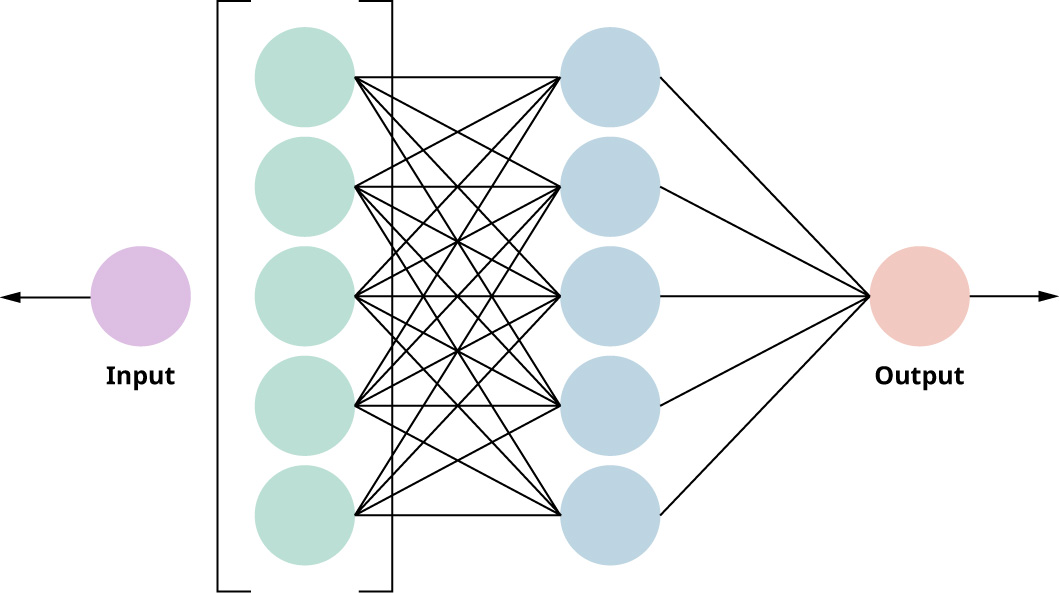
The machine learning method based on encouraging desired behaviors and removing undesired behaviors is called reinforcement. The machine learning method based on reusing the result of a specific task to start a new task is called transfer learning. A deep learning network is a type of machine learning method based on artificial neural networks (Figure 8.29). Artificial neural networks simulate the network of neurons to make a computer learn and make decisions like the human brain does (e.g., recurrent neural networks or RNNs, which are an artificial neural network, uses time series data). There are various classes of deep learning networks such as:
英語のヒント
望ましい行動を促し、望ましくない行動を取り除くことに基づく機械学習の方法を、強化という。特定の課題の結果を再利用して、新しい課題を始めることに基づく機械学習の方法を、転移学習という。深層学習ネットワークは、人工ニューラルネットワークに基づく機械学習の方法の一種である(図8.29)。人工ニューラルネットワークは、ニューロンのネットワークを模倣し、コンピューターが人間の脳と同じように学習し、判断できるようにする(たとえば、人工ニューラルネットワークである再帰型ニューラルネットワーク、すなわちRNNは、時系列データを使う)。深層学習ネットワークには、次のようなさまざまな分類がある。
• Cloud-based deep learning frameworks such as Microsoft Cognitive Toolkit, which is an open-source toolkit for commercial-grade distributed deep learning
英語のヒント
• Microsoft Cognitive Toolkitのような、クラウドを基盤とする深層学習フレームワーク。これは、商用水準の分散深層学習に使う、オープンソースのツールキットである。
• Google TensorFlow system applications for neural network computing and deep learning such as handwritten digit recognition and cognitive services
英語のヒント
• 手書き数字の認識や認知サービスなど、ニューラルネットワーク計算と深層学習に使う、Google TensorFlowシステムのアプリケーション。
• Predictive software libraries for cognitive applications such as Keras, which is an open-source software library that provides a Python interface for artificial neural networks
• Kerasのような、認知アプリケーション向けの予測ソフトウェアライブラリ。Kerasは、人工ニューラルネットワークのためのPythonインターフェースを提供する、オープンソースのソフトウェアライブラリである。
credit: modification of "NeuralNetwork" by Loxaxs/Wikimedia Commons, CC0 · CC0 · Source出典
Figure 8.29 The deep learning process uses artificial neural networks. (credit: modification of "NeuralNetwork" by Loxaxs/Wikimedia Commons, CC0)
図8.29 深層学習の過程では、人工ニューラルネットワークを使う。(クレジット:Loxaxs/Wikimedia Commonsによる「NeuralNetwork」を改変、CC0)
Cognitive Analytics Frameworks for Deep Machine Learning深層機械学習のための認知分析フレームワーク
In this section, we introduce examples of Cognitive analytics frameworks for deep machine learning applications such as Spark MLlib, Amazon Machine Learning Platform and MXNet, Google TensorFlow, Azure Machine Learning Platform, and Microsoft Cognitive Toolkit.
この節では、深層機械学習のアプリケーション向けの認知分析フレームワークの例として、Spark MLlib、Amazon Machine Learning PlatformとMXNet、Google TensorFlow、Azure Machine Learning Platform、Microsoft Cognitive Toolkitを紹介する。
Spark MLlibSpark MLlib
Spark ML includes a High-level API (Spark Machine Learning Library of MLlib) for creating ML pipelines. Data can be fed into data frames, and the library enables the quick creation of a machine learning processing pipeline by combining transformers and estimators.
英語のヒント
Spark MLには、MLのパイプラインを作るための高水準API(Spark Machine Learning Library of MLlib)が含まれる。データをデータフレームへ渡すことができ、このライブラリでは、変換器と推定器を組み合わせることで、機械学習の処理パイプラインを迅速に作れる。
MXNetMXNet
MXNet is an open-source library for distributed parallel machine learning that was developed at Carnegie Mellon University, the University of Washington, and Stanford University. MXNet can be programmed with Python, Julia, R, Go, Matlab, or C++ and runs on many different platforms including clusters and GPUs; it is also now the deep learning framework of choice for Amazon.
英語のヒント
MXNetは、カーネギーメロン大学、ワシントン大学、スタンフォード大学で開発された、分散並列機械学習のためのオープンソースライブラリである。MXNetでは、Python、Julia、R、Go、Matlab、C++でプログラムでき、クラスタやGPUを含む多様な基盤で動作する。現在は、Amazonが選ぶ深層学習フレームワークでもある。
Google TensorFlowGoogle TensorFlow
Google’s TensorFlow is a frequently discussed and used deep learning toolkit; if you have installed the Amazon Deep Learning AMI, you already have TensorFlow installed, and you can begin experimenting right away.
英語のヒント
GoogleのTensorFlowは、よく話題に上り、広く使われる深層学習ツールキットである。Amazon Deep Learning AMIをインストール済みなら、TensorFlowもすでにインストールされており、すぐに実験を始められる。
Azure Machine Learning Platform and Microsoft Cognitive ToolkitAzure Machine Learning PlatformとMicrosoft Cognitive Toolkit
The Microsoft Cognitive Toolkit software is available for download in a variety of formats so that deep learning examples can be run on Azure as clusters of Docker containers (i.e., multiple nodes joined using a special configuration).
英語のヒント
Microsoft Cognitive Toolkitのソフトウェアは、さまざまな形式でダウンロードできる。そのため、深層学習の例を、Dockerコンテナーのクラスタ(特別な構成で接続した複数のノード)として、Azure上で実行できる。