第8章データ管理
Data Governance and Complianceデータガバナンスとコンプライアンス
The set of clear roles, policies, and responsibilities that enables a business to manage and safeguard data quality using internally set rules and policies is called data governance. The related concept that ensures that data practices align with external legal requirements and industry standards is called data compliance. For example, the UK-GDPR (General Data Protection Regulation) is the United Kingdom’s data security regulation, modeled after the EU-GDPR that governs and regulates how UK organizations and businesses collect, store, use, and process personal data.
英語のヒント
企業が内部で定めた規則や方針を使い、データ品質を管理し、守れるようにする、明確な役割・方針・責任の集合を、データガバナンスという。これに関連し、データの取り扱いが、外部の法的要件や業界標準に沿っていることを確保する考え方を、データコンプライアンスという。たとえば、UK-GDPR(一般データ保護規則)は、EU-GDPRをモデルにした英国のデータセキュリティー規則であり、英国の組織や企業が個人データをどのように収集、保存、利用、処理するかを管理し、規制する。
Using data governance, data are managed as an asset rather than a liability. Data governance has three dimensions: technology, people, and process. It should include standard roles for quality, security, and ownership.
英語のヒント
データガバナンスを使うと、データを負担ではなく資産として管理する。データガバナンスには、技術、人、手順という三つの次元がある。品質、セキュリティー、所有権に関する標準的な役割を含めるべきである。
In planning for data governance, we should answer four questions: what, how, why, and who. What policies should we include? How do we integrate the policies with the enterprise business process? Why do we need this policy? Who will be part of this policy?
英語のヒント
データガバナンスの計画では、「何を」「どのように」「なぜ」「誰が」という四つの問いに答えるべきである。どの方針を含めるべきか。その方針を、企業の業務手順へどう組み込むか。なぜその方針が必要なのか。誰がその方針に関わるのか。
Different frameworks have been introduced for data quality management and data quality improvement: Total Data Quality Management (TDQM), Total Quality Management (TQM), Capability Maturity Model Integration (CMMI), ISO 9000, Control Objectives for Information and Related Technology (COBIT), Data Management Body of Knowledge (DMBOK), Information Technology Infrastructure Library (ITIL), and Six Sigma. These frameworks provide guidelines for organizations that define how a product or process should be based on high-quality standards. The main issue in these frameworks is that they may cause failure when the system is not considering all of the processes in a correct flow.
英語のヒント
データ品質の管理と向上のために、さまざまな枠組みが導入されている。総合的データ品質管理(TDQM)、総合的品質管理(TQM)、能力成熟度モデル統合(CMMI)、ISO 9000、情報および関連技術の統制目標(COBIT)、データマネジメント知識体系(DMBOK)、情報技術インフラストラクチャーライブラリー(ITIL)、シックスシグマである。これらの枠組みは、高い品質基準に基づいて製品や手順をどうあるべきものにするかを定める、組織向けの指針を提供する。これらにおける主な問題は、システムがすべての手順を正しい流れとして考慮していないと、失敗を引き起こす可能性があることである。
It is possible to annotate the data with data quality metadata as a short-term solution. Unfortunately, many data governance efforts (if any) are mostly reactive and ad hoc.
英語のヒント
短期的な対策として、データに品質に関するメタデータを付記することはできる。残念ながら、データガバナンスの取り組みは、仮にあったとしても、その多くが、問題が起きてからの、場当たり的な対応にとどまっている。
GLOBAL ISSUES IN TECHNOLOGY技術をめぐる世界的な問題
Hacked!ハッキングされた!
Chegg is an educational technology company based in California. It offers various online services such as textbook rentals, tutoring, homework assistance, and more to students around the country. In April 2018, an unauthorized party gained access to Chegg’s database. This database hosted user information for both Chegg and its affiliated companies (e.g., EasyBib). The hacked information included names, emails, passwords, and addresses, but did not include any financial information or social security numbers. After discovering the breach, Chegg implemented plans to notify the 40 million affected users. The motivation for the attack is still unclear, but it is likely that a third party sought information to profit from identity theft.
英語のヒント
Cheggは、カリフォルニアに拠点を置く教育技術企業である。全国の学生に、教科書のレンタル、個別指導、宿題の支援など、さまざまなオンラインサービスを提供している。2018年4月、権限のない者がCheggのデータベースに侵入した。このデータベースには、Cheggと、その関連会社(EasyBibなど)の利用者情報が保存されていた。侵害された情報には、名前、メールアドレス、パスワード、住所が含まれていたが、金融情報や社会保障番号は含まれていなかった。侵害を発見した後、Cheggは、影響を受けた4,000万人の利用者へ通知する計画を実行した。攻撃の動機は、依然として不明である。しかし、第三者が、個人情報を盗用して利益を得るために、情報を探していた可能性が高い。
What are some things that Chegg users can do to protect themselves from this hack and future breaches of personal information?
この侵入や、今後の個人情報の漏えいから自分を守るために、Cheggの利用者ができることには、どのようなものがあるか。
Data Management Rolesデータ管理の役割
Within any organization, there are various data management roles including information architect, database designer, data owner, data steward, database administrator, computer scientist, and data scientist. Their roles are outlined in the following sections.
英語のヒント
どの組織にも、情報アーキテクト、データベース設計者、データ所有者、データスチュワード、データベース管理者、コンピューターサイエンティスト、データサイエンティストなど、さまざまなデータ管理の役割がある。以下で、それぞれの役割の概要を示す。
Information Architect情報アーキテクト
An information architect, also known as a data architect or information analyst, is responsible for designing the conceptual data model (blueprints) to bridge the gap between the business processes and the IT environment.
英語のヒント
情報アーキテクトは、データアーキテクトや情報アナリストとも呼ばれ、業務手順とIT環境の隔たりを埋めるために、概念データモデル(設計図)を設計する責任を負う。
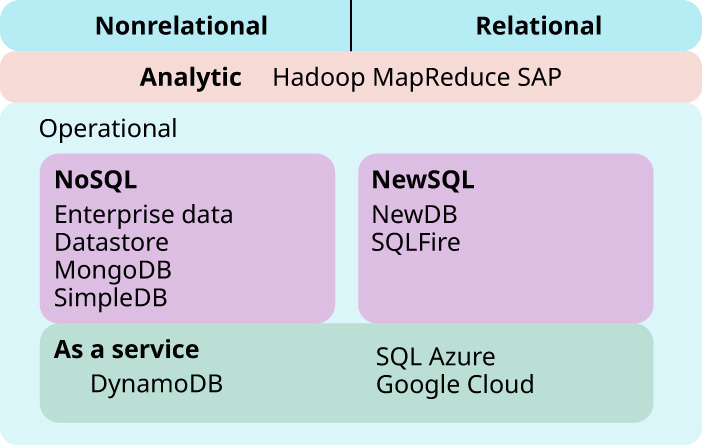
The information architect collaborates with the database designer who may assist in choosing the type of conceptual data model (e.g., EER or UML) and the database modeling tool. Figure 8.5 shows an example of different database systems that various personnel working in data management may encounter.
英語のヒント
情報アーキテクトは、データベース設計者と協力する。設計者は、概念データモデルの種類(EERやUMLなど)と、データベースのモデル化の道具を選ぶ際に、支援することがある。図8.5は、データ管理に従事するさまざまな担当者が、扱うことになるデータベースシステムの例を示している。
attribution: Copyright Rice University, OpenStax, under CC BY 4.0 license · CC BY 4.0 · Source出典
Figure 8.5 Existing database systems can be categorized as nonrelational and relational. (attribution: Copyright Rice University, OpenStax, under CC BY 4.0 license)
図8.5 既存のデータベースシステムは、非関係型と関係型に分類できる。(出典:著作権 Rice University、OpenStax、CC BY 4.0ライセンス)
Database Designerデータベース設計者
A database designer is responsible for creating, implementing, and maintaining the database management system. Other responsibilities include translating the conceptual data model into a logical and internal data model, assisting the application developers in defining the views of the external data model, and defining company-wide uniform naming conventions when creating the various data models.
英語のヒント
データベース設計者は、データベース管理システムの作成・実装・保守を担当する。ほかにも、概念データモデルを論理データモデルと内部データモデルへ変換すること、アプリケーション開発者が外部データモデルのビューを定義するのを支援すること、さまざまなデータモデルを作る際に、全社で統一した命名規約を定めることが含まれる。
Data Ownerデータ所有者
The data owner has the authority to ultimately decide on the access to, and usage of, the data. The data owner could be the original producer of the data, or the data could originate from a third party. A person who assumes the role of a data owner should be able to insert, edit, delete, or update data as well as check or populate the value of a field. The data owner is the one responsible for checking the quality of one or more datasets.
英語のヒント
データ所有者は、データへのアクセスと利用について、最終的に決定する権限を持つ。所有者が、もともとそのデータを作った者である場合もあれば、データが第三者から来る場合もある。データ所有者の役割を引き受ける人は、データの挿入・編集・削除・更新に加え、フィールドの値を確認したり、埋めたりできるべきである。データ所有者は、一つ以上のデータセットの品質を確認する責任を負う。