第8章データ管理
Database Systems and Database Managementデータベースシステムとデータベース管理
There are many advantages to using a DBMS such as controlling redundancy in data storage. When the same piece of data is held in two separate places in the database, data redundancy can occur. DBMS improves development and maintenance efforts, sharing of data among multiple users, and restricting unauthorized access to data. For example, only the DBA staff uses privileged commands and facilities providing persistent storage for program objects (e.g., object-oriented DBMSs make program objects persistent), providing storage structures (e.g., indexes) for efficient query processing. Additionally, a DBMS provides data independence, which helps the user to easily make changes to the database.
英語のヒント
DBMSを使う利点は多く、データ格納の冗長性を抑えることなどがある。同じデータがデータベース内の別々の二か所にあると、データの冗長性が生じうる。DBMSは、開発と保守の作業、複数利用者でのデータ共有、不正なデータアクセスの制限を改善する。たとえばDBAの担当者だけが、特権付きのコマンドや機能を使う。これらは、プログラムのオブジェクトを永続的に保存したり、効率的な問い合わせ処理のために、索引などの格納構造を提供したりする。たとえばオブジェクト指向DBMSは、プログラムのオブジェクトを永続化する。さらにDBMSは、利用者がデータベースを容易に変更できるようにする、データ独立性を提供する。
There are two types of data independence. The first, physical data independence, separates the conceptual level from the physical level (e.g., using a new storage device such as a hard drive); the second, logical data independence, separates any changes in the data from the data format. DBMS provides integrity rules by adding a primary key to guarantee that every record is unique. DBMS allows you to manage structured, semistructured, and unstructured data.
英語のヒント
データ独立性には二つの種類がある。一つ目の物理的データ独立性は、概念水準と物理水準を切り離す。たとえば、新しいハードドライブのような記憶装置を使う場合である。二つ目の論理的データ独立性は、データの変更を、データ形式から切り離す。DBMSは、各レコードが一意であることを保証する主キーを加え、整合性の規則を提供する。DBMSでは、構造化、半構造化、非構造化のデータを管理できる。
Data that have been organized into a formatted database and have relational keys (e.g., relational data) are called structured data. Data that are not organized in a formatted database but have some organized properties (e.g., XML data) are called semistructured data. Data that are not organized in a formatted database and do not have organized properties (e.g., PDF) are called unstructured data. The DBMS provides a backup copy of the entire database, which is backed up as decided, perhaps once a day. The backup copy should be stored in a secured location and is used to restore the database in the event of failure, loss, or damage to the original data.
英語のヒント
形式が定まったデータベースに整理され、関係を表すキーを持つデータ、たとえば関係データを、構造化データという。形式が定まったデータベースには整理されていないが、整理された性質を一部持つデータ、たとえばXMLデータを、半構造化データという。形式が定まったデータベースに整理されず、整理された性質も持たないデータ、たとえばPDFを、非構造化データという。DBMSは、データベース全体のバックアップコピーを提供する。たとえば一日一回など、定めた方法でバックアップする。そのコピーは、安全が確保された場所に保存し、元のデータに障害、損失、損傷が起きた場合に、データベースを復元するために使うべきである。
TECHNOLOGY IN EVERYDAY LIFE日常生活の中の技術
Databases Impact All Industriesデータベースはあらゆる産業に影響する
Databases, database technology, and “big data” (complex datasets) have a tremendous impact in industries such as banking, insurance, retail, health care, real estate, e-commerce, law, education, and more recently, social networks. Data collection is also impacting advancements in the fields of medicine, environmental studies, science, and mobile technology.
英語のヒント
データベース、データベース技術、「ビッグデータ」(複雑なデータセット)は、銀行、保険、小売、医療、不動産、電子商取引、法律、教育、そして最近ではソーシャルネットワークなどの産業に、大きな影響を与えている。データ収集は、医学、環境研究、科学、モバイル技術の進歩にも影響している。
Can you think of any other industries in which the use of big data is surprising? Does big data benefit the users or the collectors? Will big data enable more scientific research and/or discoveries? Why or why not?
ほかにも、ビッグデータが意外な形で使われている産業を思い付くだろうか。ビッグデータは、利用者と収集者のどちらに利益をもたらすのか。ビッグデータによって、科学研究や発見は、さらに進むだろうか。そう考える理由、またはそう考えない理由は何か。
DBMS FacetsDBMSのさまざまな面
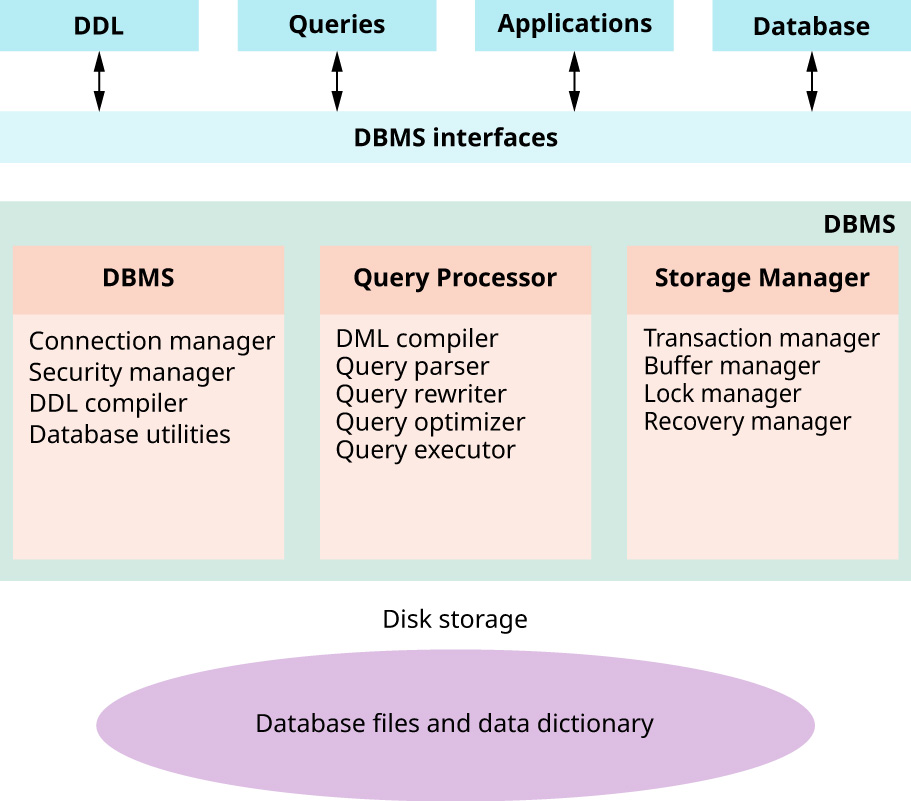
DBMS includes various components as in Figure 8.6. DBMS interface is the main line of communication between the database and the user. There are many types of interfaces such as web-based, stand-alone query language, command line, forms-based, graphical user interface (GUI), natural language, admin, and network.
英語のヒント
DBMSには、図8.6のように、さまざまな構成要素が含まれる。DBMSインターフェースは、データベースと利用者の間でやり取りをする主要な窓口である。インターフェースには、Web型、独立した問い合わせ言語、コマンドライン、フォーム型、グラフィカルユーザーインターフェース(GUI)、自然言語、管理者用、ネットワークなど、多くの種類がある。
attribution: Copyright Rice University, OpenStax, under CC BY 4.0 license · CC BY 4.0 · Source出典
Figure 8.6 DBMS includes multiple components: DBMS interface, query processor, storage manager, connection manager, security manager, DDL compiler, and database utilities. (attribution: Copyright Rice University, OpenStax, under CC BY 4.0 license)
図8.6 DBMSには、DBMSインターフェース、問い合わせ処理器、格納管理機構、接続管理機構、セキュリティー管理機構、DDLコンパイラー、データベースユーティリティーなど、複数の構成要素が含まれる。(出典:著作権 Rice University、OpenStax、CC BY 4.0ライセンス)
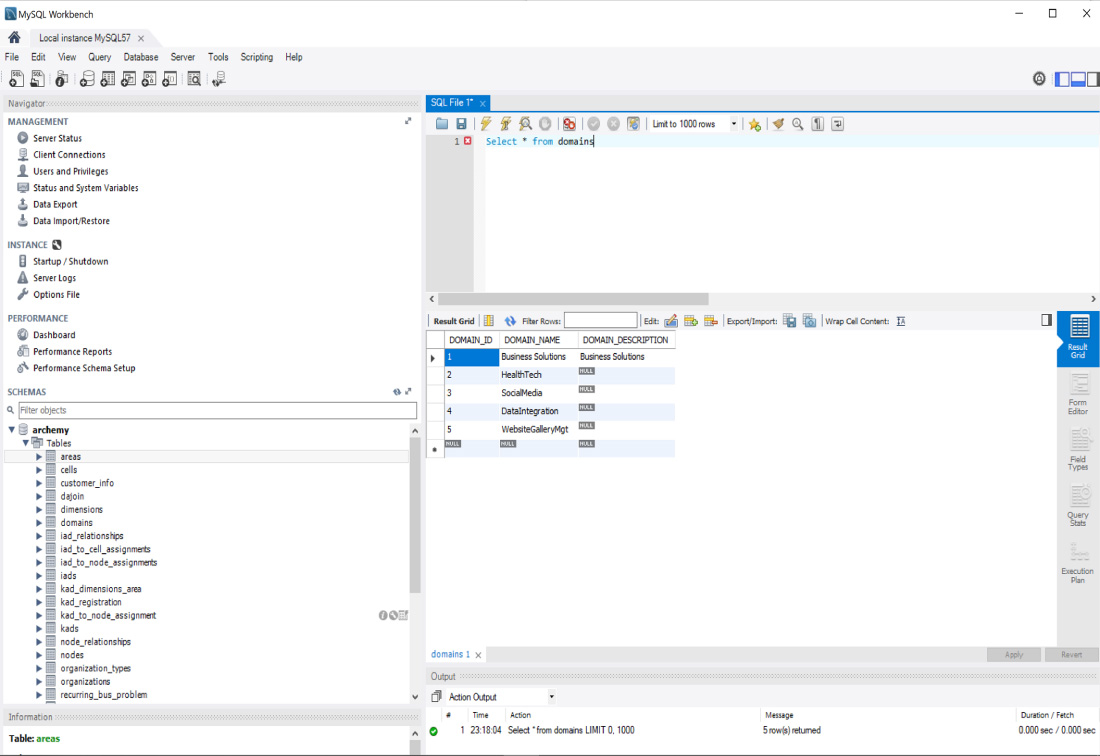
A connection manager manages reports, books, objects, and batches. For each database, the connection manager provides the connection name, data source type, and value. A security manager is a collection of processes used to secure the database from threats. The data description language (DDL) compiler translates statements in a high-level language into low-level instructions that the query evaluation engine understands. A query processor acts as an intermediary between users and the DBMS data engine to communicate query requests including DML compiler, query parser, query rewriter, query optimizer, and query executor. A storage manager is a program that is responsible for editing, storing, updating, deleting, and retrieving data in the database such as transaction manager, buffer manager, lock manager, and recovery manager. DBMS utilities are a set of utilities for managing and controlling database activities such as loading utility, reorganization utility, performance-monitoring utilities, user management utilities, and backup and recovery utility. Figure 8.7 illustrates the navigation window, results window, log window, and query window.
英語のヒント
接続管理機構は、報告書、ブック、オブジェクト、バッチを管理する。データベースごとに、接続名、データ源の種類、値を提供する。セキュリティー管理機構は、データベースを脅威から守るための処理の集合である。データ記述言語(DDL)のコンパイラーは、高水準言語の文を、問い合わせ評価エンジンが理解できる低水準の命令へ翻訳する。問い合わせ処理器は、問い合わせ要求を伝えるために、利用者とDBMSのデータエンジンの仲介役を果たす。DMLコンパイラー、問い合わせ解析器、問い合わせ書き換え器、問い合わせ最適化器、問い合わせ実行器などを含む。格納管理機構は、データベース内のデータを編集・格納・更新・削除・取得するプログラムであり、トランザクション管理機構、バッファー管理機構、ロック管理機構、回復管理機構などがある。DBMSユーティリティーは、データベースの活動を管理・制御する補助機能の集合である。読み込み、再編成、性能監視、利用者管理、バックアップと回復などのユーティリティーがある。図8.7は、ナビゲーションウィンドウ、結果ウィンドウ、ログウィンドウ、問い合わせウィンドウを示している。
credit: used with permission from Oracle · Oracle screenshot permission · Source出典
Figure 8.7 This sample MySQL Workbench graphical user interface shows the navigation window, query window, and result window. (credit: used with permission from Oracle)
図8.7 このMySQL Workbenchのグラフィカルユーザーインターフェースの例は、ナビゲーションウィンドウ、問い合わせウィンドウ、結果ウィンドウを示している。(クレジット:Oracleの許可を得て使用)