第2章計算論的思考と設計の再利用性
Innovative Cloud Mashups革新的なクラウドマッシュアップ
Innovative cloud mashups refer to creative combinations of different innovative business solutions that leverage disruptive technologies such as IoT, big data analytics, machine learning, blockchain, and others that can be quickly assembled today as hybrid cloud applications. A hybrid cloud application combines the benefits of both private and public clouds, allowing organizations to optimize their infrastructure based on specific requirements.
英語のヒント
革新的なクラウドマッシュアップとは、IoT、ビッグデータ分析、機械学習、ブロックチェーンなどの破壊的な技術を使う、異なる革新的なビジネスソリューションを創造的に組み合わせたものをいう。今日では、これらをハイブリッドクラウドのアプリケーションとして素早く組み立てられる。ハイブリッドクラウドアプリケーションは、プライベートクラウドとパブリッククラウドの両方の利点を組み合わせ、組織が固有の要件に合わせて基盤を最適化できるようにする。
Internet of Things (IoT) refers to the network of physical devices embedded with sensors, software, and connectivity, enabling them to collect and exchange data. The process of examining, processing, and extracting valuable insights from large datasets is called big data analytics. Developing algorithms that enable computers to learn from data and make decisions without explicit programming is called machine learning. This is made possible by creating mashups of platform services provided by various public cloud vendors to gain access to these disruptive technologies.
英語のヒント
モノのインターネット(IoT)とは、センサー、ソフトウェア、接続機能を組み込み、データを収集・交換できる物理的な機器のネットワークを指す。大量のデータセットを調べ、処理し、有用な知見を取り出す過程を、ビッグデータ分析という。コンピューターが明示的なプログラミングなしにデータから学び、判断できるようにするアルゴリズムの開発を、機械学習という。さまざまなパブリッククラウド事業者が提供するプラットフォームサービスをマッシュアップして、こうした破壊的技術を利用できるようにすることで、これが実現する。
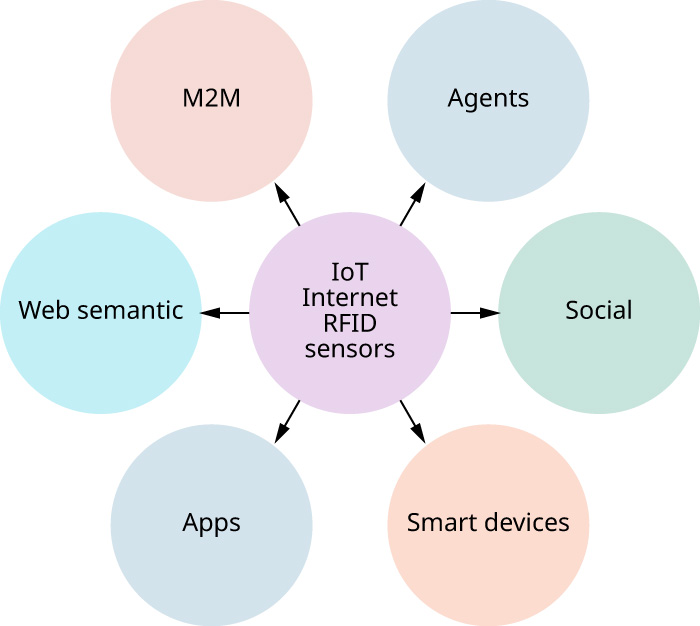
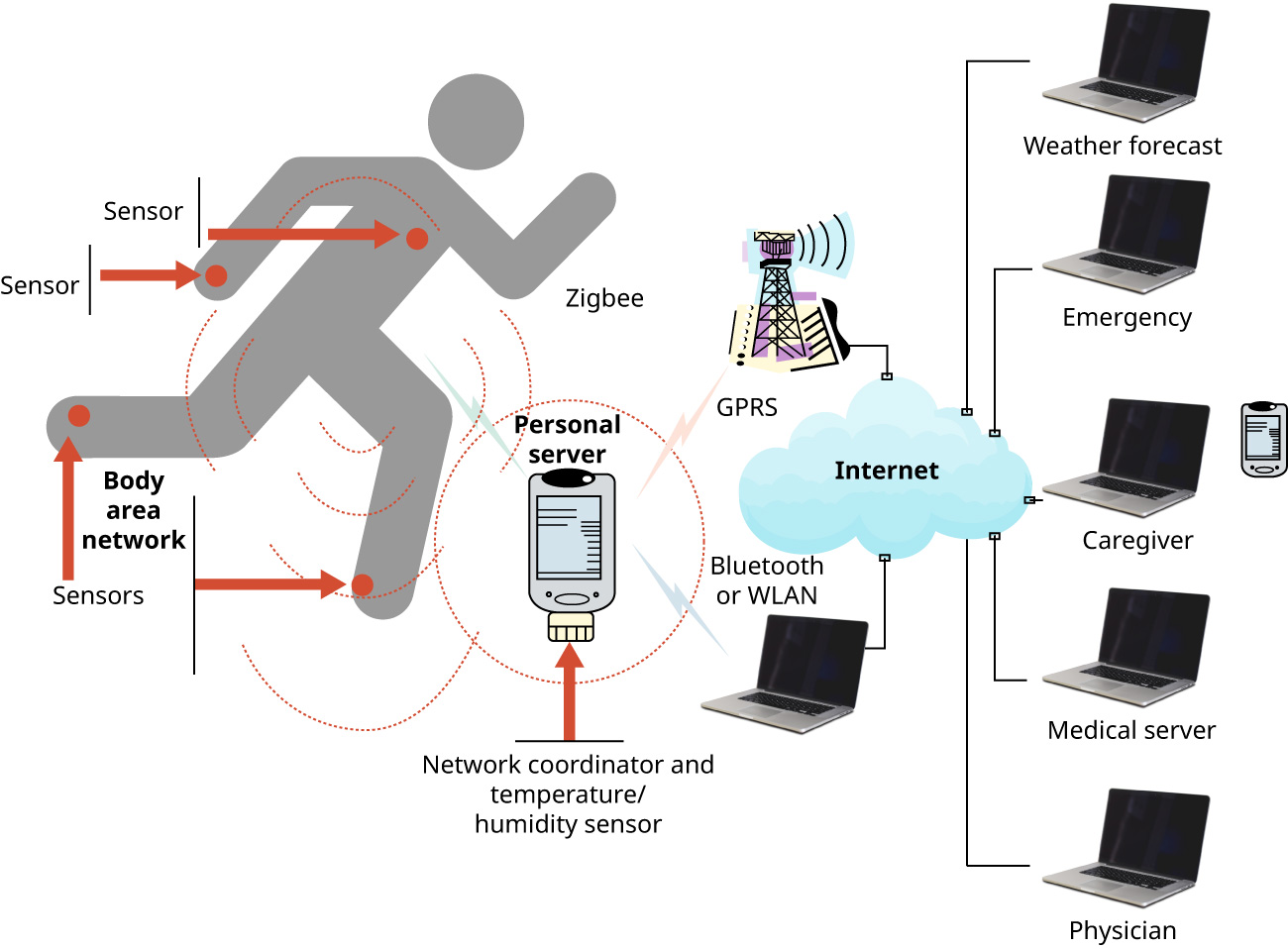
Figure 2.30 and Figure 2.31 illustrate models of solutions that are used today to support a variety of mobile health (MHealth), body area networks (BANs), emotions monitoring, and social media applications. In addition to the capabilities provided by the Big Clouds, the adaptive design reuse approach may be used to create the custom part of these hybrid solutions. Google Maps and Zillow are prime examples of applications that utilize location-based data to deliver valuable services. A GPS device identifies a user’s location, and that information flows through the central network. Apps then display this data in a user-friendly manner, connecting users with real-time geographic information in Google Maps or housing market details in Zillow. The integration of GPS with other IoT systems allows for the seamless presentation of customized, location-specific content to enhance the user experience. More information related to the development of web solutions is provided in Chapter 9 Software Engineering, Chapter 10 Enterprise and Solution Architectures Management, and Chapter 13 Hybrid Multicloud Digital Solutions Development.
英語のヒント
図2.30と図2.31は、さまざまなモバイルヘルス(MHealth)、ボディエリアネットワーク(BAN)、感情の監視、ソーシャルメディアのアプリケーションを支えるために、現在使われている解決策のモデルを示す。大手クラウドが提供する機能に加え、適応的な設計の再利用によって、こうしたハイブリッドな解決策の固有部分を作ることもできる。Google MapsとZillowは、位置に基づくデータから有用なサービスを提供するアプリケーションの代表例である。GPS機器が利用者の位置を特定し、その情報が中央のネットワークを通って流れる。アプリはデータを使いやすい形で表示し、Google Mapsではリアルタイムの地理情報、Zillowでは住宅市場の詳細を利用者へ届ける。GPSとほかのIoTシステムを統合することで、個人や場所に合わせたコンテンツを円滑に提示し、利用体験を高められる。ウェブソリューションの開発については、第9章「ソフトウェア工学」、第10章「エンタープライズアーキテクチャーとソリューションアーキテクチャーの管理」、第13章「ハイブリッド・マルチクラウドのデジタルソリューション開発」で詳しく説明する。
attribution: Copyright Rice University, OpenStax, under CC BY 4.0 license · CC BY 4.0 · Source出典
Figure 2.30 IoT devices use sensors, applications, and connectivity to interact, collect, and exchange data. (attribution: Copyright Rice University, OpenStax, under CC BY 4.0 license)
図2.30 IoT機器は、センサー、アプリケーション、接続機能によって相互にやり取りし、データを収集・交換する。(出典:著作権Rice University、OpenStax。CC BY 4.0ライセンス)
credit: modification of "Body Area Network" by "Jtel"/Wikimedia Commons, Public Domain · Public Domain · Source出典
Figure 2.31 This diagram depicts an architecture of a body area network. (credit: modification of "Body Area Network" by "Jtel"/Wikimedia Commons, Public Domain)
図2.31 ボディエリアネットワークのアーキテクチャーを示す図。(クレジット:「Jtel」/Wikimedia Commonsによる「Body Area Network」を改変。パブリックドメイン)
Web 3.0 enables businesses to create more personalized and predictive services for users, fostering greater trust and engagement by giving users control over their own data. For companies, this translates to new opportunities for collaboration, innovation, and reaching consumers directly without intermediaries, ultimately driving more efficient business models and creating value in ways that were not possible with earlier web technologies.
英語のヒント
Web 3.0は、より個人に合わせた予測的なサービスを企業が作ることを可能にする。利用者が自分のデータを管理できるようにすることで、信頼や関与を高める。企業にとっては、協働、イノベーション、仲介者を通さず消費者へ直接届くことの、新たな機会につながる。最終的に、より効率的なビジネスモデルを進め、従来のウェブ技術では不可能だった方法で価値を生み出す。