第2章計算論的思考と設計の再利用性
INDUSTRY SPOTLIGHT産業の現場から
Design Reuse設計の再利用
Adaptive design reuse plays a crucial role across various industries today, including the health-care sector, where its impact is profoundly significant. Understanding and leveraging adaptive design reuse in health care can lead to innovative solutions for complex medical problems, enhancing patient care and treatment outcomes. One prime example of its application is in the design of artificial valves that can replace natural heart valves in people.
英語のヒント
適応的な設計の再利用は、今日のさまざまな産業で重要な役割を担っている。医療分野もその一つであり、影響は非常に大きい。医療でこの方法を理解し活用すれば、複雑な医療上の問題に革新的な解決策を生み出し、患者のケアや治療結果を改善できる。代表的な応用例に、人間の自然な心臓弁に置き換わる人工弁の設計がある。
Heart valve disease is a condition where one or more valves in the heart do not function properly, leading to disrupted blood flow. The traditional solution involves surgical replacement with prosthetic valves, which can be derived from biological sources or made from synthetic materials. Adaptive design reuse in this context refers to the innovative process of designing these prosthetic heart valves by repurposing existing materials, technologies, and design principles from within or outside the medical field. This approach can accelerate the development of more effective, durable, and safer heart valve replacements.
英語のヒント
心臓弁膜症は、心臓の一つ以上の弁が正常に働かず、血流が妨げられる病気である。従来の解決法は、外科手術によって人工弁に交換することで、弁は生体由来のもの、または合成材料で作るものがある。この場合の適応的な設計の再利用とは、医療分野の内外で使われている既存の材料、技術、設計原理を別の用途へ転用し、人工心臓弁を設計する革新的な過程を指す。この方法は、より効果的で長持ちし、安全な置換用心臓弁の開発を加速しうる。
Infrastructure Architecture (Infrastructure Pillars)
インフラストラクチャーのアーキテクチャー(基盤の柱)
Technology architecture is a fundamental component of enterprise architecture, supported by four main pillars: compute, memory, storage, and network. It outlines the organization and functionality of an enterprise’s solutions or system’s technology framework. This encompasses the configuration of client and server hardware, the applications operating on this hardware, the services these applications provide, and the protocols and networks facilitating communication between applications and hardware components. It’s important to distinguish technology architecture from system architecture. The system architecture deals with applications and data, how they are related to each other, and what business process they support together. The technical architecture includes the software and hardware capabilities to fully enable application and data services.
英語のヒント
技術アーキテクチャーは、計算、メモリ、ストレージ、ネットワークという四つの主要な柱に支えられた、エンタープライズアーキテクチャーの基本的な構成要素である。企業の解決策やシステムの技術的な枠組みについて、構成と機能を示す。クライアントとサーバーのハードウェア構成、その上で動くアプリケーション、アプリケーションが提供するサービス、そしてアプリケーションやハードウェア部品の間の通信を可能にするプロトコルとネットワークが含まれる。技術アーキテクチャーは、システムアーキテクチャーと区別することが重要である。システムアーキテクチャーは、アプリケーションとデータ、その相互関係、それらが共同で支える業務プロセスを扱う。技術アーキテクチャーには、アプリケーションとデータのサービスを十分に機能させるための、ソフトウェアとハードウェアの能力が含まれる。
Refer to Figure 10.36 for an example of an enterprise-level conceptual technology architecture for a fictitious company. The goal of the enterprise conceptual technology architecture is to illustrate the various types of hardware components that are part of the enterprise infrastructure and the way they are laid out at a high level.
英語のヒント
架空の企業における、企業全体の概念的な技術アーキテクチャーの例は、図10.36を参照しよう。その目的は、企業の基盤を構成するさまざまな種類のハードウェア部品と、その配置を大まかな水準で示すことである。
GLOBAL ISSUES IN TECHNOLOGY技術をめぐる世界の課題
Design Reuse Broader Impacts設計の再利用が及ぼす幅広い影響
Focusing on reusing existing designs and technologies can save time and money, but it might also limit new ideas and innovations because designers could stick too closely to what’s already been done. This approach can have several effects:
英語のヒント
既存の設計や技術の再利用を重視すると、時間と費用を節約できる。しかし、設計者がすでに行われたことに固執しすぎ、新しいアイデアやイノベーションを制限する可能性もある。この方法は、次のような影響を及ぼしうる。
• Socially, it might not meet the needs of all users, especially if the technology doesn’t consider different cultures or lifestyles, leading to some people being left out.
英語のヒント
• 社会面では、すべての利用者のニーズを満たせない可能性がある。特に、技術が異なる文化や生活様式を考慮しない場合には、取り残される人が出てくる。
• Ethically, there’s a question about fairness and whether technology serves everyone equally, as relying on old designs may not address current or future challenges well.
英語のヒント
• 倫理面では、公平さと、技術が誰に対しても等しく役立つかが問題となる。古い設計に頼ると、現在や将来の課題にうまく対応できない可能性があるためである。
• Environmentally, while using existing designs could reduce waste and save resources, it might also keep using outdated, less eco-friendly technologies instead of developing cleaner, more efficient options.
英語のヒント
• 環境面では、既存の設計を使うことで廃棄物を減らし資源を節約できるが、よりクリーンで効率的な選択肢を開発する代わりに、古くて環境負荷の高い技術を使い続ける可能性もある。
• Economically, countries that already have a lot of designs and technologies could get ahead because they have more to reuse, making it harder for countries with fewer resources to catch up or compete. While reusing designs has its benefits, it’s important to also think about these broader impacts and strive for a balance between recycling old ideas and creating new ones to make sure technology keeps improving in a way that’s good for everyone.
英語のヒント
• 経済面では、すでに多くの設計や技術を持つ国は、再利用できるものが多いので先行でき、資源の少ない国が追いついたり競争したりすることが難しくなる可能性がある。設計の再利用には利点があるが、こうした広い影響も考え、古いアイデアの再活用と新しいアイデアの創出との均衡を目指すことが重要である。誰にとってもよい形で、技術の改善が続くようにするためである。
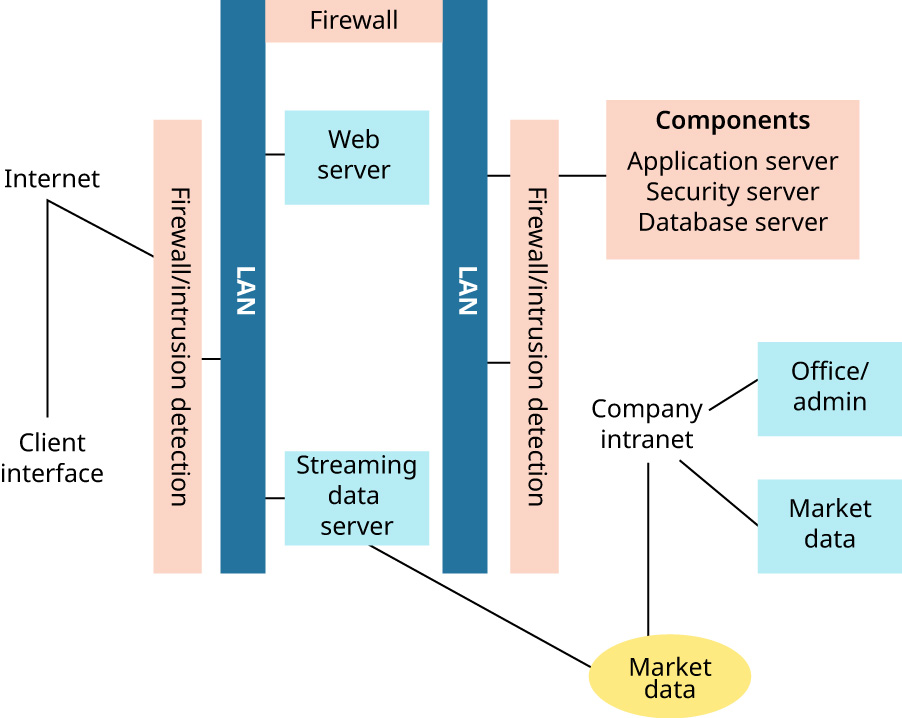
Figure 2.21 illustrates a possible physical architecture for the sample trading business model that was introduced earlier in this section. This diagram depicts the layout of the actual hardware components that make up the infrastructure of the trading solution. It also delineates where the functional blocks of the application architecture are physically deployed. Note that this physical technology architecture leverages the layout and components of the enterprise application architecture illustrated previously at the conceptual level.
図2.21は、この節で先に紹介した取引業務モデルに対する、物理的なアーキテクチャーの一例を示す。取引ソリューションの基盤を構成する実際のハードウェア部品の配置と、アプリケーションアーキテクチャーの機能ブロックが物理的にどこへ配備されるかを明示している。この物理的な技術アーキテクチャーは、先に概念水準で示した企業のアプリケーションアーキテクチャーの配置と構成部品を活用している。
attribution: Copyright Rice University, OpenStax, under CC BY 4.0 license · CC BY 4.0 · Source出典
Figure 2.21 The physical trading application architecture highlights the use of hardware to meet the organization’s goals. (attribution: Copyright Rice University, OpenStax, under CC BY 4.0 license)
図2.21 取引アプリケーションの物理的なアーキテクチャーは、組織の目標を満たすためのハードウェアの利用を強調する。(出典:著作権Rice University、OpenStax。CC BY 4.0ライセンス)
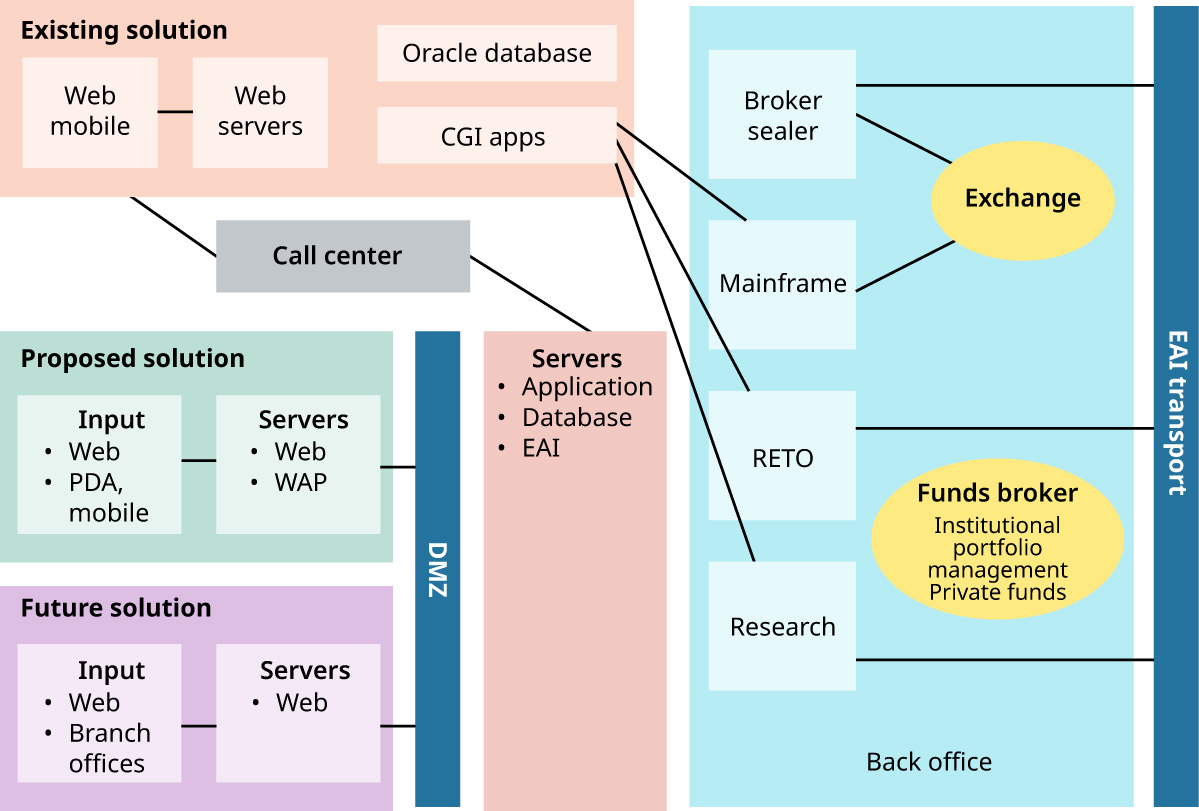
An alternative physical application architecture for the trading solution is shown in Figure 2.22. The diagram does not delineate where the functional blocks of the application architecture are physically deployed.
図2.22は、取引ソリューションに対する、別の物理的なアプリケーションアーキテクチャーを示す。この図では、アプリケーションアーキテクチャーの機能ブロックが物理的にどこへ配備されるかは、明示していない。
attribution: Copyright Rice University, OpenStax, under CC BY 4.0 license · CC BY 4.0 · Source出典
Figure 2.22 This alternative physical trading application architecture outlines possible changes from the existing web solution. (attribution: Copyright Rice University, OpenStax, under CC BY 4.0 license)
図2.22 別の取引アプリケーションの物理的なアーキテクチャーとして、既存のウェブソリューションから考えられる変更を示す。(出典:著作権Rice University、OpenStax。CC BY 4.0ライセンス)