第2章計算論的思考と設計の再利用性
Enterprise Technical Architecture企業全体の技術アーキテクチャー
The enterprise technology architecture (ETA) is a comprehensive framework that defines the structure, components, and interrelationships of an organization’s technology systems to support its business processes and objectives. In general, the ETA guides the development and support of an organization’s information systems4 and technology infrastructure. Therefore, it characterizes the organization’s application, data, and technology infrastructure architectures and describes their models. The technology (virtual infrastructure) supports the execution of information systems services, which in turn support business functions and related services. Application, data, and technology infrastructure architecture models may be described via blueprints at different levels of abstraction, including presentation, conceptual, logical, and physical. Layering and componentization heuristics play an important role in structuring these models.
英語のヒント
エンタープライズ技術アーキテクチャー(ETA)は、業務プロセスと目標を支えるため、組織の技術システムの構造、構成要素、相互関係を定める包括的な枠組みである。一般に、組織の情報システム4と技術基盤の開発・支援を導く。したがって、組織のアプリケーション、データ、技術基盤のアーキテクチャーを特徴づけ、そのモデルを記述する。技術、すなわち仮想的な基盤は、情報システムのサービスの実行を支え、それがさらに業務機能と関連サービスを支える。アプリケーション、データ、技術基盤のアーキテクチャーモデルは、プレゼンテーション、概念、論理、物理という異なる抽象化水準の設計図として記述できる。階層化と部品化のヒューリスティクスは、これらのモデルを構造化する重要な役割を担う。
The abstraction level indicates the extent to which a design is distanced from tangible technological details. This level of abstraction can differ across various architectural fields, but four main levels are widely recognized:
英語のヒント
抽象化水準は、設計が具体的な技術の細部からどれだけ離れているかを示す。水準の分け方はアーキテクチャーの分野によって異なることがあるが、次の四つが広く認められている。
1. Presentation: At this level, architecture is simplified into a form to streamline the communication of essential ideas, particularly to business executives. Distilling complex architectural diagrams into more straightforward, high-level visuals ensures that the core messages are conveyed effectively.
英語のヒント
1. プレゼンテーション:この水準では、特に経営幹部へ重要な考えを円滑に伝えるため、アーキテクチャーを簡略化した形で表す。複雑なアーキテクチャー図から要点を抽出し、わかりやすく高水準の視覚表現にすることで、中心的なメッセージを効果的に伝える。
2. Conceptual: This level offers a more structured view of architecture, deliberately omitting many specifics. The rationale for not including certain details is that they may not be relevant to the diagram’s intended purpose or are yet to be decided.
英語のヒント
2. 概念:多くの細部を意図的に省略しつつ、より構造化されたアーキテクチャーの見方を示す。細部を含めない理由は、それが図の目的に関係しないか、まだ決まっていないためである。
3. Logical: The architecture is depicted in detail but remains uncertain of specific technologies. It aims to give a full outline without committing to the particular technologies that will be employed for the final build.
英語のヒント
3. 論理:アーキテクチャーを詳しく描くが、具体的な技術は未確定のままにする。最終的な構築で使う技術を特定のものに決めず、全体を詳しく示すことを目指す。
4. Physical: This level focuses on the actual technological specifics used or to be used in the architecture’s realization, making it the most concrete representation of the four.
英語のヒント
4. 物理:アーキテクチャーの実現に実際に使う、または使う予定の具体的な技術に注目する。四つのうちで最も具体的な表現となる。
CONCEPTS IN PRACTICE概念を実践する
Manufacturing Industry製造業
Business operations are commonly articulated through a value chain framework, a concept originating from manufacturing practices. Analogous to the manufacturing industry where raw materials like steel are transformed into various components, each step in the value chain plays a role in creating a finished product, such as a car. In our approach, we’ve utilized the componentization heuristic to break down business operations into distinct steps constituting the elements of a value chain. Additionally, the layering heuristic has been applied to structure the value chain as layers of elements. Each layer in this model relies on the output of the preceding layer to perform its specific function. This methodology enhances the understanding of how value is sequentially added throughout the business process.
英語のヒント
業務運営は、製造業の実践に由来するバリューチェーンという枠組みで表すことが多い。製造業で鋼鉄などの原材料がさまざまな部品に変わるように、バリューチェーンの各段階は、自動車のような完成品を作る役割を担う。ここでの方法では、部品化のヒューリスティクスによって業務を個別の段階に分け、バリューチェーンの要素としている。さらに、階層化のヒューリスティクスで、これらの要素を層として構造化する。各層は直前の層の出力を利用し、自分に固有の機能を実行する。この方法により、業務プロセス全体で価値が順に加わる仕組みを理解しやすくなる。
Application Architecture Model
アプリケーションアーキテクチャーモデル
The application architecture is a subset of the enterprise solution architecture that includes a process to architect and design the application architecture as well as the actual application architecture model, which represents the content of the application architecture. Application architecture helps organizations decide how to invest in new software and systems. It makes sure that any new software being looked at, designed, or put into use can work well with the systems the organization already has. This includes brand-new software, updates to old software, making old software better, and buying and updating software packages.
英語のヒント
アプリケーションアーキテクチャーは、企業のソリューションアーキテクチャーの一部である。アプリケーションアーキテクチャーを構築・設計する過程と、その内容を表す実際のアーキテクチャーモデルの両方を含む。アプリケーションアーキテクチャーは、組織が新しいソフトウェアやシステムへの投資を決めるのに役立つ。検討中、設計中、または導入する新しいソフトウェアが、すでに組織にあるシステムとうまく連携できるようにする。対象には、まったく新しいソフトウェア、既存ソフトウェアの更新や改良、ソフトウェアパッケージの購入と更新が含まれる。
4 Information systems architectures combine the use of application and data architecture details and specify control and data flow necessary to operate the systems.
4 情報システムのアーキテクチャーは、アプリケーションとデータのアーキテクチャーの詳細を組み合わせ、システムを動作させるのに必要な制御とデータの流れを規定する。
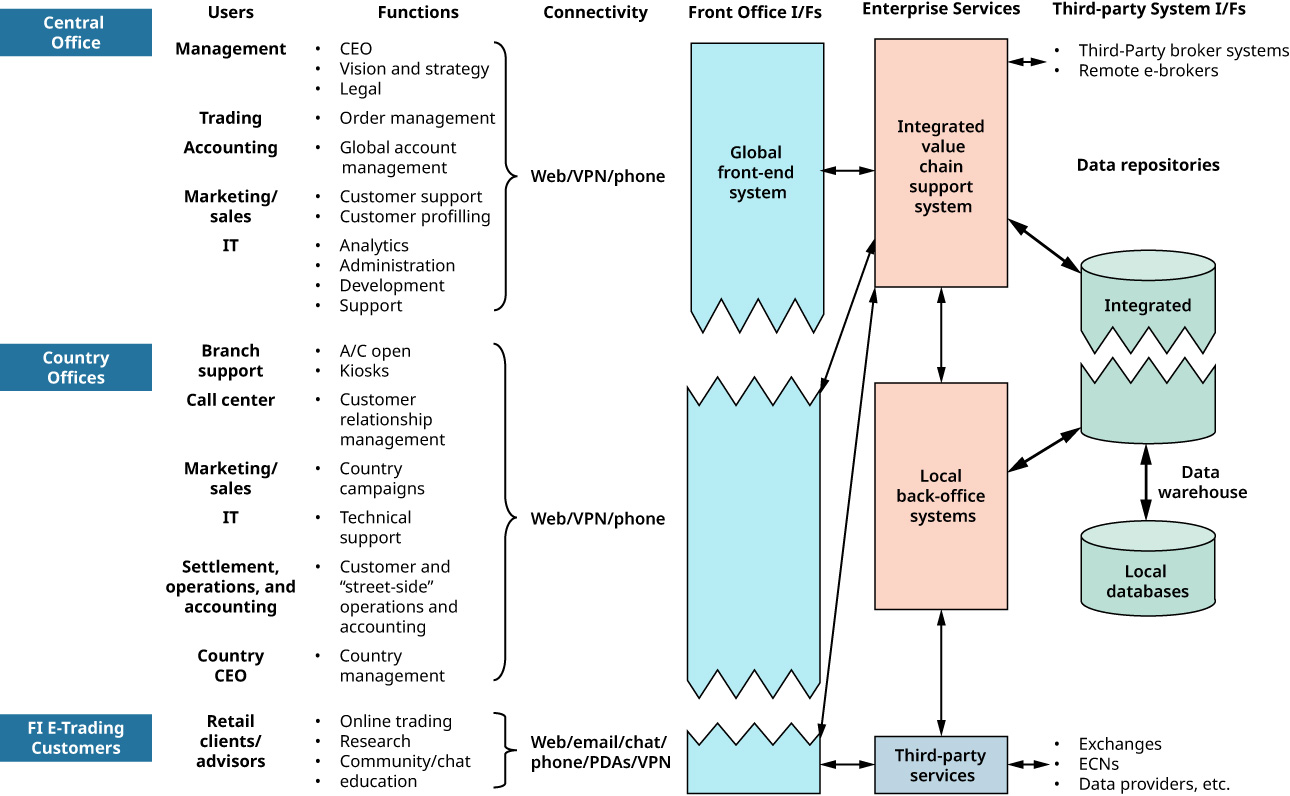
Figure 2.16 illustrates a conceptual application architecture model of the sample trading business model that was introduced earlier in this section. The goal of a conceptual application architecture is to demonstrate how members of the organization interact with the application architecture from different locations when invoking business processes. This example illustrates three distinct offices accommodating a diverse range of users, including management, trading, IT, and others.
英語のヒント
図2.16は、この節で先に紹介した取引業務モデルの例について、概念的なアプリケーションアーキテクチャーモデルを示す。概念的なアプリケーションアーキテクチャーの目的は、組織のメンバーが業務プロセスを呼び出すとき、異なる場所からアプリケーションの構成とどう関わるかを示すことである。この例では、経営管理、取引、ITなど、多様な利用者を受け入れる三つのオフィスを示している。
attribution: Copyright Rice University, OpenStax, under CC BY 4.0 license · CC BY 4.0 · Source出典
Figure 2.16 A conceptual trading application architecture moves through various levels, including users, functions, enterprise services, and third-party systems. (attribution: Copyright Rice University, OpenStax, under CC BY 4.0 license)
図2.16 取引アプリケーションの概念的なアーキテクチャーは、利用者、機能、企業サービス、外部のシステムなど、さまざまな水準を通して構成される。(出典:著作権Rice University、OpenStax。CC BY 4.0ライセンス)
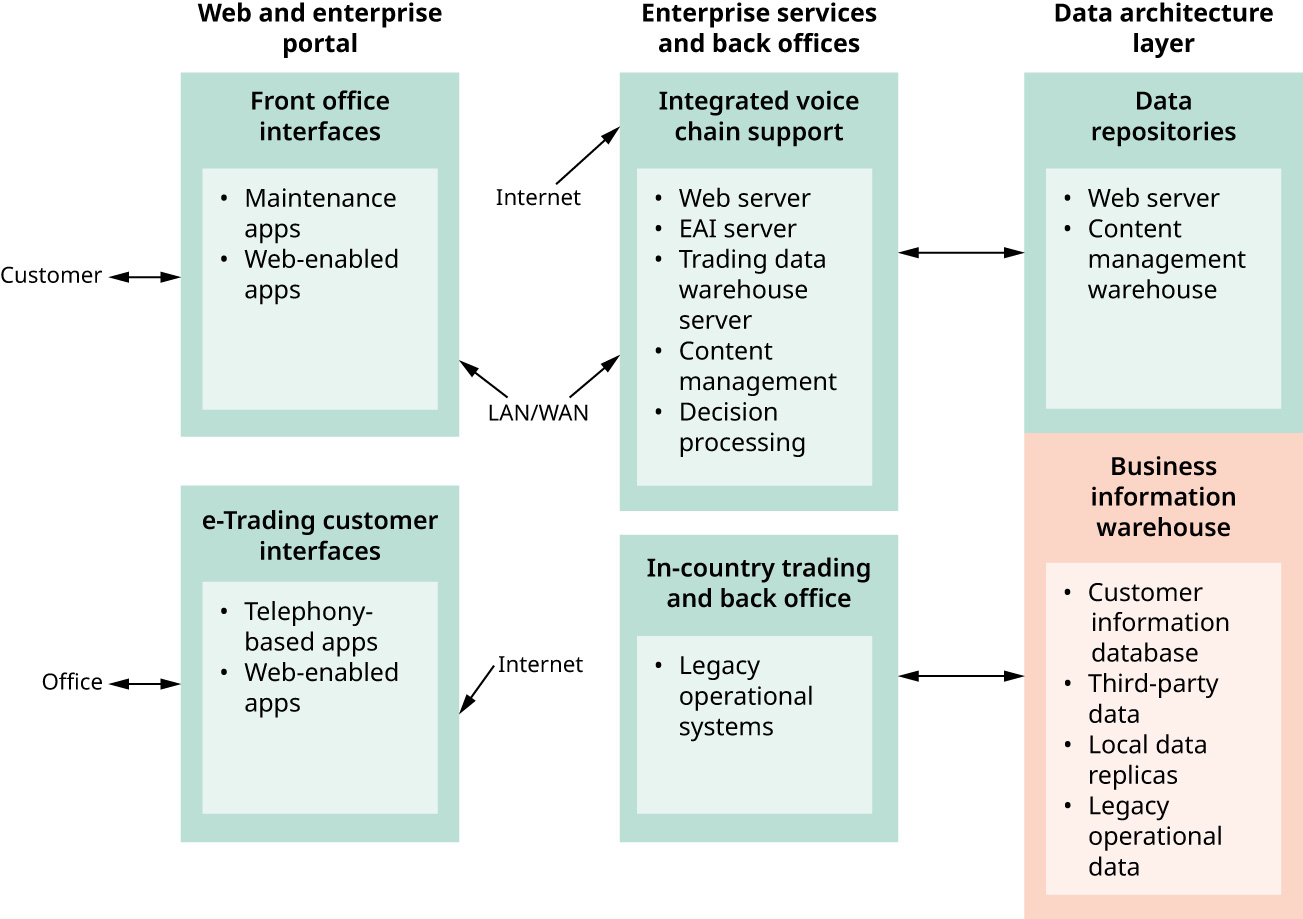
Figure 2.17 takes the conceptual trading application architecture a bit further and describes what one of the alternative application architectures may look like at the logical level. The goal of the logical application architecture is to identify the various functional blocks within the architecture without getting into the details of how they connect with and/or use each other.
英語のヒント
図2.17は、取引アプリケーションの概念的なアーキテクチャーを一歩進め、選択肢となるアーキテクチャーの一つを論理水準で表すとどうなるかを示している。論理的なアプリケーションアーキテクチャーの目的は、機能同士の接続方法や利用方法の細部へ踏み込まず、構成内のさまざまな機能ブロックを特定することである。
attribution: Copyright Rice University, OpenStax, under CC BY 4.0 license · CC BY 4.0 · Source出典
Figure 2.17 The logical trading application architecture illustrates each function block for the processing of customer orders. (attribution: Copyright Rice University, OpenStax, under CC BY 4.0 license)
図2.17 取引アプリケーションの論理的なアーキテクチャーは、顧客の注文を処理する各機能ブロックを示す。(出典:著作権Rice University、OpenStax。CC BY 4.0ライセンス)