第2章計算論的思考と設計の再利用性
Web 3.0 Business SolutionsWeb 3.0のビジネスソリューション
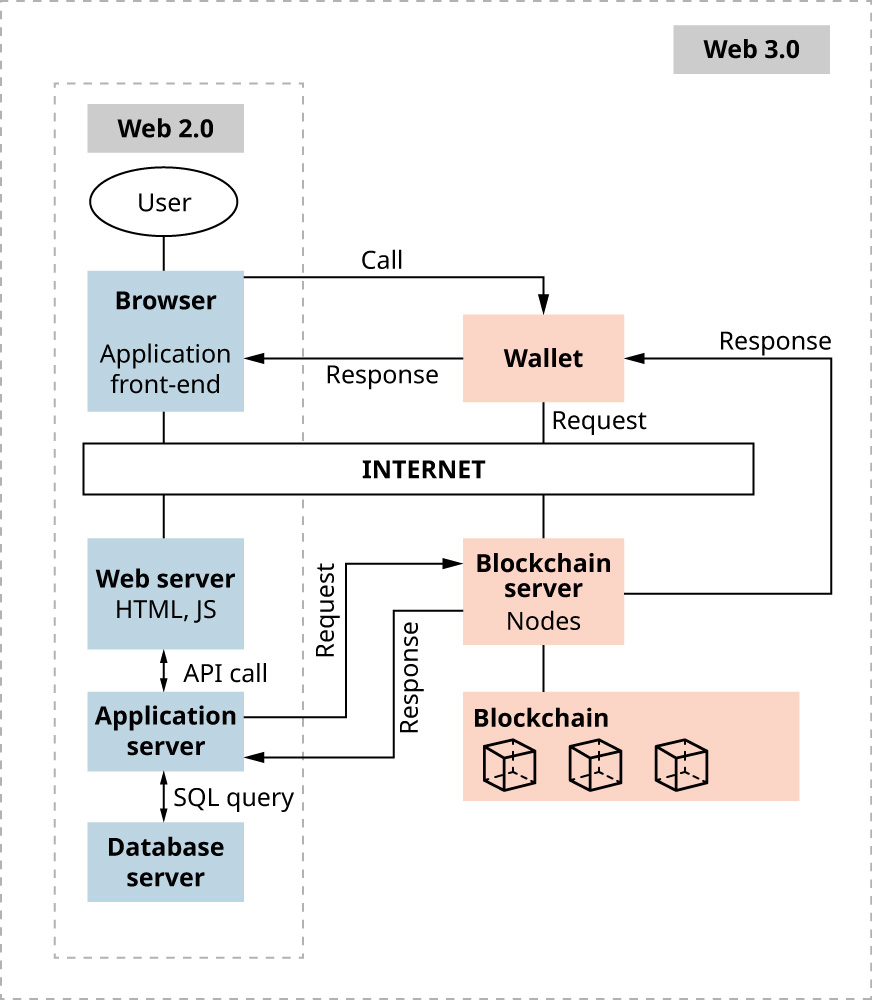
The secure and transparent way of recording transactions that uses a chain of blocks, each storing a list of encrypted transactions is called blockchain. Once a block is full, it is linked to the previous one, forming a chain. Blockchain technology decentralizes processing to ensure the integrity of transactions across multiple computer nodes. This ensures that no single computer node gets assigned to processing transactions repeatedly, thereby preventing possible fraudulent modifications of transactions. A smart contract is an automated agreement written in code that runs on blockchain technology. They enforce contract terms automatically when specific conditions are met, removing the need for intermediaries and ensuring security. The use of blockchain smart contracts within web applications is becoming more popular. The logical application architecture model in Figure 2.28 illustrates how this is made possible by creating hybrid Web 2.0 websites that interact with Web 3.0 smart contracts.
英語のヒント
それぞれが暗号化された取引の一覧を保存するブロックを連ね、安全で透明な形で取引を記録する方法を、ブロックチェーンという。一つのブロックがいっぱいになると、前のブロックへ結びつけられ、鎖ができる。ブロックチェーン技術は処理を分散させ、複数のコンピューターノードにまたがる取引の完全性を確保する。これにより、一台のノードへ繰り返し取引処理が割り当てられることを防ぎ、取引の不正な改変を防止する。スマートコントラクトは、コードで記述され、ブロックチェーン技術上で動く、自動化された契約である。特定の条件が満たされると契約条項を自動で履行し、仲介者を不要にするとともに安全性を確保する。ウェブアプリケーションでブロックチェーンのスマートコントラクトを使うことは、ますます一般的になっている。図2.28の論理的なアプリケーションアーキテクチャーモデルは、Web 3.0のスマートコントラクトと連携するハイブリッドなWeb 2.0サイトを作ることで、それを実現する方法を示す。
attribution: Copyright Rice University, OpenStax, under CC BY 4.0 license · CC BY 4.0 · Source出典
Figure 2.28 The flowchart show the logical application architecture of a Web 2.0 and Web 3.0 Website. (attribution: Copyright Rice University, OpenStax, under CC BY 4.0 license)
図2.28 Web 2.0とWeb 3.0を使うウェブサイトの論理的なアプリケーションアーキテクチャーを示すフローチャート。(出典:著作権Rice University、OpenStax。CC BY 4.0ライセンス)
Building these types of business solutions is greatly facilitated by the use of the Ethereum platform, an open-source blockchain platform that enables the creation and execution of smart contracts and decentralized applications, or Cloud blockchain platforms provided by one of the Cloud service providers such as Amazon AWS, Google GCP, IBM Cloud, Consensys, Oracle Cloud, and others. These platforms provide frameworks and APIs that make it easy to develop and deploy smart contracts. The Web 2.0 portion of the website can leverage the frameworks mentioned earlier. In addition to these capabilities, the adaptive design reuse approach may be used to create the custom part of the Web 3.0 application. More information related to the development of Web 3.0 solutions is provided in Chapter 9 Software Engineering, Chapter 10 Enterprise and Solution Architectures Management, and Chapter 13 Hybrid Multicloud Digital Solutions Development.
英語のヒント
この種のビジネスソリューションの構築は、Ethereumプラットフォームや、Amazon AWS、Google GCP、IBM Cloud、Consensys、Oracle Cloudなどのクラウドサービス事業者が提供するブロックチェーンプラットフォームを使うことで、大幅に容易になる。Ethereumは、スマートコントラクトや分散型アプリケーションの作成・実行を可能にする、オープンソースのブロックチェーンプラットフォームである。これらのプラットフォームは、スマートコントラクトの開発・配備を容易にするフレームワークやAPIを提供する。サイトのWeb 2.0の部分には、先に述べたフレームワークを使える。さらに、適応的な設計の再利用で、Web 3.0アプリケーションの固有部分を作ることもできる。Web 3.0ソリューションの開発は、第9章「ソフトウェア工学」、第10章「エンタープライズアーキテクチャーとソリューションアーキテクチャーの管理」、第13章「ハイブリッド・マルチクラウドのデジタルソリューション開発」で詳しく扱う。
Cloud-Native Business Solutionsクラウドネイティブのビジネスソリューション
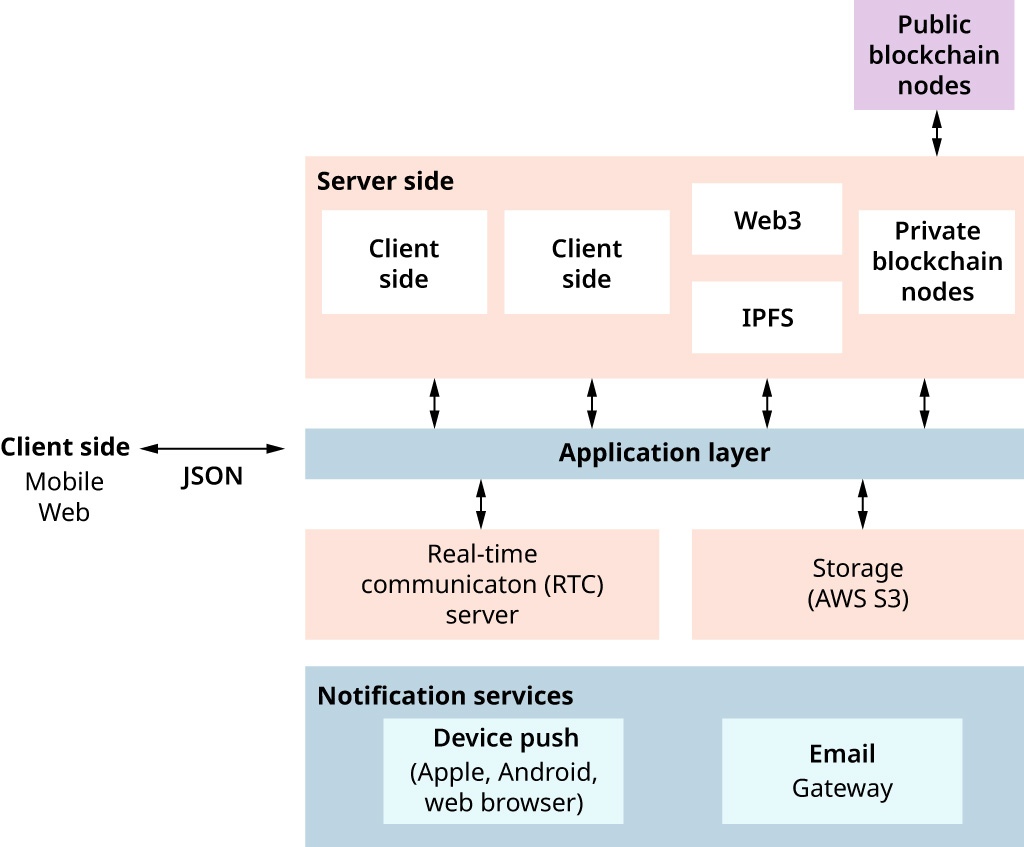
A way of building software by breaking it into small, independent pieces where each piece, or service, does a specific job and works on its own is called microservices. A large number of businesses have been migrating their legacy business solutions to the cloud to take advantage of microservices that are designed around specific business functions and can be deployed independently using automated deployment systems. Figure 2.29 illustrates how secure, managed, and monetized APIs that are critical for a digital enterprise can be created by leveraging a combination of API-led integration frameworks and cloud-native technologies. The use of such frameworks and technologies helps streamline the migration of legacy business solutions. The process of migrating legacy business solutions means upgrading or replacing old systems with newer, more efficient ones. In addition to these capabilities, the adaptive design reuse approach may be used to create the custom part of the cloud-native applications. More information related to the development of cloud-native solutions is provided in Chapter 9 Software Engineering, Chapter 10 Enterprise and Solution Architectures Management, and Chapter 12 Cloud-Native Applications Development.
英語のヒント
ソフトウェアを小さく独立した部分に分け、それぞれの部分、すなわちサービスが特定の仕事を自律的に行うように構築する方法を、マイクロサービスという。多くの企業が、従来のビジネスソリューションをクラウドへ移行している。特定の業務機能を中心に設計され、自動配備システムで独立して配備できるマイクロサービスを活用するためである。図2.29は、APIを中心とした統合フレームワークとクラウドネイティブ技術を組み合わせて、デジタル企業に不可欠な、安全で、管理され、収益化されたAPIを作る方法を示す。こうしたフレームワークや技術は、既存のビジネスソリューションの移行を円滑にする。この移行とは、古いシステムを更新したり、より新しく効率的なものへ置き換えたりする過程である。これらの機能に加えて、適応的な設計の再利用によってクラウドネイティブアプリケーションの固有部分を作ることもできる。クラウドネイティブの開発は、第9章「ソフトウェア工学」、第10章「エンタープライズアーキテクチャーとソリューションアーキテクチャーの管理」、第12章「クラウドネイティブアプリケーションの開発」で詳しく扱う。
attribution: Copyright Rice University, OpenStax, under CC BY 4.0 license · CC BY 4.0 · Source出典
Figure 2.29 The cloud-native application architecture view of a digital enterprise shows both client-side and server-side processes through each layer. (attribution: Copyright Rice University, OpenStax, under CC BY 4.0 license)
図2.29 デジタル企業のクラウドネイティブアプリケーションのアーキテクチャービューは、各層を通じたクライアント側とサーバー側の処理を示す。(出典:著作権Rice University、OpenStax。CC BY 4.0ライセンス)
Figure 2.29 illustrates the architecture of a digital platform that combines web and mobile applications with blockchain technology. On the client side, users interact with the platform through web dashboards and mobile apps, which communicate with the server using JSON and handle notifications via services like Firebase, Huawei, and Apple. The server side includes an API layer that processes these requests, a caching layer to improve performance, and a back-end logic layer responsible for application logic, backups, and analytics. The architecture also features integration with public blockchain networks for enhanced security and transparency, and it supports various notification services to keep users informed.
英語のヒント
図2.29は、ウェブ・モバイルアプリケーションとブロックチェーン技術を組み合わせたデジタルプラットフォームのアーキテクチャーを示す。クライアント側では、利用者がウェブのダッシュボードやモバイルアプリを通じてプラットフォームを操作する。これらはJSONでサーバーと通信し、Firebase、Huawei、Appleなどのサービスを通じて通知を扱う。サーバー側には、要求を処理するAPI層、性能を高めるキャッシュ層、アプリケーションのロジック、バックアップ、分析を担当するバックエンドのロジック層がある。また、安全性と透明性を高めるためのパブリックなブロックチェーンネットワークとの統合を備え、利用者へ情報を伝え続ける各種の通知サービスにも対応する。
GLOBAL ISSUES IN TECHNOLOGY技術をめぐる世界の課題
Scale Transformations大規模な変革
The approach that consists of reinventing, rethinking, and rewiring solutions in various industries seems to favor countries that have the means to perform broadscale transformations. This may have ethical, social, and economic implications in other parts of the world.
英語のヒント
さまざまな産業で解決策を作り直し、考え直し、組み直す方法は、広範囲の変革を実行する手段を持つ国に有利に働くように見える。これは、世界のほかの地域に、倫理的、社会的、経済的な影響を及ぼす可能性がある。
Consider how advanced countries are rapidly adopting electric cars. They have the resources to reinvent transportation by investing in electric vehicle (EV) technology, rethinking their energy use to reduce pollution, and rewiring their infrastructure to support EV charging stations. This shift toward electric cars is more challenging in less wealthy countries due to the high costs of EVs and the lack of charging infrastructure. As a result, these countries may continue to depend on older, more polluting vehicles, facing both environmental and economic disadvantages.
英語のヒント
先進国が電気自動車を急速に導入している状況を考えてみよう。こうした国には、電気自動車(EV)の技術へ投資し、汚染を減らすためにエネルギー利用を見直し、EV充電設備を支えるようインフラを組み替えて、交通を作り直す資源がある。経済的に余裕の少ない国では、EVの価格の高さと充電設備の不足により、この転換はより難しい。その結果、古くて汚染の多い車両への依存が続き、環境面と経済面の両方で不利になる可能性がある。