第2章計算論的思考と設計の再利用性
THINK IT THROUGH考えてみよう
Enterprise Business Architecture企業のビジネスアーキテクチャー
What is the mechanism that prompts the creation of organization, location, and process domains to describe an (enterprise) business architecture? How does decomposition help describe (enterprise) technology architectures?
英語のヒント
企業のビジネスアーキテクチャーを説明するため、組織、場所、プロセスという領域を作るのは、どのような仕組みによるのか。分解は、企業の技術アーキテクチャーを説明するうえで、どのように役立つか。
Hint: The organization domain focuses on the structure, roles, responsibilities, and relationships within the enterprise. The location domain deals with the physical or virtual places where business activities take place. The process domain delves into the business processes that drive the value chain and operational activities.
英語のヒント
ヒント:組織の領域は、企業内の構造、役割、責任、関係に注目する。場所の領域は、業務活動を行う物理的または仮想的な場所を扱う。プロセスの領域は、バリューチェーンや業務活動を動かす業務プロセスを掘り下げる。
The process involves dividing a system or architecture into smaller, more discrete elements, which aids in analysis, understanding, and effective communication. Technology architectures in enterprises can be highly complex, involving numerous components and interdependencies. Decomposition simplifies this complexity by breaking down the architecture into smaller, comprehensible pieces. Each component can then be analyzed and understood independently.
英語のヒント
この過程では、システムやアーキテクチャーを、より小さく明確に分かれた要素に分けることで、分析、理解、効果的な意思疎通を助ける。企業の技術アーキテクチャーは、多数の構成要素と相互依存関係を含み、非常に複雑なことがある。分解は、アーキテクチャーを小さく理解しやすい部分へ分けることで、その複雑さを軽減する。各部品を独立して分析し、理解できるようになる。
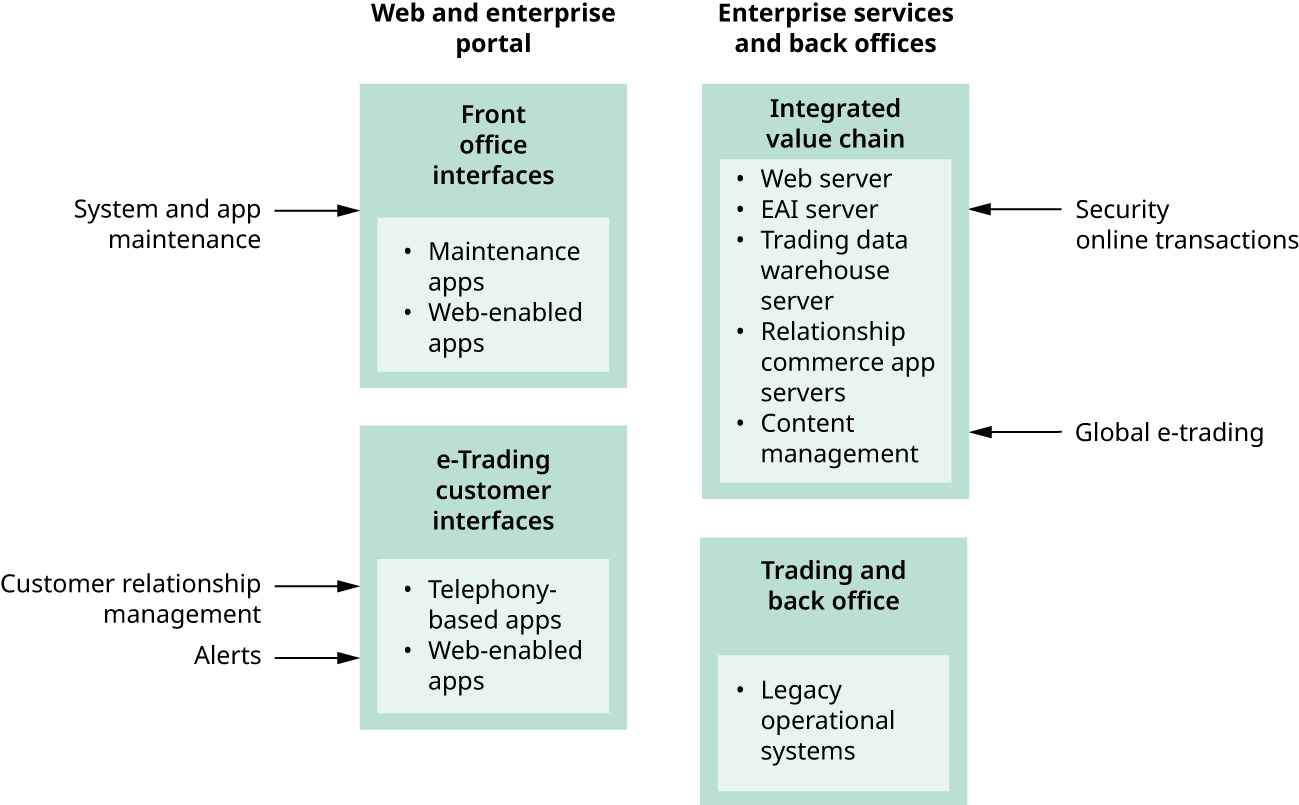
Figure 2.18 is a simplified view of the logical trading application architecture model that provides callouts to explain what the various functions are meant to accomplish. It is good practice to document the functions in that way. It is also good practice to provide an additional diagram (not included here) that includes callouts identifying the actual third-party technologies that are used to implement the various functions.
英語のヒント
図2.18は、取引アプリケーションの論理的なアーキテクチャーモデルを簡略化し、各機能が何を達成するためのものかを説明する吹き出しを付けた図である。このように機能を文書化するのは、よい実践である。また、ここには載せていないが、各機能の実装に使う実際の外部技術を吹き出しで特定した、追加の図を用意することも望ましい。
attribution: Copyright Rice University, OpenStax, under CC BY 4.0 license · CC BY 4.0 · Source出典
Figure 2.18 This logical trading application architecture includes function callouts that identify the technologies used for this process. (attribution: Copyright Rice University, OpenStax, under CC BY 4.0 license)
図2.18 この取引アプリケーションの論理的なアーキテクチャーには、プロセスで使う技術を特定する、機能の吹き出し説明がある。(出典:著作権Rice University、OpenStax。CC BY 4.0ライセンス)
Data Architecture Model
データアーキテクチャーモデル
A data architecture model is a conceptual framework that outlines how an organization structures, organizes, and manages its data assets. Data architecture forms a component of the broader enterprise solution architecture. It encompasses the design process for both information and actual data architecture models, representing the content within the data architecture. This framework aids organizations in strategically planning investments in data management solutions and associated systems. The evaluated, designed, and delivered data management solutions must seamlessly coexist with established ones, managing newly developed databases as well as legacy database extensions.
英語のヒント
データアーキテクチャーモデルは、組織がデータ資産をどう構造化し、整理し、管理するかを示す、概念的な枠組みである。データアーキテクチャーは、より広い企業のソリューションアーキテクチャーの一部をなす。データアーキテクチャーの内容を表す、情報と実際のデータの両アーキテクチャーモデルの設計過程を含む。この枠組みは、データ管理の解決策と関連システムへの投資を、組織が戦略的に計画するのに役立つ。評価し、設計し、提供するデータ管理の解決策は、既存のものと円滑に共存し、新たに開発したデータベースと既存データベースの拡張の両方を管理しなければならない。
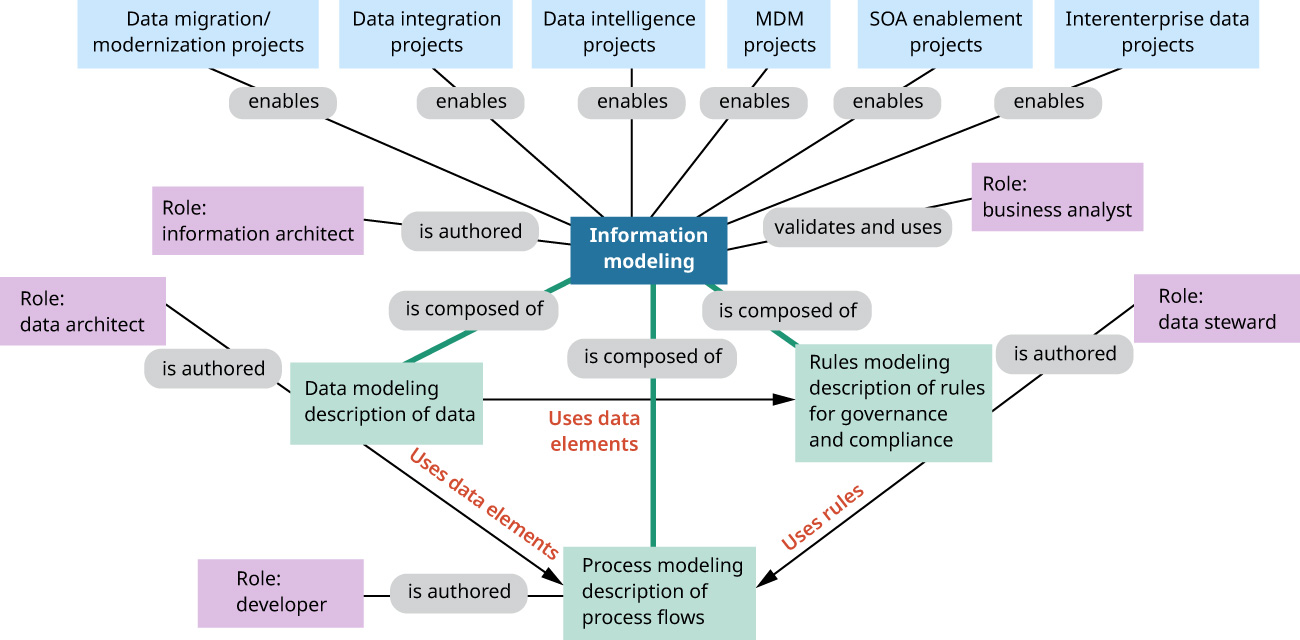
In general, information can be extracted from raw data, knowledge can be gleaned from information, and wisdom can be obtained from knowledge. Most enterprises refer to the relationship between data, information, knowledge, and wisdom as the pyramid of knowledge. A wealth of additional information related to data management and the pyramid of knowledge is provided in Chapter 8 Data Management. Information modeling is the process used to describe the metadata necessary to understand the data, processes, and rules that are relevant to the enterprise, as illustrated in Figure 2.19.
英語のヒント
一般に、生のデータから情報を取り出し、情報から知識を得て、知識から知恵を得ることができる。多くの企業は、データ、情報、知識、知恵の関係を、知識のピラミッドと呼ぶ。データ管理と知識のピラミッドについては、第8章「データ管理」で多くの追加情報を提供する。情報モデリングは、企業に関係するデータ、プロセス、規則を理解するために必要なメタデータを記述する過程である(図2.19)。
attribution: Copyright Rice University, OpenStax, under CC BY 4.0 license · CC BY 4.0 · Source出典
Figure 2.19 Examining and learning from data is integral to an organization’s success, as outlined in this role of information modeling figure. (attribution: Copyright Rice University, OpenStax, under CC BY 4.0 license)
図2.19 情報モデリングの役割を示すこの図のように、データを調べ、そこから学ぶことは、組織の成功に不可欠である。(出典:著作権Rice University、OpenStax。CC BY 4.0ライセンス)
In the collaborative process of data modeling, IT and business stakeholders establish a shared understanding of essential business terms, known as entities, which typically end up being represented as tables that contain data in a relational database management system. This involves defining the attributes that characterize these terms and establishing the relationships between them. The capability to uphold and document the data model is integral to an organization’s capacity to address varied data acquisition needs across critical business projects. In essence, a well-maintained data model serves as a foundational element for ensuring coherence and effectiveness in managing diverse data requirements.
英語のヒント
データモデリングという協働の過程では、IT部門と事業部門の関係者が、エンティティと呼ばれる重要な業務用語について、共通の理解を築く。これらは通常、最終的にはリレーショナルデータベース管理システム内でデータを保持する表として表現される。この過程には、用語を特徴づける属性の定義と、それらの間の関係の設定が含まれる。データモデルを維持・文書化する能力は、重要な業務プロジェクトにまたがる多様なデータ取得のニーズへ組織が応えるうえで、不可欠である。つまり、よく管理されたデータモデルは、多様なデータ要件を一貫して効果的に扱うための基盤となる。
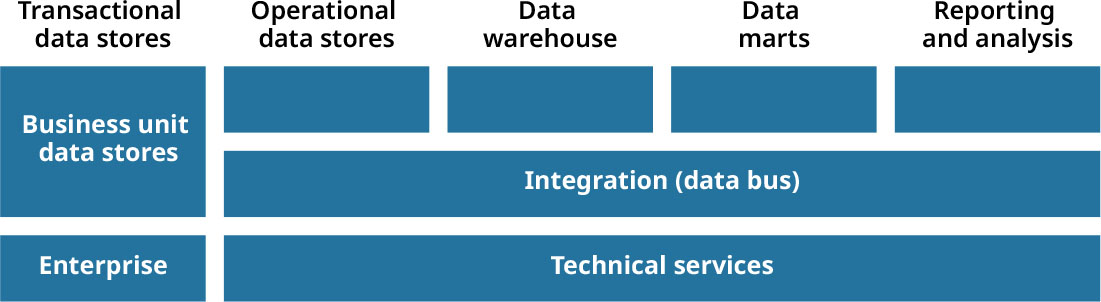
Figure 2.20 is an example of an enterprise-level conceptual data architecture for an insurance company. The goal of the enterprise conceptual data architecture is to illustrate the various types of data repositories and the way data is collected and managed within the enterprise.
英語のヒント
図2.20は、保険会社の企業全体の概念的なデータアーキテクチャーの例である。その目的は、企業内にあるさまざまな種類のデータ保管場所と、データの収集・管理の方法を示すことである。
attribution: Copyright Rice University, OpenStax, under CC BY 4.0 license · CC BY 4.0 · Source出典
Figure 2.20 The enterprise conceptual data architecture for a fictitious insurance company highlights the different ways in which data is handled and managed. (attribution: Copyright Rice University, OpenStax, under CC BY 4.0 license)
英語のヒント
図2.20 架空の保険会社の企業全体の概念的なデータアーキテクチャーは、データを扱い管理するさまざまな方法を示す。(出典:著作権Rice University、OpenStax。CC BY 4.0ライセンス)
Concerning the data that flows through the application architecture, there may be many types of data (e.g., relational and NoSQL) and various ways to represent the corresponding data architecture models. A relational database organizes data into tables where each row represents a unique record and each column represents a property of that record. It uses a language called SQL to manage and query the data. NoSQL databases are designed to store and manage data that doesn’t fit neatly into tables and can handle various types of data models like documents or graphs.
英語のヒント
アプリケーションアーキテクチャーを流れるデータには、リレーショナルやNoSQLなど多くの種類があり、それに対応するデータアーキテクチャーモデルの表し方もさまざまである。リレーショナルデータベースは、各行が一つの固有のレコード、各列がそのレコードの属性を表す表に、データを整理する。SQLという言語を使って、データの管理や問い合わせを行う。NoSQLデータベースは、表にすっきり収まらないデータを保存・管理するよう設計され、文書やグラフなど、さまざまなデータモデルを扱える。