第2章計算論的思考と設計の再利用性
Enterprise-Level Architecture Domains企業全体のアーキテクチャー領域
Enterprise-level architecture encompasses various domains that define the structure, components, and operations of an entire organization. These domains provide a comprehensive framework for managing an enterprise.
英語のヒント
企業全体のアーキテクチャーには、組織全体の構造、構成要素、運営を定める、さまざまな領域が含まれる。これらの領域は、企業を管理する包括的な枠組みを提供する。
Up to this point, our efforts have been centered on employing the adaptive design reuse methodology to construct business solution architectures tailored to individual projects. Within this scope, we aim to facilitate the conversion of solution requirements into a cohesive solution concept, comprehensive business and IT system outlines, and a collection of implementation activities, essentially forming the project plan. However, because the adaptive design reuse approach is top-down, it is possible to start applying it at a higher level. The enterprise level is typically the highest level of an organization, and it covers all strategic and tactical functions. An enterprise often spans multiple organizations.
英語のヒント
ここまでは、適応的な設計の再利用という方法を使い、個々のプロジェクトに合わせたビジネスソリューションのアーキテクチャーを構築することに注目してきた。その範囲では、解決策に求められる要件を、首尾一貫した解決策の構想、ビジネスとITシステムの包括的な概要、実装に向けた活動の集まりへと変えることを目指す。これは実質的に、プロジェクト計画を形作ることである。しかし、適応的な設計の再利用はトップダウンの方法なので、さらに高い水準から適用し始めることができる。企業全体の水準は、一般に組織の最上位に当たり、戦略的・戦術的な機能をすべて含む。一つの企業体が、複数の組織にまたがることも多い。
Enterprise architecture (EA) emerged at the beginning of the information age in the 1970s, and various enterprise architecture frameworks (EAFs) were developed and used over time. The Open Group Architecture Framework (TOGAF) is one such framework. According to TOGAF, an EA domain represents business, data, application, and technology architectures. While specific frameworks may vary, Table 2.3 illustrates the common enterprise-level architecture domains.
英語のヒント
エンタープライズアーキテクチャー(EA)は、情報化時代の始まった1970年代に登場した。その後、さまざまなエンタープライズアーキテクチャーフレームワーク(EAF)が開発され、使われてきた。The Open Group Architecture Framework(TOGAF)は、その一つである。TOGAFによると、EAの領域は、ビジネス、データ、アプリケーション、技術のアーキテクチャーを表す。個々のフレームワークには違いがあるが、表2.3に、企業全体の一般的なアーキテクチャー領域を示す。
Architecture アーキテクチャー | Purpose 目的 | Components 構成要素 |
|---|---|---|
Business architecture ビジネスアーキテクチャー | Defines the organization’s business strategy, goals, processes, and functions 組織の事業戦略、目標、プロセス、機能を定義する | Business models, processes, capabilities, and organizational structure ビジネスモデル、プロセス、能力、組織構造 |
Information architecture 情報アーキテクチャー | Manages data and information assets データと情報資産を管理する | Data models, information flow diagrams, data governance, data standards, and metadata データモデル、情報の流れを示す図、データガバナンス、データ標準、メタデータ |
Application architecture アプリケーションアーキテクチャー | Designs and organizes software applications ソフトウェアアプリケーションを設計し、体系化する | Application portfolio, application integration, and interface design アプリケーション群、アプリケーションの統合、インターフェース設計 |
Technology architecture 技術アーキテクチャー | Specifies the hardware, software, and technology infrastructure ハードウェア、ソフトウェア、技術基盤を規定する | Servers, networks, databases, cloud services, security protocols サーバー、ネットワーク、データベース、クラウドサービス、セキュリティプロトコル |
Security architecture セキュリティアーキテクチャー | Ensures the protection of information assets, systems, and networks 情報資産、システム、ネットワークの保護を確実にする | Security policies, access controls, and encryption mechanisms セキュリティポリシー、アクセス制御、暗号化の仕組み |
Integration architecture 統合アーキテクチャー | Facilitates seamless communication and data exchange 円滑な通信とデータ交換を促す | Middleware, messaging systems, and integration patterns ミドルウェア、メッセージングシステム、統合パターン |
Process architecture プロセスアーキテクチャー | Defines and optimizes business processes 業務プロセスを定義し、最適化する | Process models, workflow diagrams, and performance metrics プロセスモデル、ワークフロー図、性能指標 |
Table 2.3 Common Enterprise-Level Architecture Domains
表2.3 企業全体の一般的なアーキテクチャー領域
EA adopts a holistic perspective, treating the enterprise as a unified system or a system of systems. Its primary aim is to integrate disparate processes, both manual and automated, into a cohesive environment that is responsive to change and aligned with the enterprise’s business strategy. EA involves designing comprehensive systems to support business processes, going beyond individual software or technology systems. By standardizing and integrating fundamental processes across various business divisions, EA facilitates enterprise-wide alignment and optimization of operations.
英語のヒント
EAは全体的な視点を採用し、企業を一つの統合システム、または複数のシステムからなるシステムとして捉える。その主な目的は、手作業と自動化されたものの両方を含む、ばらばらのプロセスを統合し、変化に対応でき、企業の事業戦略と一致する一つの環境を作ることである。EAは、個々のソフトウェアや技術システムを超えて、業務プロセスを支える包括的なシステムを設計する。さまざまな事業部門にまたがる基本的なプロセスを標準化・統合することで、企業全体で業務の整合性を確保し、最適化を進める。
Solution architecture complements EA by tailoring specific system solutions to meet defined business and technological needs. While EA focuses on defining the present situation and future goals of the organization, solution architecture ensures the timely availability of suitable systems to fulfill business requirements.
英語のヒント
ソリューションアーキテクチャーは、明確に定めたビジネスと技術のニーズに応えるよう、個々のシステムによる解決策を調整することで、EAを補完する。EAが組織の現状と将来の目標を定義することに重点を置くのに対し、ソリューションアーキテクチャーは、ビジネス上の要件を満たす適切なシステムを、必要な時期に利用できるようにする。
TOGAF architectures promote the reuse of building blocks but lack a prescriptive method for managing them. Adaptive design reuse becomes valuable in this context, involving understanding enterprise architectures and adapting preexisting models and implementations. Detailed management of EA, solution architectures, and leveraging EAFs is explored further in Chapter 10 Enterprise and Solution Architectures Management.
英語のヒント
TOGAFのアーキテクチャーは構成部品の再利用を促すが、その管理方法を具体的に規定してはいない。そこで、企業全体のアーキテクチャーを理解し、既存のモデルや実装を適応させる、適応的な設計の再利用が役に立つ。EAやソリューションアーキテクチャーの詳細な管理、EAFの活用については、第10章「エンタープライズアーキテクチャーとソリューションアーキテクチャーの管理」でさらに扱う。
Enterprise Business Architecture and Model企業のビジネスアーキテクチャーとモデル
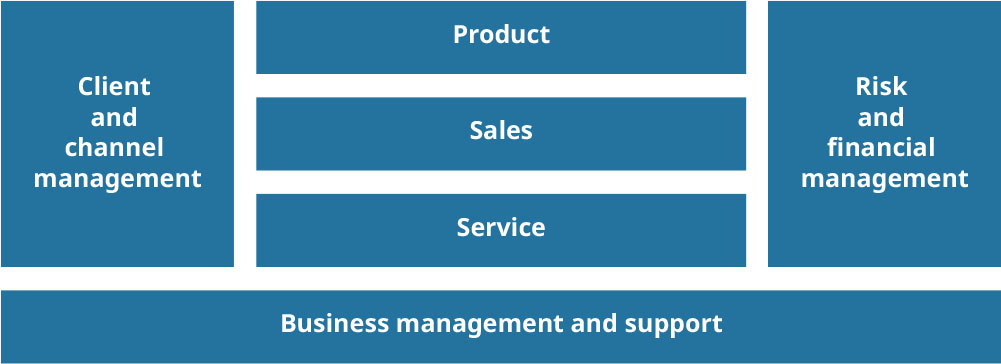
The enterprise business architecture (EBA) is a comprehensive framework that defines the structure and operation of an entire organization. It is related to corporate business and the documents and diagrams that describe the architectural structure of that business. It characterizes the processes, organization, and location aspects of the EBA at hand. EBAs usually consist of different business capabilities grouped into categories, as illustrated in Figure 2.11. In this example, sample categories include product, sales, and service. The business capabilities shown under the various categories typically have business models of their own that are part of the overall organization’s business model. Note that it is clear from this diagram that the layering and componentization heuristics play an important role in structuring capability models.
英語のヒント
エンタープライズビジネスアーキテクチャー(EBA)は、組織全体の構造と運営を定める包括的な枠組みである。企業の事業と、そのアーキテクチャー上の構造を記述する文書や図に関わる。対象とするEBAのプロセス、組織、場所という側面を特徴づける。EBAは通常、図2.11のように、カテゴリーにまとめられたさまざまな業務能力からなる。この例のカテゴリーには、製品、販売、サービスがある。各カテゴリーの下に示される業務能力は、通常、それぞれ独自のビジネスモデルを持ち、それが組織全体のビジネスモデルの一部を構成する。この図からも明らかなように、階層化と部品化のヒューリスティクスは、能力モデルの構造化に重要な役割を果たす。
attribution: Copyright Rice University, OpenStax, under CC BY 4.0 license · CC BY 4.0 · Source出典
Figure 2.11 The EBA framework categories, including product, sales, and service, support the business organizations. (attribution: Copyright Rice University, OpenStax, under CC BY 4.0 license)
図2.11 製品、販売、サービスなどのEBAのカテゴリーは、事業組織を支える。(出典:著作権Rice University、OpenStax。CC BY 4.0ライセンス)
Business architecture modeling helps extract the overall business model of an organization’s capability, which includes the set of underlying processes necessary to operate the various capabilities of the organization.
英語のヒント
ビジネスアーキテクチャーのモデリングは、組織の能力に関する全体的なビジネスモデルを取り出すのに役立つ。このモデルには、組織のさまざまな能力を機能させるために必要な、基盤となるプロセスの集まりが含まれる。
A business model is a framework that outlines how a business creates, delivers, and captures value. It covers the way a company generates revenue, identifies its target audience, and defines the products/services it offers. The business model includes the organization, location, and process model, as described in the following sections. It may include additional models, such as the financial model, which will not be covered here. To illustrate what a business model entails practically, we will focus on a typical financial instruments trading capability, which could be one of the capabilities in the overall business model of an organization operating in the global markets industry. The organization, location, and process models are typically represented at a logical level of abstraction, which is the most detailed representation for these types of models. Note again that layering and componentization heuristics play an important role in structuring these models.
英語のヒント
ビジネスモデルは、事業がどのように価値を生み出し、届け、自らも価値を獲得するかを示す枠組みである。企業が収益を生み出す方法、対象とする顧客の特定、提供する製品・サービスの定義を含む。ビジネスモデルには、この後の各項で説明する組織モデル、場所モデル、プロセスモデルが含まれる。ここでは扱わない財務モデルなど、さらに別のモデルが含まれることもある。ビジネスモデルに実際には何が含まれるかを示すため、典型的な金融商品の取引能力に注目する。これは、世界の市場を対象とする業界で活動する組織の全体的なビジネスモデルに含まれる、一つの能力になりうる。組織、場所、プロセスのモデルは、通常、論理的な抽象化の水準で表す。これが、この種のモデルの最も詳細な表現となる。ここでも、階層化と部品化のヒューリスティクスが、モデルを構造化するうえで重要な役割を果たす。
Organizational Model
組織モデル
The organizational model is the structure and design of an organization, outlining how roles, responsibilities, and relationships are defined. It provides a framework for understanding how various components within the organization interact and collaborate to support its functions. In addition, it offers clear definitions of roles and a matrix mapping of processes to roles.
英語のヒント
組織モデルは、役割、責任、関係をどのように定めるかを示す、組織の構造と設計である。組織内のさまざまな構成要素が、機能を支えるためにどう相互に作用し協力するかを理解する枠組みとなる。また、役割の明確な定義と、プロセスを役割に対応づける行列を提供する。
Role definitions encapsulate a set of functional capabilities essential for an individual to manage one or several distinct business processes, as shown in Table 2.4. It is common for an individual to fulfill multiple roles. The process/role matrix delineates which business roles are accountable for particular business processes. Typically structured at the elementary business process level, this matrix can also be extended to more overarching levels when beneficial.
英語のヒント
役割の定義には、表2.4のように、一人が一つまたは複数の異なる業務プロセスを管理するために必要な、一組の機能的な能力がまとめられる。一人が複数の役割を担うことは一般的である。プロセスと役割の対応表は、どの業務上の役割が特定の業務プロセスに対する責任を負うかを明確にする。通常は基本業務プロセスの水準で構成するが、役立つ場合には、さらに包括的な水準へ広げることもできる。
Role Title 職名 | Responsibilities 責務 | Reporting 報告先 |
|---|---|---|
DBA (database administrator) DBA(データベース管理者) | Managing and monitoring the database activities データベースの活動の管理と監視 | IT manager or VP of IT ITマネージャーまたはIT部門の副社長 |
CIO (chief information officer) CIO(最高情報責任者) | Overall IT leadership IT全体の指揮 | CEO (chief executive officer) CEO(最高経営責任者) |
HR employee 人事担当職員 | Human resources operations 人事業務 | HR manager 人事マネージャー |
Table 2.4 Organizational Roles
表2.4 組織内の役割
In general, the role matrix is a visual representation or chart that outlines the various roles within an organization and their respective responsibilities. It helps in clarifying and communicating the distribution of tasks and authorities among different positions or departments.
英語のヒント
一般に、役割の対応表とは、組織内のさまざまな役割と、それぞれの責任を視覚的に表した図表である。異なる職位や部門の間で、業務と権限がどう配分されているかを明らかにし、伝えるのに役立つ。
In a financial instruments trading business model, various roles contribute to the overall functioning of the organization, as shown in Table 2.5.
金融商品取引のビジネスモデルでは、表2.5のように、さまざまな役割が組織全体の機能に貢献する。
Title 職名 | Roles and Responsibilities 役割と責務 |
|---|---|
Traders トレーダー | • Manage trading portfolios • Develop strategies to maximize profits and manage risk • 取引ポートフォリオを管理する• 利益を最大化し、リスクを管理する戦略を策定する |
Sales team 営業チーム | • Build and maintain client relationships • Understand client needs and offer suitable products and services • 顧客との関係を築き、維持する• 顧客のニーズを理解し、適切な商品やサービスを提案する |
• Process and settle trades • Handle trade confirmation and reconciliation • 取引を処理し、決済する• 取引の確認と照合を行う | |
Risk managers リスク管理担当者 | • Monitor and manage risk exposure • Ensure compliance with risk management policies • リスクへのさらされ方を監視し、管理する• リスク管理方針の遵守を確実にする |
Legal advisors 法務アドバイザー | • Provide legal advice and services • Ensure compliance with laws and regulations • 法的な助言とサービスを提供する• 法令の遵守を確実にする |
Technology professionals 技術専門職 | • Develop and maintain trading systems and IT infrastructure • Ensure the security and efficiency of technology resources • 取引システムとIT基盤を開発し、維持する• 技術資源の安全性と効率を確保する |
Human resources 人事 | • Manage recruitment, training, and employee relations • Ensure the organization is staffed with skilled and motivated employees • 採用、研修、従業員との関係を管理する• 技能と意欲を備えた従業員を組織に配置する |
Table 2.5 Roles and Responsibilities within a Financial Organization
表2.5 金融機関における役割と責任
In addition to these titles, there are two primary management layers: upper management and systems management. Upper management is tasked with the supervision of various sectors within the organization, encompassing numerous business units, operations departments, and other key areas. This tier includes roles such as division managers, group managers, and risk managers, who collectively ensure the smooth operation and strategic direction of the business. On the other hand, systems management is dedicated to the routine functioning of the trading system. This includes positions like site manager, systems maintenance manager, content manager, and help desk personnel, all of which collaborate daily to ensure the trading system is operational, well-maintained, and user-friendly.
英語のヒント
これらの職名に加えて、経営・管理には主に二つの層がある。上位の経営管理と、システム管理である。上位の経営管理は、多数の事業単位、業務部門、そのほかの重要領域を含む、組織内のさまざまな部門の監督を担当する。この層には、部門長、グループ責任者、リスク管理責任者などがおり、協力して事業の円滑な運営と戦略的な方向づけを確保する。一方、システム管理は、取引システムの日々の稼働を担当する。拠点管理者、システム保守管理者、コンテンツ管理者、ヘルプデスク担当者などが含まれ、日々協力して、取引システムが動作し、適切に保守され、使いやすい状態に保たれるようにする。
Process Model
プロセスモデル
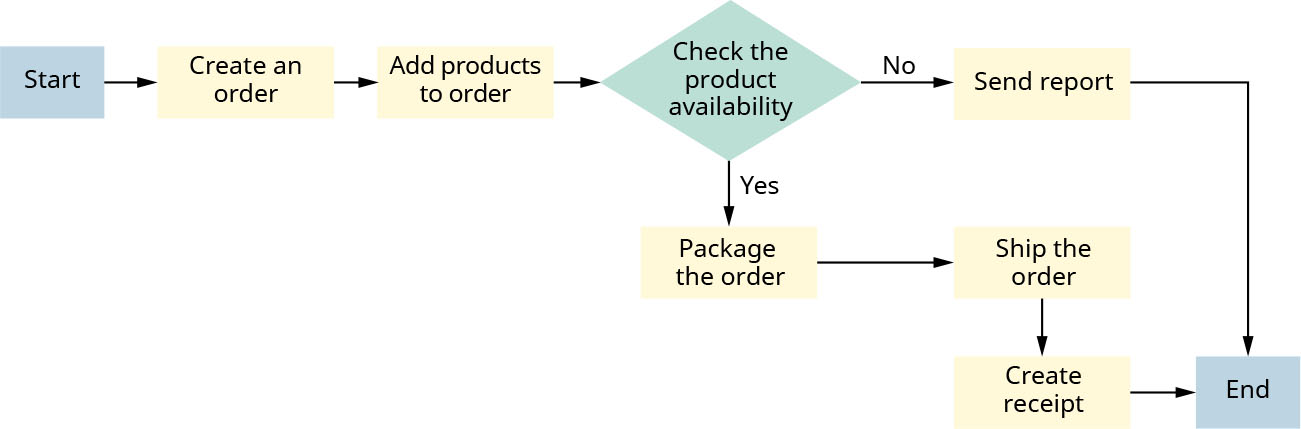
The business process is a series of interrelated tasks, activities, or steps performed in a coordinated manner within an organization to achieve a specific business goal. The business process model can be encapsulated within a framework of business process hierarchies. These hierarchies visually illustrate the outcome of breaking down complex processes, a method known as process decomposition. This decomposition is carried out until it reaches the elementary business process (EBP), which is a fundamental and indivisible activity within a business that is not further subdivided into smaller processes (i.e., the smallest unit of business activity). Figure 2.12 illustrates an example of business process modeling for creating an order.
英語のヒント
業務プロセスとは、特定の事業上の目標を達成するため、組織内で連携して行う、相互に関係する作業、活動、手順の連なりである。業務プロセスモデルは、業務プロセスの階層という枠組みにまとめられる。この階層は、複雑なプロセスを分解した結果を視覚的に示す。この方法は、プロセス分解と呼ばれる。分解は、基本業務プロセス(EBP)に達するまで行う。EBPとは、これ以上小さなプロセスに分けられない、基本的で不可分な業務活動、すなわち業務活動の最小単位である。図2.12に、注文を作成する業務プロセスのモデル化の例を示す。
3 Often referred to as “back-office personnel.” A distinction may be necessary between back-office and front-office functionality. Support—Front-office operations: Typically work alongside traders and salespeople. They facilitate telephone calls, process trades, and resolve trading and sales/customer issues. Front-office personnel would consist of assistant traders and salespeople.
英語のヒント
3 「バックオフィス担当者」とも呼ばれる。バックオフィスとフロントオフィスの機能を区別する必要がある場合がある。支援業務―フロントオフィス業務:通常、トレーダーや営業担当者とともに働く。電話の取り次ぎ、取引の処理、取引や営業・顧客に関する問題の解決を行う。フロントオフィスの担当者には、トレーダーや営業担当者の補佐が含まれる。
attribution: Copyright Rice University, OpenStax, under CC BY 4.0 license · CC BY 4.0 · Source出典
Figure 2.12 This flowchart outlines the business process model for creating an order, checking availability, shipping, and payments. (attribution: Copyright Rice University, OpenStax, under CC BY 4.0 license)
図2.12 注文の作成、在庫確認、発送、支払いの業務プロセスモデルを示すフローチャート。(出典:著作権Rice University、OpenStax。CC BY 4.0ライセンス)
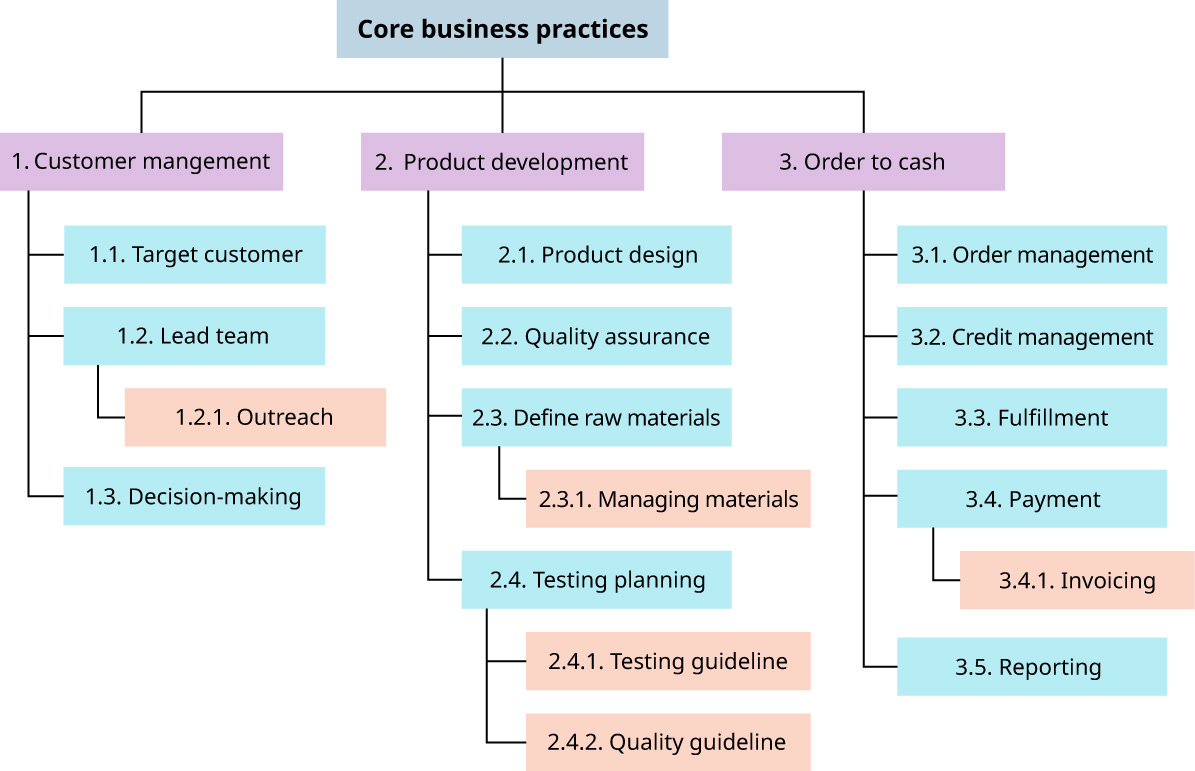
EBPs possess distinct characteristics that make them noteworthy in the context of business operations. They are considered significant and candidates for in-depth analysis. EBPs are typically associated with the actions of a single user, emphasizing a focused responsibility within the organization. Furthermore, these processes may encompass both manual and automated activities, reflecting the diverse nature of contemporary business workflows. User involvement in EBPs is concentrated at a specific point in time, streamlining the temporal aspect of these activities. The preservation of crucial business distinctions between processes ensures clarity and coherence. Finally, EBPs aim to leave the conceptual entity model in a consistent state, contributing to data integrity and maintaining a reliable representation of the organization’s entities and relationships where the entity model represents the various objects or concepts and their relationships within a system. A process map displays the order of chosen processes from the process hierarchies, highlighting their connection to the roles responsible for executing them. A business process hierarchy organizes a company’s activities from broad, general processes down to specific tasks, making it easier to manage and improve how the business operates. Figure 2.13 illustrates a high-level business process hierarchy that could be used for any manufacturing business process.
英語のヒント
EBPには、業務運営の観点から注目に値する特徴がある。重要なものとされ、詳細な分析の対象候補となる。通常、EBPは一人の利用者の動作に対応し、組織内の明確な責任に焦点を当てる。また、手作業と自動化された活動の両方を含み、現代の業務フローの多様さを反映する。利用者の関与は特定の時点に集中し、活動の時間的な側面が整理される。プロセス間の重要な業務上の区別を保つことで、明確さと一貫性が確保される。最後に、EBPは、概念的なエンティティモデルを整合した状態に保つことを目指す。これによりデータの完全性が支えられ、組織の実体と関係が信頼できる形で表現され続ける。エンティティモデルは、システム内のさまざまな物や概念と、それらの関係を表すものである。プロセスマップは、プロセス階層から選んだプロセスの順序を示し、それを実行する責任を持つ役割とのつながりを強調する。業務プロセス階層は、企業の活動を、大きく一般的なプロセスから具体的な作業まで整理し、業務の管理と改善を容易にする。図2.13に、どの製造業の業務プロセスにも使える、高水準の業務プロセス階層を示す。
attribution: Copyright Rice University, OpenStax, under CC BY 4.0 license · CC BY 4.0 · Source出典
Figure 2.13 The trading business process hierarchy includes activities such as customer management, product development, quality control, order fulfillment, and customer payments. (attribution: Copyright Rice University, OpenStax, under CC BY 4.0 license)
図2.13 取引業務のプロセス階層には、顧客管理、製品開発、品質管理、受注履行、顧客からの支払いなどの活動が含まれる。(出典:著作権Rice University、OpenStax。CC BY 4.0ライセンス)
At the top of the hierarchy, there are three core business processes:
階層の最上位には、三つの中核的な業務プロセスがある。
1. Customer management: This process plays a central role, interacting with various activities designed to acquire, retain, and develop customer relationships. It focuses on all aspects of customer interaction. There are three subsections as follows:
英語のヒント
1. 顧客管理:顧客関係を獲得し、維持し、発展させるためのさまざまな活動と関わりながら、中心的な役割を果たすプロセスである。顧客とのやり取りのあらゆる側面に注目する。次の三つの下位区分がある。
◦ 1.1. Target customer: Customers first discover a company and its offerings through various marketing efforts. They then evaluate these offerings to decide if they meet their needs, leading to a purchase decision. After buying, customers may require support, which is provided to ensure satisfaction. A positive experience can turn these customers into loyal buyers and advocates for the company and maintain strong customer relationships.
英語のヒント
◦ 1.1. 対象顧客:顧客はまず、さまざまなマーケティング活動を通じ、企業とその提供物を知る。次に、それらが自分のニーズを満たすか評価し、購入を決める。購入後には支援が必要になることがあり、満足してもらうための支援を提供する。良い体験をした顧客は、忠実な購入者や企業の支持者となり、強い顧客関係が維持される。
◦ 1.2. Lead team: This involves identifying potential leads and assessing their likelihood to purchase. It includes:
英語のヒント
◦ 1.2. 見込み客担当チーム:見込み客を特定し、購入の可能性を評価する。次の活動を含む。
▪ 1.2.1. Outreach: This includes reaching out to customers (current and new) with promotions and advertisements.
英語のヒント
▪ 1.2.1. 働きかけ:販売促進や広告によって、既存顧客と新規顧客へ働きかける。
◦ 1.3. Decision-making: This step focuses on the creation and evaluation of product prototypes to ensure they meet the required standards before launch.
◦ 1.3. 意思決定:この段階は、製品の試作品を作成・評価し、発売前に必要な基準を満たしているか確認することに重点を置く。
2. Product development: This encompasses the entire life cycle of a product from initial idea generation through design and development to launch. There are four subsections:
2. 製品開発:最初のアイデアの創出から、設計、開発、発売まで、製品のライフサイクル全体を含む。下位区分は四つある。
◦ 2.1. Product design: This focuses on the creation and evaluation of product designs to ensure they meet the required standards before testing.
◦ 2.1. 製品設計:製品設計を作成・評価し、テスト前に必要な基準を満たしているか確認することに重点を置く。
◦ 2.2. Quality assurance: QA involves checking the quality of the design and matching it with the listed requirements.
英語のヒント
◦ 2.2. 品質保証:QAでは、設計の品質を確認し、列挙された要件と照合する。
◦ 2.3. Define raw materials: Raw materials are the basic substances needed to make products. These can be things taken from nature, like wood, oil, or metals, which are used in making everything from buildings to clothes and food. The type of raw material used affects how products are made, their quality, and how much they cost. It includes:
英語のヒント
◦ 2.3. 原材料の定義:原材料は、製品を作るために必要な基本的な物質である。木材、石油、金属など、自然から得られるものがあり、建物から衣服、食料まで、さまざまなものの製造に使われる。使用する原材料の種類は、製造方法、品質、費用に影響する。次の活動を含む。
▪ 2.3.1. Managing materials: Managing materials well is important for businesses to make sure they have enough to meet demand, keep production running smoothly, and reduce waste, making the whole process more efficient and sustainable.
英語のヒント
▪ 2.3.1. 材料管理:適切な材料管理は、需要を満たす十分な量を確保し、生産を円滑に続け、無駄を減らすうえで重要である。これにより、過程全体の効率と持続可能性が高まる。
◦ 2.4. Testing planning: Writing detailed instructions for setting up and conducting usability tests, including how to select participants and record feedback, is important and includes:
英語のヒント
◦ 2.4. テスト計画:参加者の選び方や意見の記録方法を含め、使いやすさのテストを準備・実施するための詳しい指示を書くことが重要である。次のものを含む。
▪ 2.4.1. Testing guidelines: Rules that help ensure a product or service works well and is safe before it’s made available or used. These rules guide how to test the item, what tools to use, and what problems to look for, aiming to fix any issues found. The main goal is to make sure the product does what it’s supposed to do and meets quality standards.
英語のヒント
▪ 2.4.1. テストの指針:製品やサービスを提供したり使用したりする前に、それが正しく働き、安全であることを確認するための規則である。試験方法、使用する道具、探すべき問題を導き、見つかった問題の修正を目指す。主な目的は、製品が本来すべきことを行い、品質基準を満たしていると確かめることである。
▪ 2.4.2. Quality guidelines: These are rules that help ensure products or services are consistently good and meet customers’ needs. By following these guidelines, companies aim to make their customers happy, reduce mistakes, and work more efficiently. This involves regularly checking and improving how things are done to make sure they meet high standards.
▪ 2.4.2. 品質の指針:製品やサービスが一貫して良好な品質を持ち、顧客のニーズを満たすことを確実にする規則である。企業はこれらに従うことで、顧客の満足度を高め、間違いを減らし、効率よく働くことを目指す。そのためには、仕事の進め方を定期的に確認・改善し、高い基準を満たすようにする。
3. Order to cash: This is a comprehensive business flow that starts when a customer places an order and ends when the payment is received and recorded:
英語のヒント
3. 受注から入金まで:顧客の注文で始まり、代金を受け取って記録することで終わる、包括的な業務の流れである。
◦ 3.1. Order management: The process begins when a customer places an order through a chosen method, such as an online platform, phone call, or sales representative.
◦ 3.1. 受注管理:オンラインのプラットフォーム、電話、営業担当者など、選んだ方法で顧客が注文すると、プロセスが始まる。
◦ 3.2. Credit management: A credit check is performed to ensure the customer has the necessary credit to make the purchase. If the customer passes the credit check, the order is approved for processing. Otherwise, it may be held until payment is secured or canceled.
英語のヒント
◦ 3.2. 与信管理:購入に必要な信用力が顧客にあるか確かめるため、信用調査を行う。顧客が審査に通れば、注文の処理が承認される。通らなければ、支払いが確保されるまで保留するか、取り消すことがある。
◦ 3.3. Fulfillment: The required products are allocated from inventory. If products are not available, this may trigger a back-order or manufacturing process.
英語のヒント
◦ 3.3. 受注履行:必要な製品を在庫から割り当てる。在庫がなければ、取り寄せ注文や製造のプロセスが始まることがある。
◦ 3.4. Payment: The customer makes a payment using one of the accepted payment methods.
◦ 3.4. 支払い:顧客が、受け付けている支払い方法のいずれかで代金を払う。
▪ 3.4.1. Invoicing: This step will start if the customer pays with a purchase order (i.e., the customer may use different payment methods such as credit card or money transfer). Once the order is shipped, an invoice is generated and sent to the customer, detailing the amount paid and/or due for the products or services provided.
英語のヒント
▪ 3.4.1. 請求:顧客が注文書を使って支払う場合に、この段階が始まる。すなわち、顧客はクレジットカードや送金など、異なる支払い方法を使うことがある。注文品が発送されると、提供した製品やサービスについて、支払済みの金額や支払うべき金額を詳しく記した請求書を作成し、顧客へ送る。
◦ 3.5. Reporting: Reports are generated to analyze the sales volume, payment collection efficiency, and customer buying patterns.
◦ 3.5. 報告:販売量、代金回収の効率、顧客の購入パターンを分析するための報告書を作成する。
EBP definitions include brief explanations of the activities within each process. These descriptions, when paired with the appropriate process flow, serve as a foundation for progressing to intricate design stages and aid in the ongoing creation of functional specifications. Furthermore, they highlight any presumptions established during the architectural development, delineate rules for decisions that require manual intervention, and, where relevant, provide cross-referencing details to ensure compatibility with the functional demands of the application being developed.
英語のヒント
EBPの定義には、各プロセス内の活動についての簡潔な説明が含まれる。これらを適切なプロセスの流れと組み合わせると、複雑な設計段階へ進むための基盤となり、機能仕様を継続して作成するのに役立つ。また、アーキテクチャーの開発時に置いた前提を明らかにし、人の介入を要する意思決定の規則を明示する。必要に応じて、開発中のアプリケーションの機能要件と整合するよう、相互参照の詳細も提供する。
The assignment of numbers to EBPs mirrors their placement within hierarchical structures, enabling their linkage to various work products throughout the business, organizational, and location-specific domains, along with pertinent models.
英語のヒント
EBPに割り当てる番号は、階層構造内での位置を反映する。これにより、業務、組織、場所ごとの領域にまたがるさまざまな成果物や、関連モデルと結びつけられる。
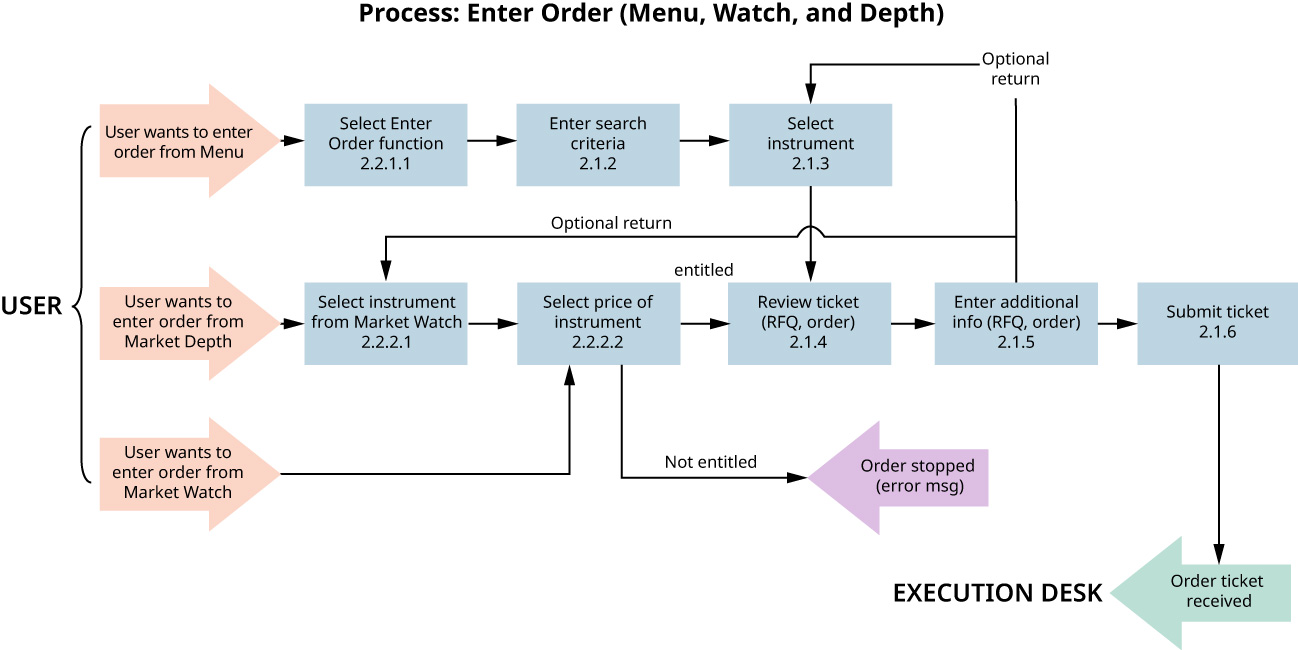
Process map diagrams illustrate the order of chosen processes from the process hierarchies, focusing on their connection to the roles responsible for executing them. The process maps specifically highlight key processes that hold particular business importance. Although every process featured in a process map is also included in the business process hierarchy, not all processes in the hierarchy are depicted in the process maps. Process flow diagrams can depict various elements, such as the business events triggering a process, outcomes of completing a process, the processes themselves, the sequence of process steps, interruptions in the process flow, possibilities for repetition, choices, exclusivity among processes, and any additional notes. Figure 2.14 illustrates a process map diagram for an order to cash business process.
英語のヒント
プロセスマップ図は、プロセス階層から選んだプロセスの順序を示し、それを実行する責任を持つ役割とのつながりに注目する。特に、業務上の重要性が高い主要プロセスを強調する。プロセスマップに載るプロセスはすべて業務プロセス階層にも含まれるが、階層内のすべてのプロセスがマップに描かれるわけではない。プロセスフロー図は、プロセスを起動する業務上の出来事、完了時の結果、プロセスそのもの、各手順の順序、流れの中断、反復の可能性、選択、プロセス同士の排他性、追加の注記などを表せる。図2.14に、受注から入金までの業務プロセスのマップを示す。

attribution: Copyright Rice University, OpenStax, under CC BY 4.0 license · CC BY 4.0 · Source出典
Figure 2.14 The order to cash business process flows from order management through product fulfillment and payment. (attribution: Copyright Rice University, OpenStax, under CC BY 4.0 license)
図2.14 受注から入金までの業務プロセスは、受注管理から商品の受注履行、支払いへと進む。(出典:著作権Rice University、OpenStax。CC BY 4.0ライセンス)
Figure 2.15 illustrates the process of managing orders within a business. It begins with order management, where orders are received and verified for accuracy. Next is credit management, which assesses the customer’s credit to ensure they can fulfill payment requirements. The process then moves to fulfillment, where the order is prepared and shipped. Then, during payment, the customer is invoiced and payment is processed. Invoicing is a detailed part of this step, where an invoice is generated and sent to the customer. The final stage is reporting, where the business generates reports on sales and financial transactions. This process ends once all steps are completed, ensuring each order is handled efficiently from start to finish.
英語のヒント
図2.15は、事業における注文管理の過程を示す。まず受注管理で注文を受け付け、その内容が正しいか確認する。次の与信管理では、顧客が支払いの要件を満たせるよう、信用力を評価する。その後、受注履行に進み、注文品を準備して発送する。支払いの段階では顧客へ請求し、支払いを処理する。請求はこの段階の詳しい一部分であり、請求書を作成して顧客へ送る。最後は報告の段階で、売上や金融取引についての報告書を作成する。すべての手順が完了すると、このプロセスは終了する。こうして、各注文を最初から最後まで効率的に処理する。
attribution: Copyright Rice University, OpenStax, under CC BY 4.0 license · CC BY 4.0 · Source出典
Figure 2.15 This sample trading business model represents a process map diagram for the enter order process. (attribution: Copyright Rice University, OpenStax, under CC BY 4.0 license)
図2.15 この取引業務モデルの例は、注文入力プロセスのプロセスマップ図を示す。(出典:著作権Rice University、OpenStax。CC BY 4.0ライセンス)
Location Model
場所モデル
A location model refers to a set of rules used to analyze and make decisions related to the positioning of entities, activities, or resources. The conceptual location model shows how business processes will be distributed geographically. Within the location model, definitions of location types specify the identification of locations based on both their type and general geographic area. Additionally, the location model contains a matrix illustrating the relationship between processes and locations, indicating the specific location types where each process takes place.
英語のヒント
場所モデルとは、実体、活動、資源の配置に関する分析と意思決定に使う、一組の規則を指す。概念的な場所モデルは、業務プロセスを地理的にどう分散させるかを示す。モデル内の場所の種類の定義では、種類と大まかな地理的地域の両方に基づいて、場所を特定する。また、プロセスと場所の関係を示す対応表も含み、各プロセスが行われる具体的な場所の種類を示す。