第1章コンピューターサイエンス入門
GLOBAL ISSUES IN TECHNOLOGY技術をめぐる世界の課題
H-1B Visas Address Worker ShortagesH-1Bビザによる労働力不足への対応
According to the U.S. Bureau of Labor Statistics (BLS), by 2033, the number of jobs available for computer and information research scientists is expected to increase by 26%. This is much faster job growth than the average expected in total for all occupations. BLS predicts that this will result in about 3,400 job openings per year in technology, including computer science.8
英語のヒント
アメリカ労働統計局(BLS)によると、コンピューター・情報研究科学者の雇用数は、2033年までに26%増加すると予想されている。これは、すべての職業について予想される平均の雇用増加率を大きく上回る。BLSは、その結果、コンピューターサイエンスを含む技術分野で、年に約3,400件の求人が生じると予測している。8
To fill some of these jobs, U.S. employers likely will continue to rely on H-1B visas. This visa enables employers to recruit well-educated professionals from other countries. These professionals temporarily reside in the United States and work in specialty occupations, like computer science, that require a minimum education of a bachelor’s degree or its equivalent.9 To participate in the visa program, employers must register and file a petition to hire H-1B visa holders. Each year, the U.S. Citizenship and Immigration Services accepts applications from individuals from other countries who compete for a pool of 65,000 visa numbers, as well as an additional pool of 20,000 master’s exemption visa numbers awarded that year and valid for a period of three years. At the end of three years, employers can petition to have each worker’s visa extended for a period of three additional years.10 This program helps U.S. employers fill vacancies in many fields, including computer science while providing job opportunities for highly skilled workers around the world.
英語のヒント
こうした職の一部を埋めるため、アメリカの雇用主は今後もH-1Bビザを利用すると考えられる。このビザは、他国から高い教育を受けた専門家を採用することを可能にする。彼らは一時的にアメリカに居住し、コンピューターサイエンスのように、少なくとも学士号またはそれに相当する学歴を必要とする専門職に従事する。9この制度に参加するには、雇用主は登録を行い、H-1Bビザ保有者を雇用するための請願書を提出しなければならない。アメリカ市民権・移民局は毎年、65,000件のビザ枠に加え、その年に割り当てられ、3年間有効な、修士号取得者向けの別枠20,000件を求めて競う外国人から申請を受け付ける。3年が経過すると、雇用主は各労働者のビザをさらに3年間延長するよう請願できる。10この制度は、世界各地の高度な技能を持つ労働者に就業機会を提供すると同時に、アメリカの雇用主がコンピューターサイエンスなど、多くの分野の欠員を埋めるのを助けている。
Computers and Global Developmentコンピューターと世界の開発
Computer technology, like any other cutting-edge technology, changes the balance of power in society. But access to new technologies is rarely ever equal. Computer science has improved the quality of life for many people who have access to computer technology and the means of controlling it to serve their interests. But for everyone else in the world, particularly people living in the Global South, computer technologies need context-sensitive designs to meet their needs. In the 1990s, for instance, consumer access to the Internet was primarily based on “dial-up” systems that ran on top of public telephone network systems. Yet many parts of the world, even today, lack telephone coverage, let alone Internet connectivity. Research in computers for global development aims to improve the quality of life for people all over the world by designing computer solutions for low-income and underserved populations across the world—not just those living in the wealthiest countries.
英語のヒント
コンピューター技術は、ほかの最先端技術と同じように、社会の力の均衡を変える。しかし、新技術を利用する機会が平等であることは、ほとんどない。コンピューター技術にアクセスでき、それを自分たちの利益に役立つよう制御する手段を持つ多くの人々にとって、コンピューターサイエンスは生活の質を向上させてきた。だが、世界のそれ以外の人々、とりわけグローバルサウスに暮らす人々の必要に応えるには、その地域の状況に配慮した設計が求められる。例えば1990年代、一般利用者のインターネット接続は、主に公衆電話網の上で動く「ダイヤルアップ」方式に基づいていた。しかし、今なお世界の多くの地域では、インターネット接続はおろか、電話網さえ十分に整っていない。世界の開発に向けたコンピューター研究は、最も豊かな国に暮らす人々だけでなく、世界中の低所得層や、十分なサービスを受けられていない人々に向けて解決策を設計することで、世界のすべての人々の生活の質を高めようとしている。
Computer technologies for global development require designing around unique resource constraints such as a lack of reliable power, limited or nonexistent Internet connectivity, and low literacy. Computer scientists employ a variety of methods drawing from the social sciences to produce effective solutions. However, designing for diverse communities is difficult, particularly when the designers have little direct experience with the people they wish to serve. In The Charisma Machine, Morgan Ames criticizes the One Laptop Per Child (OLPC) project, a nonprofit initiative announced in 2005 by the Massachusetts Institute of Technology Media Lab. The project attempted to bring computer technology in the form of small, sturdy, and cheap laptops that were powered by a hand crank to children in the Global South. Based on her fieldwork in Paraguay, Ames argues that the project failed to achieve its goals for a variety of reasons, such as electricity infrastructure problems, hardware reliability issues, software frustrations, and a lack of curricular materials. Ames argues that “charismatic technologies are deceptive: they make both technological adoption and social change appear straightforward instead of as a difficult process fraught with choices and politics.” When the computers did work, OLPC’s vision for education never truly materialized because children often used the computers for their own entertainment rather than the learning experiences the designers intended. Though Ames’s account of the OLPC project (Figure 1.6) itself has been criticized for presenting an oversimplified narrative, it still represents a valuable argument for the risks and potential pitfalls associated with designing technologies for global development: technology does not act on its own but is embedded in a complicated social context and history.
英語のヒント
世界の開発に役立つコンピューター技術には、安定した電力の不足、インターネット接続の制限や不在、低い識字率など、特有の資源制約を踏まえた設計が必要である。コンピューターサイエンティストは、有効な解決策を生み出すため、社会科学から取り入れたさまざまな方法を使う。しかし、多様な共同体に向けて設計するのは難しい。特に、支援したい人々と直接関わった経験が、設計者にほとんどない場合はそうである。モーガン・エイムズは『The Charisma Machine』で、2005年にマサチューセッツ工科大学メディアラボが発表した非営利の取り組み、One Laptop Per Child(OLPC)を批判している。この計画は、手回し発電で動く、小さく、丈夫で、安価なノートパソコンを通じて、グローバルサウスの子どもたちにコンピューター技術を届けようとした。パラグアイでの現地調査を踏まえ、エイムズは、電力インフラの問題、ハードウェアの信頼性の問題、ソフトウェアへの不満、教材の不足など、多くの理由によって計画は目標を達成できなかったと論じる。彼女は、「カリスマ的な技術は人を欺く。技術の導入も社会の変化も、選択と政治が絡み合う困難な過程であるのに、単純であるかのように見せてしまう」と述べている。コンピューターが動作した場合にも、OLPCの教育構想は十分には実現しなかった。子どもたちは、設計者が意図した学習体験より、自分たちの娯楽のためにコンピューターを使うことが多かったからである。エイムズによるOLPC計画(図1.6)の説明そのものにも、単純化しすぎた物語を提示しているという批判はある。それでも、世界の開発のために技術を設計する際の危険や、陥りうる落とし穴を考えるうえで、価値のある議論であることに変わりはない。技術は単独で作用するのではなく、複雑な社会的文脈と歴史に組み込まれているのである。
8 U.S. Bureau of Labor Statistics, “Computer and Information Research Scientists: Job Outlook,” 2024. https://www.bls.gov/ooh/ computer-and-information-technology/computer-and-information-research-scientists.htm#tab-6 9 U.S. Citizenship and Immigration Services, “H-1B Specialty Occupations,” 2024. https://www.uscis.gov/working-in-the-united-states/h-1b-specialty-occupations 10 American Immigration Council, “The H-1B Visa Program and Its Impact on the U.S. Economy,” 2024. https://www.americanimmigrationcouncil.org/research/h1b-visa-program-fact-sheet
8 アメリカ労働統計局「Computer and Information Research Scientists: Job Outlook」、2024年。https://www.bls.gov/ooh/computer-and-information-technology/computer-and-information-research-scientists.htm#tab-69 アメリカ市民権・移民局「H-1B Specialty Occupations」、2024年。https://www.uscis.gov/working-in-the-united-states/h-1b-specialty-occupations10 American Immigration Council「The H-1B Visa Program and Its Impact on the U.S. Economy」、2024年。https://www.americanimmigrationcouncil.org/research/h1b-visa-program-fact-sheet
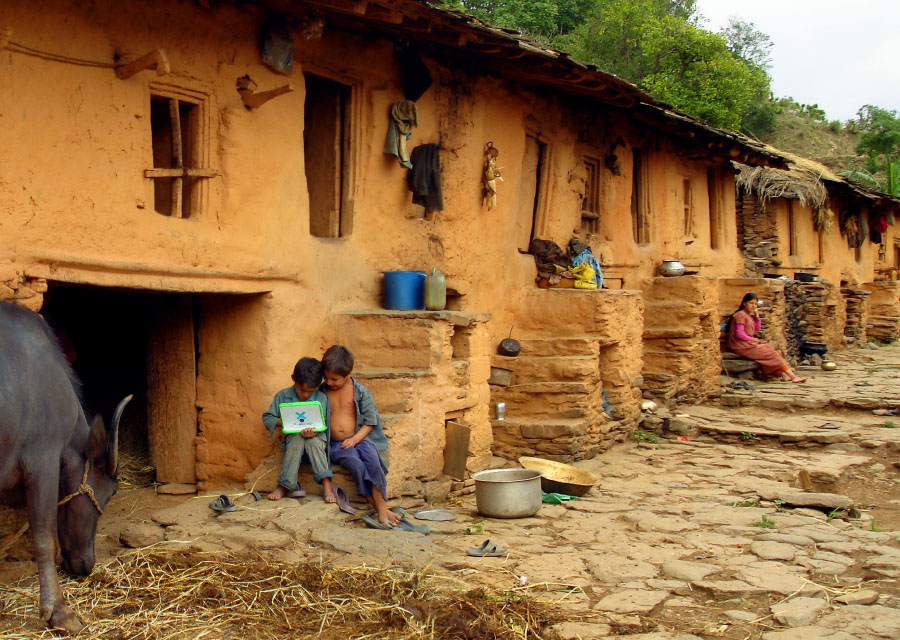
credit: "One Laptop per Child" by OLE Nepal Cover/Flickr, CC BY 2.0 · CC BY 2.0 · Source出典
Figure 1.6 In 2005, MIT’s Media Lab started the OLPC initiative to bring laptops to children in the Global South. An unexpected outcome they discovered was that designing technologies for global communities is not as straightforward as designers may initially believe. (credit: "One Laptop per Child" by OLE Nepal Cover/Flickr, CC BY 2.0)
図1.6 2005年、MITのメディアラボは、グローバルサウスの子どもたちにノートパソコンを届けるOLPCの取り組みを開始した。そこで明らかになった予想外の結果は、世界各地の共同体に向けた技術設計が、設計者の当初の想定ほど単純ではないということだった。(出典:OLE Nepal Cover/Flickr「One Laptop per Child」、CC BY 2.0)