第10章エンタープライズアーキテクチャーとソリューションアーキテクチャーの管理
10.2 Enterprise Architecture Management Frameworks10.2 エンタープライズアーキテクチャ管理の枠組み
Learning Objectives学習目標
By the end of this section, you will be able to:
この節を終えると、次のことができるようになる。
• Understand how enterprise architecture management helps align business and technology strategies
• エンタープライズアーキテクチャ管理が、事業と技術の戦略の整合にどう役立つかを理解する
• Explain what enterprise architecture frameworks are used for
• エンタープライズアーキテクチャの枠組みの用途を説明する
• Relate to the specifics of the TOGAF enterprise architecture framework
• TOGAFのエンタープライズアーキテクチャの枠組みの特徴を、関連付けて考える
• Build a strategic adoption road map
• 戦略的な導入のロードマップを構築する
• Apply process frameworks and blueprinting templates in EAM
• EAMで、プロセスの枠組みと設計図作成のテンプレートを適用する
Enterprise architecture (EA) is a comprehensive, well-defined approach to a business plan that utilizes information technology to meet the objectives of the business vision by aligning business and technology strategies. Information technology includes software, hardware, communication, data, and people. Managing EA will involve using enterprise architecture management (EAM), which helps guide the adoption of technology stacks and corresponding implementation frameworks. EAM is the practice of managing an enterprise’s business and IT architecture. It involves planning, designing, implementing, and governing the enterprise architecture to support the organization’s goals.
英語のヒント
エンタープライズアーキテクチャ(EA)は、事業と技術の戦略を整合させ、情報技術を使って事業の構想が掲げる目標を達成するための、包括的で明確に定められた事業計画への取り組み方である。情報技術には、ソフトウェア、ハードウェア、通信、データ、人が含まれる。EAを管理する際には、エンタープライズアーキテクチャ管理(EAM)を用い、技術スタックと対応する実装の枠組みの導入を導く。EAMは、企業の業務とITのアーキテクチャを管理する実践である。組織の目標を支えるために、アーキテクチャの計画、設計、実装、統治を行う。
Enterprise Architectureエンタープライズアーキテクチャ
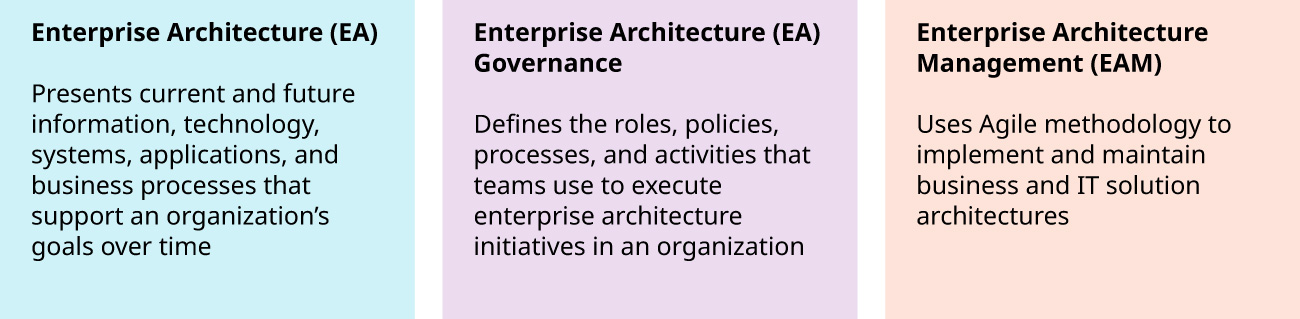
There are many activities/business processes associated with an enterprise; however, its focus is on activities that allow it to meet current and future objectives. A business process is a series of steps a group of stakeholders performs to achieve an enterprise concrete goal or set of objectives. Current objectives reflect an enterprise’s mission and short-term strategies, while future objectives reflect their vision and long-term strategies. To ensure successful development and execution of these strategies in either the short or long term, an enterprise will rely on EA as shown in Figure 10.10.
英語のヒント
企業には多くの活動や業務プロセスが関わるが、中心となるのは、現在と将来の目標を達成できる活動である。業務プロセスとは、企業の具体的な目標や一連の目的を達成するために、利害関係者の集団が行う一連の手順である。現在の目標は企業の使命と短期戦略を反映し、将来の目標は構想と長期戦略を反映する。短期でも長期でも、こうした戦略をうまく策定し実行するために、企業は図10.10に示すEAを頼りにする。
attribution: Copyright Rice University, OpenStax, under CC BY 4.0 license · CC BY 4.0 · Source出典
Figure 10.10 The goal of EAM is to provide enterprise capabilities to keep business solutions aligned with the enterprise strategy. (attribution: Copyright Rice University, OpenStax, under CC BY 4.0 license)
図10.10 EAMの目標は、事業向けの仕組みを企業戦略に整合させ続けるための、企業の能力を提供することである。(帰属:Rice University、OpenStax著作権、CC BY 4.0ライセンス。)
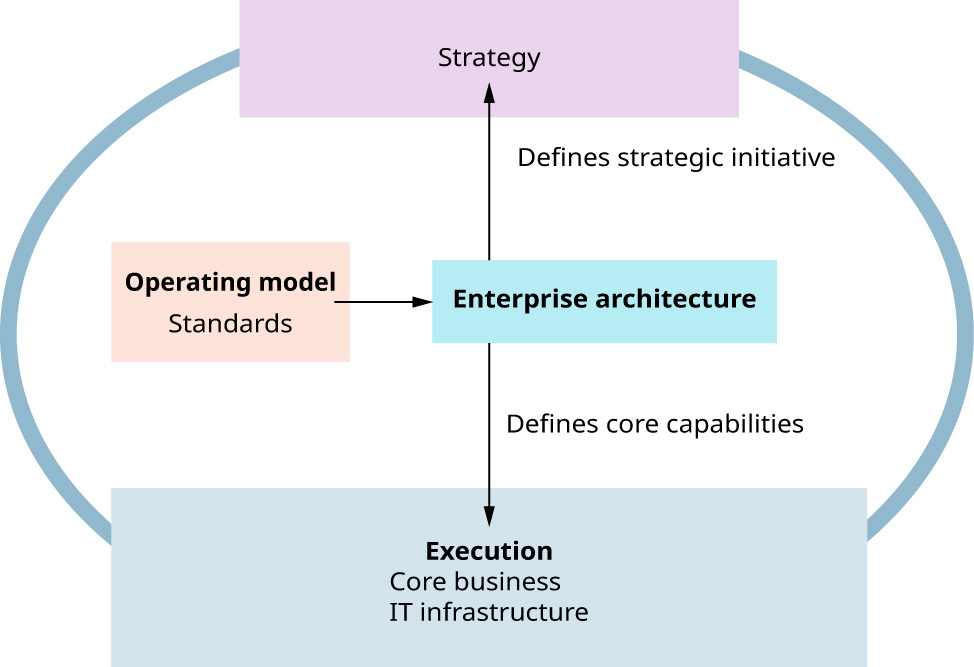
As illustrated in Figure 10.11, EA follows the requirements of a preestablished operating model, helps establish meaningful strategic boundaries, supports the management of core business capabilities that enable the development of a business platform for the execution of routine business tasks, and allows people to concentrate on improving the business rather than just purely running it. A foundation for execution is a combination of IT infrastructure (i.e., hardware, software, communication, and data) and digitized processes that automate the company’s core business capabilities. The goal of the foundation for execution is to develop alignment between business and IT strategy. Creating and maintaining a foundation for execution relies on the company’s operating model, strategy adoption road map, and a view of its reference architecture. A road map is used to guide an organization with planning and achieving business goals over time through technology.
英語のヒント
図10.11に示すように、EAは、あらかじめ定めた運営モデルの要求に従い、意味のある戦略上の境界を定める助けとなる。また、中核的な事業能力の管理を支援し、日常的な業務を実行する業務基盤を開発できるようにする。人々が単に事業を回すだけでなく、改善に集中できるようにもする。実行基盤は、ITインフラストラクチャ、すなわちハードウェア、ソフトウェア、通信、データと、企業の中核的な事業能力を自動化するデジタル化されたプロセスを組み合わせたものである。その目標は、事業とITの戦略の整合を図ることにある。実行基盤の作成と維持は、企業の運営モデル、戦略導入のロードマップ、参照アーキテクチャのビューに依存する。ロードマップは、技術を通じて時間をかけて事業目標を計画し、達成するよう組織を導くために使う。
attribution: Copyright Rice University, OpenStax, under CC BY 4.0 license · CC BY 4.0 · Source出典
Figure 10.11 This figure depicts the EA foundation design for execution. (attribution: Copyright Rice University, OpenStax, under CC BY 4.0 license)
図10.11 この図は、EAにおける実行基盤の設計を示している。(帰属:Rice University、OpenStax著作権、CC BY 4.0ライセンス。)
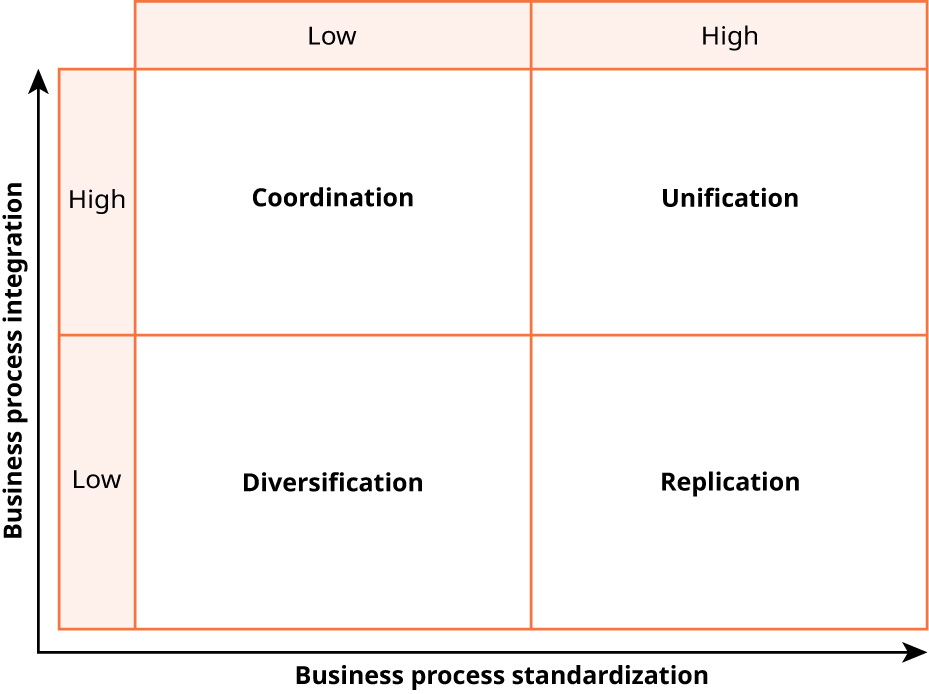
Figure 10.12 illustrates various operating models known as diversification, coordination, replication, and unification. These models correspond to variations in the way business processes are standardized and integrated.
英語のヒント
図10.12は、多角化、協調、複製、統一と呼ばれる、さまざまな運営モデルを示す。これらの違いは、業務プロセスの標準化と統合のあり方の違いに対応する。
attribution: Copyright Rice University, OpenStax, under CC BY 4.0 license · CC BY 4.0 · Source出典
Figure 10.12 Operating models known as diversification, coordination, replication, and unification correspond to the way business processes are standardized and integrated. (attribution: Copyright Rice University, OpenStax, under CC BY 4.0 license)
図10.12 多角化、協調、複製、統一と呼ばれる運営モデルは、業務プロセスの標準化と統合のあり方に対応する。(帰属:Rice University、OpenStax著作権、CC BY 4.0ライセンス。)
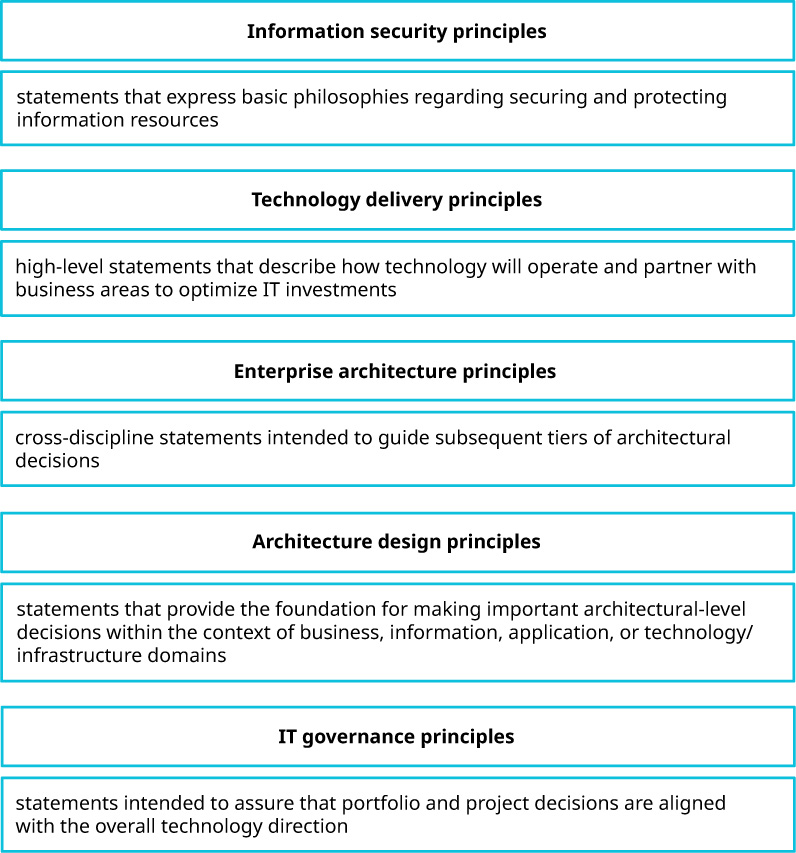
The enterprise IT strategy is based on a collective set of principles. These principles form a consistent framework for technology decision-making and reflect a level of consensus among key stakeholder technology groups. The technology groups include senior leadership, the architecture council, and leading architects. Figure 10.13 shows the principles are intended to guide decision-making at all levels and are organized as a business, information, application, and infrastructure.
英語のヒント
企業のIT戦略は、一連の原則全体に基づく。こうした原則は、技術に関する意思決定の一貫した枠組みを形成し、主要な利害関係者である技術部門の集団の間の、合意の水準を反映する。この集団には、上級経営陣、アーキテクチャ評議会、主要なアーキテクトが含まれる。図10.13に示すように、原則はすべての水準の意思決定を導くことを意図し、業務、情報、アプリケーション、インフラストラクチャとして整理される。
attribution: Copyright Rice University, OpenStax, under CC BY 4.0 license · CC BY 4.0 · Source出典
Figure 10.13 The organizing framework includes information security principles, technology delivery principles, enterprise architecture principles, and architectural design principles. (attribution: Copyright Rice University, OpenStax, under CC BY 4.0 license)
図10.13 整理の枠組みには、情報セキュリティ原則、技術提供原則、エンタープライズアーキテクチャ原則、アーキテクチャ設計原則が含まれる。(帰属:Rice University、OpenStax著作権、CC BY 4.0ライセンス。)
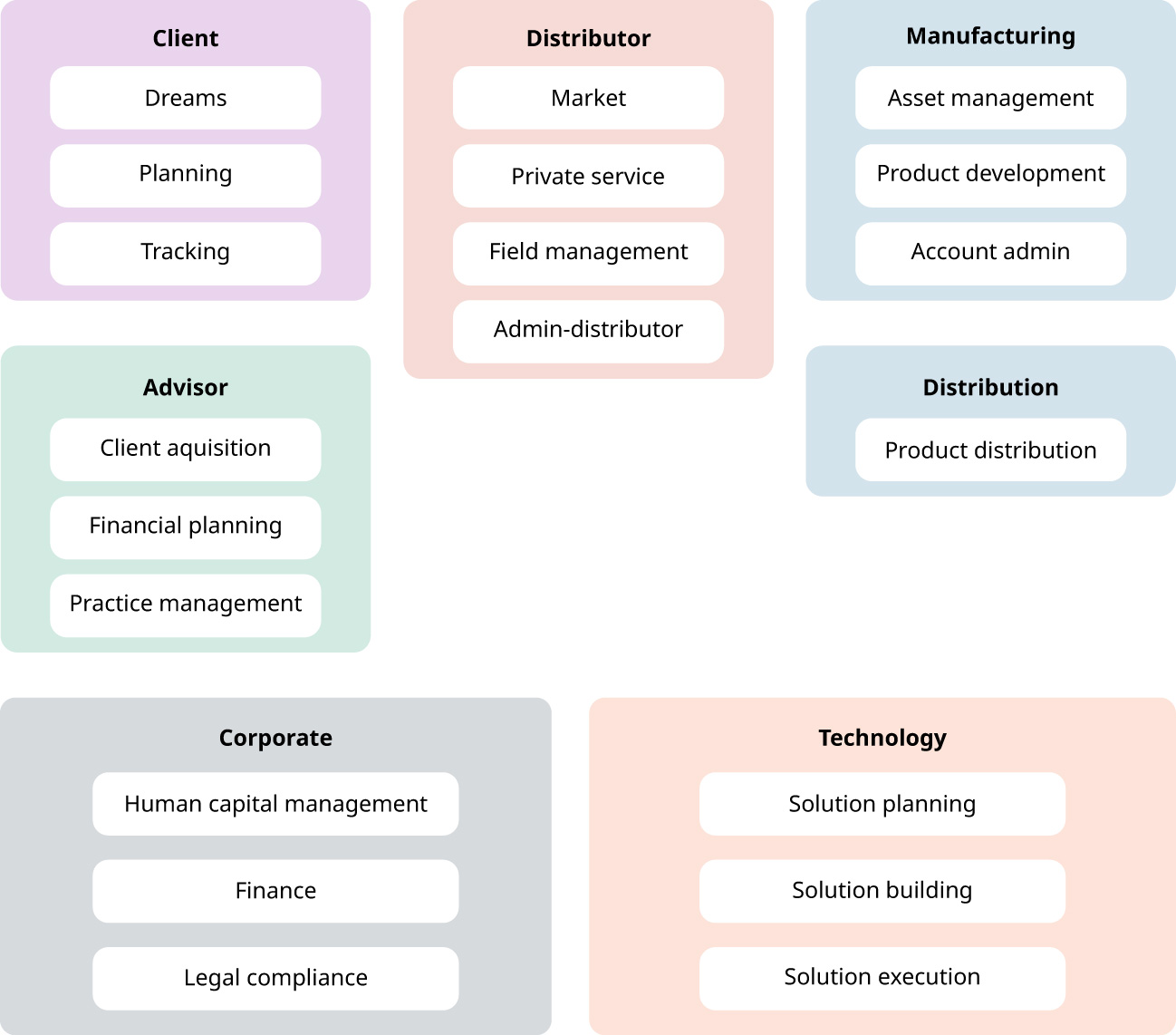
Figure 10.14 summarizes typical enterprise capabilities within various business units such as manufacturing, corporate, and technology.
図10.14は、製造、全社部門、技術など、さまざまな業務部門の中の典型的な企業能力をまとめている。
attribution: Copyright Rice University, OpenStax, under CC BY 4.0 license · CC BY 4.0 · Source出典
Figure 10.14 Typical enterprise capabilities within various business units such as manufacturing, corporate, and technology are shown. (attribution: Copyright Rice University, OpenStax, under CC BY 4.0 license)
図10.14 製造、全社部門、技術など、さまざまな業務部門の中の典型的な企業能力を示す。(帰属:Rice University、OpenStax著作権、CC BY 4.0ライセンス。)
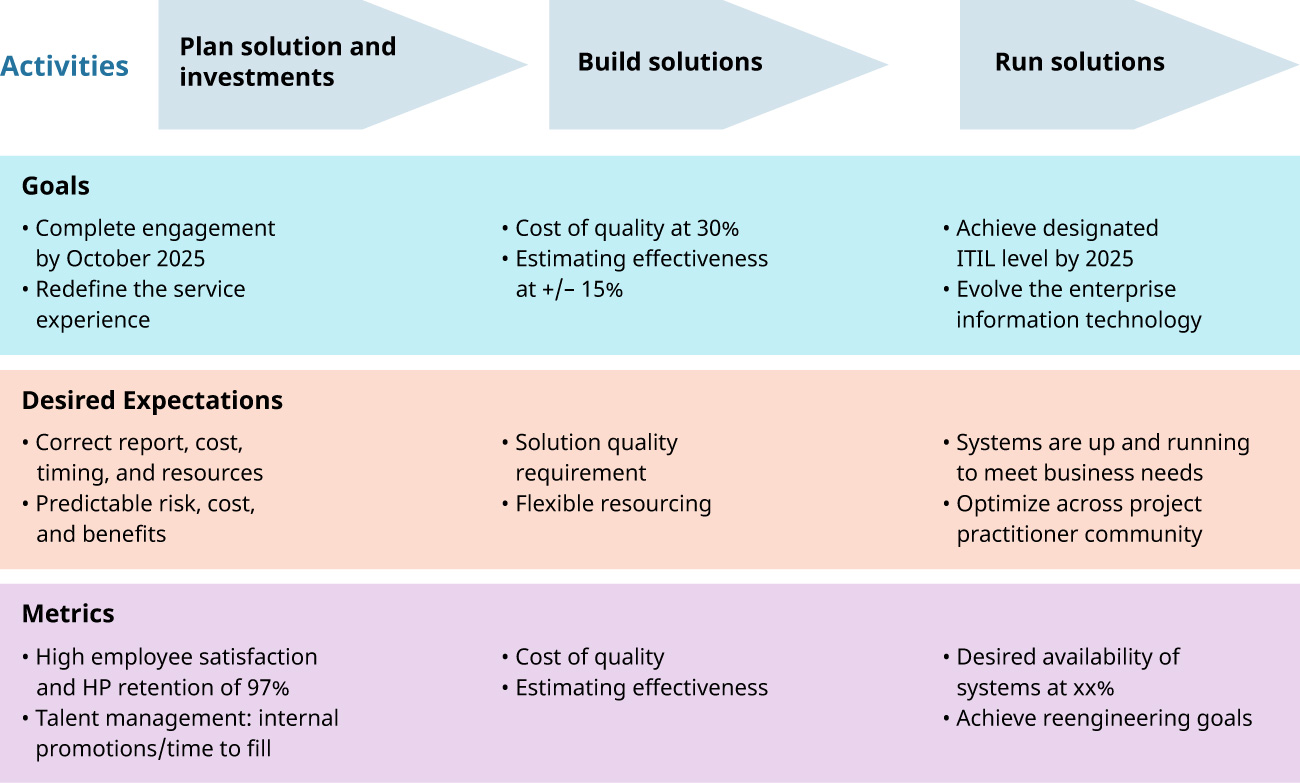
Investment in technology may have possible impacts, such as goals, desired expectations, and metrics. In the goals, we estimate many factors, such as the required time, the deliverables information, the cost of quality, and the outputs. In the desired expectation, we evaluate the project (e.g., right project, right cost, right timing, and right resources). In the metrics, we measure the investment demand, employee satisfaction, and quality of service (i.e., availability and cost). Figure 10.15 illustrates the possible impact of investment initiatives in technology capabilities as they are arranged in the plan and solution section, built into the solutions section, and deployed into products delivered to customers. The process will start with planning solutions and investments, then building solutions, and, finally, running solutions.
英語のヒント
技術への投資は、目標、望ましい期待、評価指標などに影響を与える可能性がある。目標では、必要な時間、成果物の情報、品質にかかる費用、出力など、多くの要因を見積もる。望ましい期待では、適切なプロジェクト、費用、時期、資源といった観点から、プロジェクトを評価する。評価指標では、投資の需要、従業員の満足度、サービス品質(可用性と費用)を測る。図10.15は、技術能力への投資の取り組みがもたらしうる影響を示す。計画とソリューションの部門で整理し、ソリューションの部門で構築し、顧客へ提供する製品に配備する。プロセスは、仕組みと投資の計画から始まり、仕組みの構築へ進み、最後に運用する。
attribution: Copyright Rice University, OpenStax, under CC BY 4.0 license · CC BY 4.0 · Source出典
Figure 10.15 There are many possible impacts of investment initiatives in technology capabilities. Each section lists the assigned capabilities and/or impacts. (attribution: Copyright Rice University, OpenStax, under CC BY 4.0 license)
図10.15 技術能力への投資の取り組みには、多くの影響が考えられる。各部門には、割り当てられた能力や影響、またはその両方を列挙している。(帰属:Rice University、OpenStax著作権、CC BY 4.0ライセンス。)
Business and technology executives are responsible for ensuring that an IT project achieves division-wide and company-wide objectives by engaging with the enterprise architects. EA is an evolving practice that takes time, investment, and patience. It should provide a strategic framework for organizations to handle technological disruptions by aligning IT systems with business goals while helping decision-makers implement changes that drive innovation, resilience, and efficiency to ensure short-term initiatives and long-term projects can contribute to the success of the company.
英語のヒント
事業と技術の幹部は、エンタープライズアーキテクトと連携し、ITプロジェクトが部門全体と会社全体の目標を達成するようにする責任を持つ。EAは、時間、投資、忍耐を必要とする、発展を続ける実践である。ITシステムを事業目標に整合させることで、組織が技術による大きな変化に対応するための戦略的な枠組みを提供すべきものである。同時に、意思決定者が、革新、回復力、効率を高める変化を実施できるよう支援し、短期の取り組みと長期のプロジェクトが、企業の成功に貢献するようにする。
A leading health-care organization aimed to reduce operational costs while streamlining patient care. They used EAs to identify the need for a unified data system. The system needed to integrate patient records, billing, and telemedicine services. The EA team presented recommendations, including adopting cloud-based platforms and automated workflows. This helped the organization handle business disruptions, minimize data silos, and improve service delivery. The project aligned with division-wide objectives, showcasing how EA practices can drive strategic transformation in response to industry challenges.
英語のヒント
ある大手医療組織は、患者ケアを効率化しながら運営費用を減らすことを目指した。EAを使うことで、統一されたデータシステムが必要だと特定した。このシステムには、患者記録、請求業務、遠隔医療サービスを統合する必要があった。EAチームは、クラウド基盤や自動化した作業の流れの採用などを提案した。それによって、組織は事業の中断に対応し、データの分断を最小限に抑え、サービスの提供を改善できた。プロジェクトは部門全体の目標と整合し、産業上の課題に応えて、EAの実践が戦略的な変革をどう進められるかを示した。