第10章エンタープライズアーキテクチャーとソリューションアーキテクチャーの管理
THINK IT THROUGHじっくり考えよう
Aligning Strategies戦略を整合させる
Aligning business and technology strategies involves ensuring that goals and objectives of business and technology are supportive. How is it possible to align business and technology strategies?
事業と技術の戦略を整合させるには、両者の目標と目的が互いを支えるものとなるようにする。事業と技術の戦略は、どうすれば整合させられるだろうか。
Enterprise Architecture Frameworksエンタープライズアーキテクチャの枠組み
EAM is a management practice that establishes, maintains, and uses a coherent set of guidelines, architecture principles, and governance regimes that provide direction and practical help in the design and development of an enterprise’s architecture to achieve its vision and strategy. EAM brings the highly distributed knowledge of all experts to the table and allows every participant to provide such knowledge and input in terms that best fit the experience and expectations of the contributing stakeholders.
英語のヒント
EAMは、一貫した指針、アーキテクチャ原則、統治の仕組みを確立し、維持し、利用する管理の実践である。これらは、企業の構想と戦略を実現するアーキテクチャの設計・開発に、方向性と実際的な支援を与える。EAMは、あらゆる専門家に広く分散している知識を議論の場に集める。そして参加者全員が、貢献する利害関係者の経験や期待に最も合う表現で、その知識や意見を提供できるようにする。
INDUSTRY SPOTLIGHT産業界に注目
EAM in Health Care医療におけるEAM
EAM is important in every industry today. It plays a vital role in health care to handle unexpected challenges, such as those seen during the COVID-19 pandemic. By providing a framework that aligned business and IT strategies, EAM allowed hospitals and other medical organizations to quickly adapt to the crisis. EAM was used to manage supply chain disruptions, scale telemedicine services, and rapidly build respirators to ensure that health-care infrastructures were agile, resilient, and capable of maintaining high-quality care in the face of surprises.
英語のヒント
現在、EAMはあらゆる産業で重要である。医療では、COVID-19の世界的流行時に見られたような予期しない課題への対処で、不可欠な役割を果たす。事業とITの戦略を整合させる枠組みを提供することで、病院などの医療機関が危機へ迅速に適応できるようにした。EAMは、サプライチェーンの混乱の管理、遠隔医療サービスの規模拡大、人工呼吸器の迅速な製造に使われた。これにより、医療の基盤が、予想外の出来事に直面しても、俊敏で回復力があり、高品質の医療を維持できるものとなるようにした。
As EA and EAM regard the enterprise as a large and complex system or system of systems,3 it is necessary to manage the scale and complexity of this system. To address this requirement, an enterprise architecture framework (EAF) provides tools and approaches that ensure that enterprise solutions are in alignment with the evolving vision and strategy of the organizations that use these solutions to operate and conduct day-to-day business. EAFs provide structured guidance that is divided into three main areas:
英語のヒント
EAとEAMは、企業を大規模で複雑なシステム、またはシステムの集合からなるシステムと見なすため3、その規模と複雑さを管理する必要がある。この要求に応えるため、エンタープライズアーキテクチャの枠組み(EAF)は、ツールと手法を提供する。企業向けの仕組みが、それを使って日々の業務を行う組織の、変化する構想と戦略に整合するようにするものである。EAFは、次の三つの主要な分野に分かれた、構造化された指針を提供する。
1. Descriptions of architecture: how to document the enterprise as a system
1. アーキテクチャの記述:企業をシステムとして文書化する方法。
2. Methods for designing architecture: overarching enterprise architecture process composed of phases and broken into lower-level processes composed of finer-grained activities
英語のヒント
2. アーキテクチャの設計方法:フェーズからなる、エンタープライズアーキテクチャ全体のプロセス。より細かい活動からなる、下位のプロセスに分かれる。
3. Organization of architects: guidance on the team structure and the governance of the team, including the skills, experience, and training needed
3. アーキテクトの組織化:チームの構造と統治に関する指針。必要な技能、経験、研修も含む。
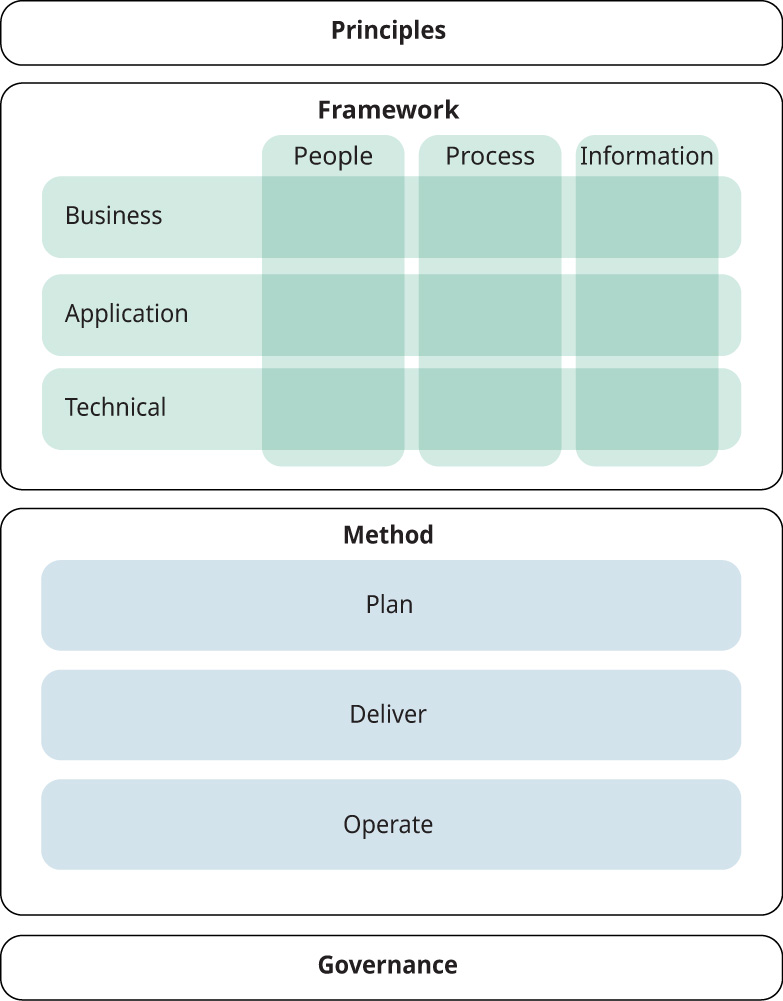
To describe architectures, EAFs employ flexible data models built upon metamodels that provide evolving outlines for capabilities and relationships. At a high level, EAFs provide foundational principles, an organizing framework, a comprehensive and consistent method, and a set of governing processes and structures, as illustrated in Figure 10.20.
英語のヒント
アーキテクチャを記述するため、EAFはメタモデルに基づく柔軟なデータモデルを用いる。メタモデルは、能力と関係について、変化に応じた骨組みを提供する。高水準で見ると、EAFは図10.20のように、基礎となる原則、整理の枠組み、包括的で一貫した方法、そして統治のプロセスと構造を提供する。
attribution: Copyright Rice University, OpenStax, under CC BY 4.0 license · CC BY 4.0 · Source出典
Figure 10.20 This high-level view of EAF reference architecture shows the main components: principles, framework, method, and governance. (attribution: Copyright Rice University, OpenStax, under CC BY 4.0 license)
図10.20 EAFの参照アーキテクチャを高水準で見た図。主要な構成要素である、原則、枠組み、方法、統治を示している。(帰属:Rice University、OpenStax著作権、CC BY 4.0ライセンス。)
3 A single house is much like a single system—it has various types of architecture within it, and it exists within ever-larger ecosystems.
3 一軒の家は一つのシステムによく似ている。内部にさまざまな種類のアーキテクチャを持ち、さらに大きな生態系の中に存在している。
The reference architecture is built upon principles. A principle forms the foundational rules that guide its design and implementation. The reference architecture uses architectural terms as well as numerous principles, policies, and guidelines to govern the architecture. The framework serves as the organizing structure and outlines architectural domains and disciplines to ensure separation of concerns and alignment between business goals and IT. The method consists of defined, repeatable processes that ensure a consistent and controlled execution of the reference architecture. The processes and organizational structures that ensure adherence to the reference architecture are considered governance.
英語のヒント
参照アーキテクチャは原則に基づいて構築する。原則は、その設計と実装を導く基礎的な規則となる。参照アーキテクチャは、アーキテクチャの用語と、多くの原則、方針、指針を使って、アーキテクチャを統治する。枠組みは、整理の構造として働き、アーキテクチャのドメインと作業分野の概略を示す。関心の分離と、事業目標とITの整合を確保するためである。方法は、定義済みで繰り返し実行できるプロセスからなり、参照アーキテクチャを一貫して、管理された形で実行できるようにする。参照アーキテクチャを守るためのプロセスと組織構造を、統治と考える。
TECHNOLOGY IN EVERYDAY LIFE日常生活の中の技術
EAMs and EAFs in Real Life実生活におけるEAMとEAF
EAMs are found in common technologies and are used to ensure systems operate smoothly as user needs change. For example, home automation systems are often expanded, with the user requiring the ability to add new devices, such as a smart refrigerator or thermostat. However, the system needs to maintain compatibility with the existing devices it is connected to. EAFs provide structured guidelines to manage these changes, ensuring flexibility and scalability.
英語のヒント
EAMは身近な技術にも見られ、ユーザーのニーズが変わっても、システムが円滑に動作するように使われる。たとえば家庭の自動化システムは拡張されることが多く、ユーザーは、スマート冷蔵庫や温度調節器など、新しい機器を追加できることを求める。しかし、接続済みの機器との互換性も維持しなければならない。EAFは、こうした変更を管理する構造化された指針を提供し、柔軟性とスケーラビリティを確保する。
How can EAMs ensure seamless integration of new smart devices into your home system? How do EAFs help maintain flexibility in personal technology ecosystems?
EAMは、新しいスマート機器を家庭のシステムに支障なく統合するうえで、どう役立つだろうか。EAFは、個人の技術の生態系に柔軟性を保つために、どう役立つだろうか。
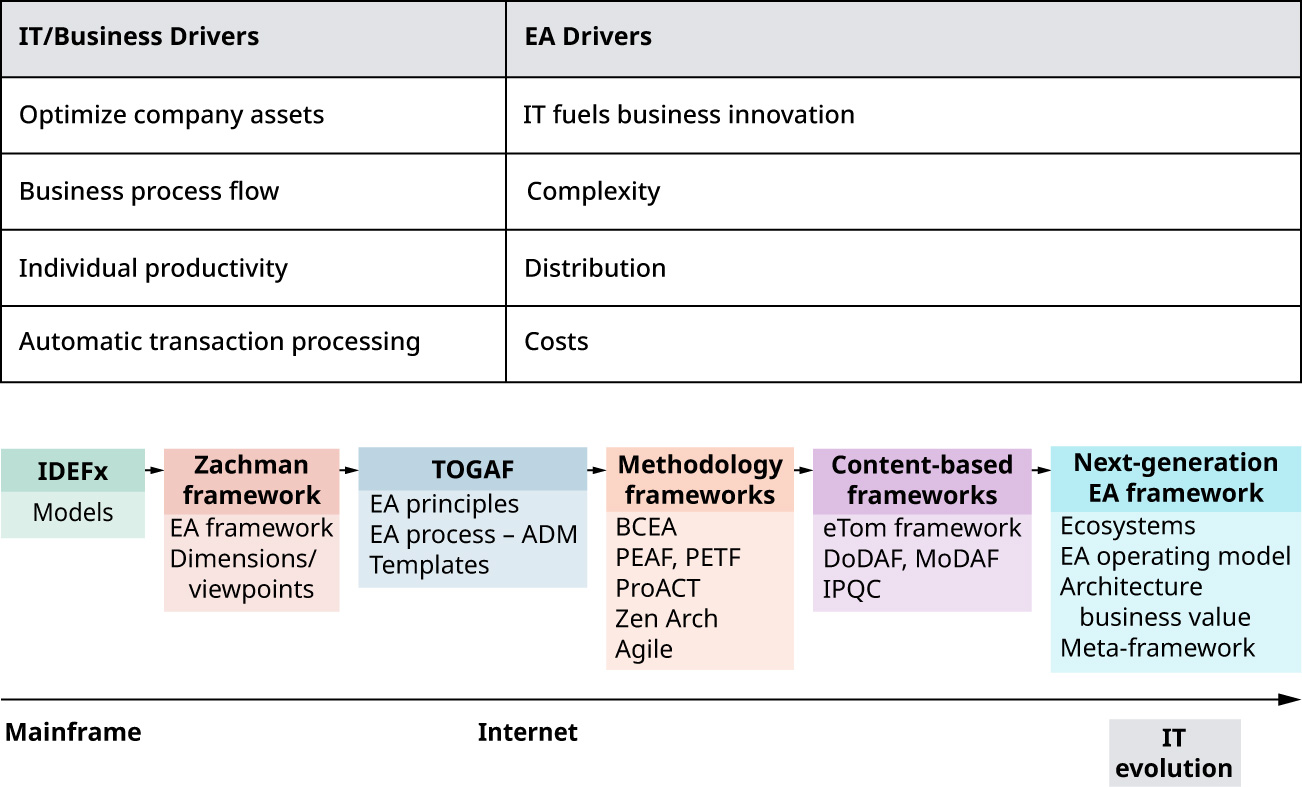
As the practice of EA evolves, the supporting EAF frameworks that enable communities and enterprises to apply EA also evolve. Indeed, as solution complexity increases, the ingenuity needed to master it must continuously improve. In fact, architecture strategies keep playing an enormous and ever-increasing role in determining whether an enterprise is successful. The next generation of EAFs is focused on enabling the creation of dynamic ecosystems and related architectures that provide value for all business participants via systems of insight that integrate and facilitate decisions across systems of record (i.e., focus on costs), systems of operations/automation (i.e., focus on operational expense [Opex]), systems of design (i.e., focus on innovation), and systems of engagement (i.e., focus on customer experience). Figure 10.21 shows the evolution of EA frameworks that has taken place over the years.
英語のヒント
EAの実践が進化するにつれて、コミュニティや企業によるEAの適用を可能にする、支援用のEAFの枠組みも進化する。実際、仕組みが複雑になるほど、それを扱うための創意工夫も、絶えず改善しなければならない。アーキテクチャ戦略は、企業が成功するかどうかを決めるうえで大きな役割を果たし、その重要性はさらに増している。次世代のEAFは、すべての事業参加者に価値を提供する、動的な生態系と関連するアーキテクチャを作れるようにすることに重点を置く。その価値は、洞察のシステムを通して提供する。このシステムは、記録のシステム(費用を重視)、運用・自動化のシステム(運用費用、Opexを重視)、設計のシステム(革新を重視)、関与のシステム(顧客体験を重視)を横断して、意思決定を統合し、容易にする。図10.21は、長年にわたるEAの枠組みの進化を示す。
attribution: Copyright Rice University, OpenStax, under CC BY 4.0 license · CC BY 4.0 · Source出典
Figure 10.21 This chart shows the relationship representation of IT/business drivers and IT evolution over time. The evolution ranges from the mainframe to smart computing. The next-generation EA framework will optimize human, physical, and environmental assets. (attribution: Copyright Rice University, OpenStax, under CC BY 4.0 license)
図10.21 IT・事業を動かす要因とITの進化の、時間を通した関係を示す。進化はメインフレームからスマートコンピューティングまで及ぶ。次世代のEAの枠組みは、人的、物理的、環境的な資産を最適化する。(帰属:Rice University、OpenStax著作権、CC BY 4.0ライセンス。)
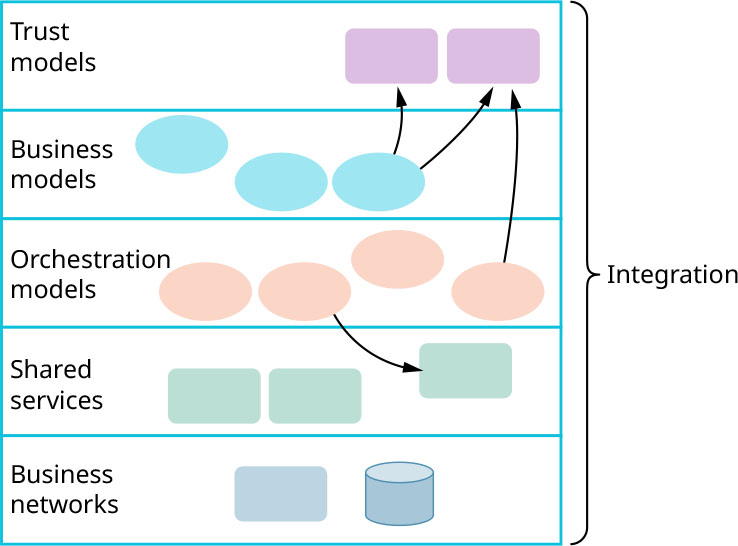
The architecture subsumed by this new breed of ecosystems is illustrated in Figure 10.22. It relies on various layers that can be modeled (using next-generation EAFs) as follows:
英語のヒント
この新種の生態系が含むアーキテクチャを、図10.22に示す。それは、次世代のEAFを使って次のようにモデル化できる、さまざまな層に依存している。
• Trust models ensure that all participants within the ecosystem share and agree on additional values rather than just operate only for financial profits (e.g., respect privacy, guarantee security, provide customer-oriented value and social values, improve the level of quality) as well as shared outcomes, including externalities such as pollution or regulation.
英語のヒント
• 信頼モデルは、生態系のすべての参加者が、金銭的な利益だけを求めて活動するのではなく、追加的な価値を共有し、合意するようにする。たとえば、プライバシーの尊重、セキュリティの保証、顧客本位の価値と社会的価値の提供、品質水準の向上である。また、汚染や規制などの外部性を含めた、共通の結果も共有する。
• Business models ensure that the values identified in trust models are shared and business models can be established that split the margin and revenue between ecosystem participants.
英語のヒント
• 事業モデルは、信頼モデルで特定した価値が共有され、生態系の参加者間で利益幅と収益を分配する事業モデルが確立できるようにする。
• Orchestration models optimize the split of responsibilities and orchestrate services to deliver the best values for customers at the right price/quality (e.g., the links navigation digital experience journey or the knowledge flows journey maps to services and processes at the ecosystem level). Shared services models include supporting data and application services.
英語のヒント
• オーケストレーションモデルは、責任の分担を最適化し、適切な価格と品質で顧客に最良の価値を提供するよう、サービスを連携させる。たとえば、リンクをたどるデジタル体験の行程や、知識の流れの行程を、生態系の水準のサービスやプロセスに対応付ける。共有サービスモデルには、支援用のデータサービスとアプリケーションサービスが含まれる。
• Business networks enable the sharing of processes and data; for example, cloud applications shared between partners in digital business networks via a mix of shared and multitenancy architectures.
英語のヒント
• ビジネスネットワークは、プロセスとデータの共有を可能にする。たとえば、デジタルビジネスネットワークの取引先同士で、共有型とマルチテナント型のアーキテクチャを組み合わせ、クラウドアプリケーションを共有する。
attribution: Copyright Rice University, OpenStax, under CC BY 4.0 license · CC BY 4.0 · Source出典
Figure 10.22 Using next-generation EAFs, various layers can be modeled as trust models, business models, orchestration models, shared services models, and business networks. (attribution: Copyright Rice University, OpenStax, under CC BY 4.0 license)
図10.22 次世代のEAFを使うと、さまざまな層を、信頼モデル、事業モデル、オーケストレーションモデル、共有サービスモデル、ビジネスネットワークとしてモデル化できる。(帰属:Rice University、OpenStax著作権、CC BY 4.0ライセンス。)
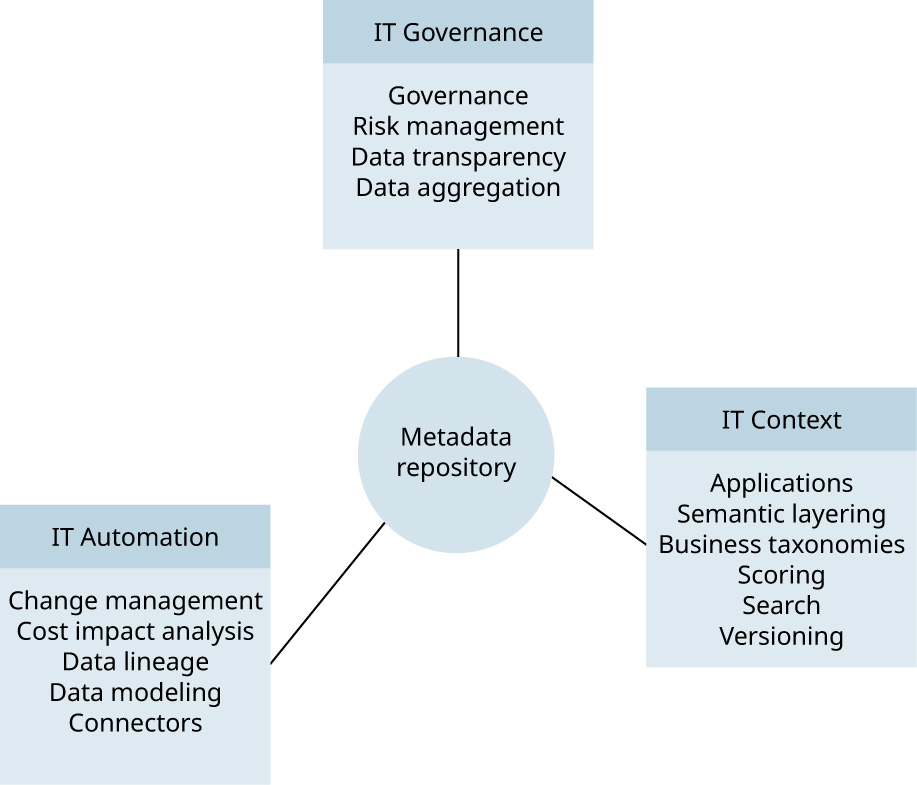
To provide adequate support, next-generation EAFs must supply an extensive set of generic capabilities as part of an underlying meta-framework. A meta-framework describes the framework in more detail, as illustrated in Figure 10.23. Clearly, these capabilities go beyond modeling and related features and must be spanned across EAF requirements for IT automation, IT governance, and IT context management. IT automation is the process of creating systems to reduce manual intervention. IT governance is the process that ensures the effective and efficient use of IT in enabling an organization to achieve its goals. IT context management is a dynamic IT process that uses data in one application to point to data resident in a separate application.
英語のヒント
適切な支援を提供するには、次世代のEAFは、基盤となるメタフレームワークの一部として、広範な汎用的能力を備えなければならない。メタフレームワークは、図10.23のように、枠組みをより詳しく記述するものである。明らかに、これらの能力はモデリングと関連する機能だけにはとどまらず、IT自動化、ITガバナンス、ITコンテキスト管理に関するEAFの要求全体に広がる必要がある。IT自動化は、人の手による介入を減らすシステムを作るプロセスである。ITガバナンスは、組織が目標を達成できるよう、ITを効果的かつ効率的に使うためのプロセスである。ITコンテキスト管理は、一つのアプリケーション内のデータを使い、別のアプリケーション内にあるデータを指し示す、動的なITプロセスである。
attribution: Copyright Rice University, OpenStax, under CC BY 4.0 license · CC BY 4.0 · Source出典
Figure 10.23 EAF requirements for IT automation, IT governance, and IT context management are shown. (attribution: Copyright Rice University, OpenStax, under CC BY 4.0 license)
図10.23 IT自動化、ITガバナンス、ITコンテキスト管理に関するEAFの要求を示す。(帰属:Rice University、OpenStax著作権、CC BY 4.0ライセンス。)
There are many examples of EAFs, such as TOGAF, Gartner Enterprise Architecture, C4ISR, CORBA, Federal Enterprise Architecture, Zachman Framework, and many more. Each one of the EAFs follows a specific format and uses a different specification.
EAFの例は多く、TOGAF、Gartnerエンタープライズアーキテクチャ、C4ISR、CORBA、連邦エンタープライズアーキテクチャ、Zachmanフレームワークなどがある。それぞれが特定の形式に従い、異なる仕様を用いる。
Table 10.2 shows examples of EAFs and their specifications.
表10.2は、EAFとその仕様の例を示す。
Enterprise Architecture Framework エンタープライズアーキテクチャの枠組み | Specifications 仕様 |
|---|---|
TOGAF | |
Gartner Enterprise Architecture Gartnerエンタープライズアーキテクチャ | • Identifies and analyzes the execution of change toward desired business vision and outcomes • 望ましい事業の構想と成果に向けた変更の実行を、特定して分析する。 |
C4ISR—Command, Control, Computers, Communications, Intelligence, Surveillance, and Reconnaissance C4ISR:指揮、統制、コンピューター、通信、情報、監視、偵察 | • Replaced Technical Architecture Framework for Information Management (it was renamed as DODAF in 2003) • Has minimal focus on methodology unlike ADM • Focuses on operational, system, and technical views • 情報管理のための技術アーキテクチャの枠組みを置き換えた(2003年にDODAFへ改称)。• ADMとは異なり、方法論への重点は小さい。• 運用、システム、技術の各ビューを重視する。 |
CORBA—Common Object Request Broker Architecture CORBA:共通オブジェクトリクエストブローカーアーキテクチャ | • Object Request Broker–based architecture • Application architecture • オブジェクトリクエストブローカーに基づくアーキテクチャ。• アプリケーションアーキテクチャ。 |
Enterprise Architecture Planning エンタープライズアーキテクチャ計画 | • Method for planning development of business, data, applications, and technology • Analogous to TOGAF but does not have TRM and SIB • 業務、データ、アプリケーション、技術の開発を計画する方法。• TOGAFに類似するが、TRMとSIBを持たない。 |
Federal Enterprise Architecture Practical Guide 連邦エンタープライズアーキテクチャ実践ガイド | • End-to-end process to manage enterprise architecture • Aligned to TOGAF life cycle • エンタープライズアーキテクチャを管理する、始めから終わりまでのプロセス。• TOGAFのライフサイクルと整合している。 |
Federal Enterprise Architecture Framework 連邦エンタープライズアーキテクチャの枠組み | • Provides guidance on structuring enterprise architecture • Organizes architecture into five reference models to provide a standard methodology • Analogous TOGAF views • エンタープライズアーキテクチャを構造化するための指針を提供する。• アーキテクチャを五つの参照モデルに整理し、標準的な方法論を提供する。• TOGAFに類似するビューを持つ。 |
ISO/IEC TR 14252 (IEEE Std. 1003.0) ISO/IEC TR 14252(IEEE Std. 1003.0) | • Withdrawn • TOGAF is more detailed • 廃止済み。• TOGAFのほうが詳しい。 |
ISO RM-ODP | • Formal description techniques for architecture specifications—distributed process and heterogeneous environments • アーキテクチャ仕様の形式的記述技法。分散プロセスと異種混在の環境を対象とする。 |
SPIRIT Platform Blueprint SPIRITプラットフォーム設計図 | • Referenced within TOGAF • TOGAFの中で参照される。 |
Table 10.2 Enterprise Architecture Frameworks and Specifications
表10.2 エンタープライズアーキテクチャの枠組みと仕様
4 www.opengroup.org/TOGAF
4 www.opengroup.org/TOGAF
Enterprise Architecture Framework エンタープライズアーキテクチャの枠組み | Specifications 仕様 |
|---|---|
Technical Architecture Framework for Information Management 情報管理のための技術アーキテクチャの枠組み | • Basis on which TOGAF is built • TOGAF構築の基礎。 |
Zachman Framework Zachmanフレームワーク |
Table 10.2 Enterprise Architecture Frameworks and Specifications
表10.2 エンタープライズアーキテクチャの枠組みと仕様